Are people basically good?

Mar 20 JDN 2459659

I recently finished reading Human Kind by Rutger Bregman. His central thesis is a surprisingly controversial one, yet one I largely agree with: People are basically good. Most people, in most circumstances, try to do the right thing.

Neoclassical economists in particular seem utterly scandalized by any such suggestion. No, they insist, people are selfish! They’ll take any opportunity to exploit each other! On this, Bregman is right and the neoclassical economists are wrong.

One of the best parts of the book is Bregman’s tale of several shipwrecked Tongan boys who were stranded on the remote island of ‘Ata, sometimes called “the real Lord of the Flies but with an outcome quite radically different from that of the novel. There were of course conflicts during their long time stranded, but the boys resolved most of these conflicts peacefully, and by the time help came over a year later they were still healthy and harmonious. Bregman himself was involved in the investigative reporting about these events, and his tale of how he came to meet some of the (now elderly) survivors and tell their tale is both enlightening and heartwarming.

Bregman spends a lot of time (perhaps too much time) analyzing classic experiments meant to elucidate human nature. He does a good job of analyzing the Milgram experiment—it’s valid, but it says more about our willingness to serve a cause than our blind obedience to authority. He utterly demolishes the Zimbardo experiment; I knew it was bad, but I hadn’t even realized how utterly worthless that so-called “experiment” actually is. Zimbardo basically paid people to act like abusive prison guards—specifically instructing them how to act!—and then claimed that he had discovered something deep in human nature. Bregman calls it a “hoax”, which might be a bit too strong—but it’s about as accurate as calling it an “experiment”. I think it’s more like a form of performance art.

Bregman’s criticism of Steven Pinker I find much less convincing. He cites a few other studies that purported to show the following: (1) the archaeological record is unreliable in assessing death rates in prehistoric societies (fair enough, but what else do we have?), (2) the high death rates in prehistoric cultures could be from predators such as lions rather than other humans (maybe, but that still means civilization is providing vital security!), (3) the Long Peace could be a statistical artifact because data on wars is so sparse (I find this unlikely, but I admit the Russian invasion of Ukraine does support such a notion), or (4) the Long Peace is the result of nuclear weapons, globalized trade, and/or international institutions rather than a change in overall attitudes toward violence (perfectly reasonable, but I’m not even sure Pinker would disagree).

I appreciate that Bregman does not lend credence to the people who want to use absolute death counts instead of relative death rates, who apparently would rather live in a prehistoric village of 100 people that gets wiped out by a plague (or for that matter on a Mars colony of 100 people who all die of suffocation when the life support fails) rather than remain in a modern city of a million people that has a few dozen murders each year. Zero homicides is better than 40, right? Personally, I care most about the question “How likely am I to die at any given time?”; and for that, relative death rates are the only valid measure. I don’t even see why we should particularly care about homicide versus other causes of death—I don’t see being shot as particularly worse than dying of Alzheimer’s (indeed, quite the contrary, other than the fact that Alzheimer’s is largely limited to old age and shooting isn’t). But all right, if violence is the question, then go ahead and use homicides—but it certainly should be rates and not absolute numbers. A larger human population is not an inherently bad thing.

I even appreciate that Bregman offers a theory (not an especially convincing one, but not an utterly ridiculous one either) of how agriculture and civilization could emerge even if hunter-gatherer life was actually better. It basically involves agriculture being discovered by accident, and then people gradually transitioning to a sedentary mode of life and not realizing their mistake until generations had passed and all the old skills were lost. There are various holes one can poke in this theory (Were the skills really lost? Couldn’t they be recovered from others? Indeed, haven’t people done that, in living memory, by “going native”?), but it’s at least better than simply saying “civilization was a mistake”.

Yet Bregman’s own account, particularly his discussion of how early civilizations all seem to have been slave states, seems to better support what I think is becoming the historical consensus, which is that civilization emerged because a handful of psychopaths gathered armies to conquer and enslave everyone around them. This is bad news for anyone who holds to a naively Whiggish view of history as a continuous march of progress (which I have oft heard accused but rarely heard endorsed), but it’s equally bad news for anyone who believes that all human beings are basically good and we should—or even could—return to a state of blissful anarchism.

Indeed, this is where Bregman’s view and mine part ways. We both agree that most people are mostly good most of the time. He even acknowledges that about 2% of people are psychopaths, which is a very plausible figure. (The figures I find most credible are about 1% of women and about 4% of men, which averages out to 2.5%. The prevalence you get also depends on how severely lacking in empathy someone needs to be in order to qualify. I’ve seen figures as low as 1% and as high as 4%.) What he fails to see is how that 2% of people can have large effects on society, wildly disproportionate to their number.

Consider the few dozen murders that are committed in any given city of a million people each year. Who is committing those murders? By and large, psychopaths. That’s more true of premeditated murder than of crimes of passion, but even the latter are far more likely to be committed by psychopaths than the general population.

Or consider those early civilizations that were nearly all authoritarian slave-states. What kind of person tends to govern an authoritarian slave-state? A psychopath. Sure, probably not every Roman emperor was a psychopath—but I’m quite certain that Commodus and Caligula were, and I suspect that Augustus and several others were as well. And the ones who don’t seem like psychopaths (like Marcus Aurelius) still seem like narcissists. Indeed, I’m not sure it’s possible to be an authoritarian emperor and not be at least a narcissist; should an ordinary person somehow find themselves in the role, I think they’d immediately set out to delegate authority and improve civil liberties.

This suggests that civilization was not so much a mistake as it was a crime—civilization was inflicted upon us by psychopaths and their greed for wealth and power. Like I said, not great for a “march of progress” view of history. Yet a lot has changed in the last few thousand years, and life in the 21st century at least seems overall pretty good—and almost certainly better than life on the African savannah 50,000 years ago.

In essence, what I think happened was we invented a technology to turn the tables of civilization, use the same tools psychopaths had used to oppress us as a means to contain them. This technology was called democracy. The institutions of democracy allowed us to convert government from a means by which psychopaths oppress and extract wealth from the populace to a means by which the populace could prevent psychopaths from committing wanton acts of violence.

Is it perfect? Certainly not. Indeed, there are many governments today that much better fit the “psychopath oppressing people” model (e.g. Russia, China, North Korea), and even in First World democracies there are substantial abuses of power and violations of human rights. In fact, psychopaths are overrepresented among the police and also among politicians. Perhaps there are superior modes of governance yet to be found that would further reduce the power psychopaths have and thereby make life better for everyone else.

Yet it remains clear that democracy is better than anarchy. This is not so much because anarchy results in everyone behaving badly and causes immediate chaos (as many people seem to erroneously believe), but because it results in enough people behaving badly to be a problem—and because some of those people are psychopaths who will take advantage of power vacuum to seize control for themselves.

Yes, most people are basically good. But enough people aren’t that it’s a problem.

Bregman seems to think that simply outnumbering the psychopaths is enough to keep them under control, but history clearly shows that it isn’t. We need institutions of governance to protect us. And for the most part, First World democracies do a fairly good job of that.

Indeed, I think Bregman’s perspective may be a bit clouded by being Dutch, as the Netherlands has one of the highest rates of trust in the world. Nearly 90% of people in the Netherlands trust their neighbors. Even the US has high levels of trust by world standards, at about 84%; a more typical country is India or Mexico at 64%, and the least-trusting countries are places like Gabon with 31% or Benin with a dismal 23%. Trust in government varies widely, from an astonishing 94% in Norway (then again, have you seen Norway? Their government is doing a bang-up job!) to 79% in the Netherlands, to closer to 50% in most countries (in this the US is more typical), all the way down to 23% in Nigeria (which seems equally justified). Some mysteries remain, like why more people trust the government in Russia than in Namibia. (Maybe people in Namibia are just more willing to speak their minds? They’re certainly much freer to do so.)

In other words, Dutch people are basically good. Not that the Netherlands has no psychopaths; surely they have a few just like everyone else. But they have strong, effective democratic institutions that provide both liberty and security for the vast majority of the population. And with the psychopaths under control, everyone else can feel free to trust each other and cooperate, even in the absence of obvious government support. It’s precisely because the government of the Netherlands is so unusually effective that someone living there can come to believe that government is unnecessary.

In short, Bregman is right that we should have donation boxes—and a lot of people seem to miss that (especially economists!). But he seems to forget that we need to keep them locked.

Russia has invaded Ukraine.

Mar 6 JDN 2459645

Russia has invaded Ukraine. No doubt you have heard it by now, as it’s all over the news now in dozens of outlets, from CNN to NBC to The Guardian to Al-Jazeera. And as well it should be, as this is the first time in history that a nuclear power has annexed another country. Yes, nuclear powers have fought wars before—the US just got out of one in Afghanistan as you may recall. They have even started wars and led invasions—the US did that in Iraq. And certainly, countries have been annexing and conquering other countries for millennia. But never before—never before, in human historyhas a nuclear-armed state invaded another country simply to claim it as part of itself. (Trump said he thought the US should have done something like that, and the world was rightly horrified.)

Ukraine is not a nuclear power—not anymore. The Soviet Union built up a great deal of its nuclear production in Ukraine, and in 1991 when Ukraine became independent it still had a sizable nuclear arsenal. But starting in 1994 Ukraine began disarming that arsenal, and now it is gone. Now that Russia has invaded them, the government of Ukraine has begun publicly reconsidering their agreements to disarm their nuclear arsenal.

Russia’s invasion of Ukraine has just disproved the most optimistic models of international relations, which basically said that major power wars for territory were over at the end of WW2. Some thought it was nuclear weapons, others the United Nations, still others a general improvement in trade integration and living standards around the world. But they’ve all turned out to be wrong; maybe such wars are rarer, but they can clearly still happen, because one just did.

I would say that only two major theories of the Long Peace are still left standing in light of this invasion, and that is nuclear deterrence and the democratic peace. Ukraine gave up its nuclear arsenal and later got attacked—that’s consistent with nuclear deterrence. Russia under Putin is nearly as authoritarian as the Soviet Union, and Ukraine is a “hybrid regime” (let’s call it a solid D), so there’s no reason the democratic peace would stop this invasion. But any model which posits that trade or the UN prevent war is pretty much off the table now, as Ukraine had very extensive trade with both Russia and the EU and the UN has been utterly toothless so far. (Maybe we could say the UN prevents wars except those led by permanent Security Council members.)

Well, then, what if the nuclear deterrence theory is right? What would have happened if Ukraine had kept its nuclear weapons? Would that have made this situation better, or worse? It could have made it better, if it acted as a deterrent against Russian aggression. But it could also have made it much, much worse, if it resulted in a nuclear exchange between Russia and Ukraine.

This is the problem with nukes. They are not a guarantee of safety. They are a guarantee of fat tails. To explain what I mean by that, let’s take a brief detour into statistics.

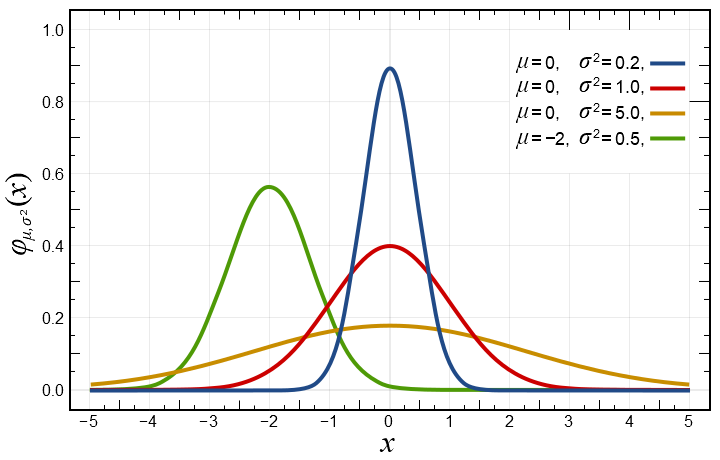
A fat-tailed distribution is one for which very extreme events have non-negligible probability. For some distributions, like a uniform distribution, events are clearly contained within a certain interval and nothing outside is even possible. For others, like a normal distribution or lognormal distribution, extreme events are theoretically possible, but so vanishingly improbable they aren’t worth worrying about. But for fat-tailed distributions like a Cauchy distribution or a Pareto distribution, extreme events are not so improbable. They may be unlikely, but they are not so unlikely they can simply be ignored. Indeed, they can actually dominate the average—most of what happens, happens in a handful of extreme events.

Deaths in war seem to be fat-tailed, even in conventional warfare. They seem to follow a Pareto distribution. There are lots of tiny skirmishes, relatively frequent regional conflicts, occasional major wars, and a handful of super-deadly global wars. This kind of pattern tends to emerge when a phenomenon is self-reinforcing by positive feedback—hence why we also see it in distributions of income and wildfire intensity.

Fat-tailed distributions typically (though not always—it’s easy to construct counterexamples, like the Cauchy distribution with low values truncated off) have another property as well, which is that minor events are common. More common, in fact, than they would be under a normal distribution. What seems to happen is that the probability mass moves away from the moderate outcomes and shifts to both the extreme outcomes and the minor ones.

Nuclear weapons fit this pattern perfectly. They may in fact reduce the probability of moderate, regional conflicts, in favor of increasing the probability of tiny skirmishes or peaceful negotiations. But they also increase the probability of utterly catastrophic outcomes—a full-scale nuclear war could kill billions of people. It probably wouldn’t wipe out all of humanity, and more recent analyses suggest that a catastrophic “nuclear winter” is unlikely. But even 2 billion people dead would be literally the worst thing that has ever happened, and nukes could make it happen in hours when such a death toll by conventional weapons would take years.

If we could somehow guarantee that such an outcome would never occur, then the lower rate of moderate conflicts nuclear weapons provide would justify their existence. But we can’t. It hasn’t happened yet, but it doesn’t have to happen often to be terrible. Really, just once would be bad enough.

Let us hope, then, that the democratic peace turns out to be the theory that’s right. Because a more democratic world would clearly be better—while a more nuclearized world could be better, but could also be much, much worse.

Cryptocurrency and its failures

Jan 30 JDN 2459620

It started out as a neat idea, though very much a solution in search of a problem. Using encryption, could we decentralize currency and eliminate the need for a central bank?

Well, it’s been a few years now, and we have now seen how well that went. Bitcoin recently crashed, but it has always been astonishingly volatile. As a speculative asset, such volatility is often tolerable—for many, even profitable. But as a currency, it is completely unbearable. People need to know that their money will be a store of value and a medium of exchange—and something that changes price one minute to the next is neither.

Some of cryptocurrency’s failures have been hilarious, like the ill-fated island called [yes, really] “Cryptoland”, which crashed and burned when they couldn’t find any investors to help them buy the island.

Others have been darkly comic, but tragic in their human consequences. Chief among these was the failed attempt by El Salvador to make Bitcoin an official currency.

At the time, President Bukele justified it by an economically baffling argument: Total value of all Bitcoin in the world is $680 billion, therefore if even 1% gets invested in El Salvador, GDP will increase by $6.8 billion, which is 25%!

First of all, that would only happen if 1% of all Bitcoin were invested in El Salvador each year—otherwise you’re looking at a one-time injection of money, not an increase in GDP.

But more importantly, this is like saying that the total US dollar supply is $6 trillion, (that’s physically cash; the actual money supply is considerably larger) so maybe by dollarizing your economy you can get 1% of that—$60 billion, baby! No, that’s not how any of this works. Dollarizing could still be a good idea (though it didn’t go all that well in El Salvador), but it won’t give you some kind of share in the US economy. You can’t collect dividends on US GDP.

It’s actually good how El Salvador’s experiment in bitcoin failed: Nobody bought into it in the first place. They couldn’t convince people to buy government assets that were backed by Bitcoin (perhaps because the assets were a strictly worse deal than just, er, buying Bitcoin). So the human cost of this idiotic experiment should be relatively minimal: It’s not like people are losing their homes over this.

That is, unless President Bukele doubles down, which he now appears to be doing. Even people who are big fans of cryptocurrency are unimpressed with El Salvador’s approach to it.

It would be one thing if there were some stable cryptocurrency that one could try pegging one’s national currency to, but there isn’t. Even so-called stablecoins are generally pegged to… regular currencies, typically the US dollar but also sometimes the Euro or a few other currencies. (I’ve seen the Australian Dollar and the Swiss Franc, but oddly enough, not the Pound Sterling.)

Or a country could try issuing its own cryptocurrency, as an all-digital currency instead of one that is partly paper. It’s not totally clear to me what advantages this would have over the current system (in which most of the money supply is bank deposits, i.e. already digital), but it would at least preserve the key advantage of having a central bank that can regulate your money supply.

But no, President Bukele decided to take an already-existing cryptocurrency, backed by nothing but the whims of the market, and make it legal tender. Somehow he missed the fact that a currency which rises and falls by 10% in a single day is generally considered bad.

Why? Is he just an idiot? I mean, maybe, though Bukele’s approval rating is astonishingly high. (And El Salvador is… mostly democratic. Unlike, say, Putin’s, I think these approval ratings are basically real.) But that’s not the only reason. My guess is that he was gripped by the same FOMO that has gripped everyone else who evangelizes for Bitcoin. The allure of easy money is often irresistible.

Consider President Bukele’s position. You’re governing a poor, war-torn country which has had economic problems of various types since its founding. When the national currency collapsed a generation ago, the country was put on the US dollar, but that didn’t solve the problem. So you’re looking for a better solution to the monetary doldrums your country has been in for decades.

You hear about a fancy new monetary technology, “cryptocurrency”, which has all the tech people really excited and seems to be making tons of money. You don’t understand a thing about it—hardly anyone seems to, in fact—but you know that people with a lot of insider knowledge of technology and finance are really invested in it, so it seems like there must be something good here. So, you decide to launch a program that will convert your country’s currency from the US dollar to one of these new cryptocurrencies—and you pick the most famous one, which is also extremely valuable, Bitcoin.

Could cryptocurrencies be the future of money, you wonder? Could this be the way to save your country’s economy?

Despite all the evidence that had already accumulated that cryptocurrency wasn’t working, I can understand why Bukele would be tempted by that dream. Just as we’d all like to get free money without having to work, he wanted to save his country’s economy without having to implement costly and unpopular reforms.

But there is no easy money. Not really. Some people get lucky; but they ultimately benefit from other people’s hard work.

The lesson here is deeper than cryptocurrency. Yes, clearly, it was a dumb idea to try to make Bitcoin a national currency, and it will get even dumber if Bukele really does double down on it. But more than that, we must all resist the lure of easy money. If it sounds too good to be true, it probably is.

Reversals in progress against poverty

Jan 16 JDN 2459606

I don’t need to tell you that the COVID pandemic has been very bad for the world. Yet perhaps the worst outcome of the pandemic is one that most people don’t recognize: It has reversed years of progress against global poverty.

Estimates of the number of people who will be thrown into extreme poverty as a result of the pandemic are consistently around 100 million, though some forecasts have predicted this will rise to 150 million, or, in the most pessimistic scenarios, even as high as 500 million.

Pre-COVID projections showed the global poverty rate falling steadily from 8.4% in 2019 to 6.3% by 2030. But COVID resulted in the first upward surge in global poverty in decades, and updated models now suggest that the global poverty rate in 2030 will be as high as 7.0%. That difference is 0.7% of a forecasted population of 8.5 billion—so that’s a difference of 59 million people.

This is a terrible reversal of fortune, and a global tragedy. Ten or perhaps even hundreds of millions of people will suffer the pain of poverty because of this global pandemic and the numerous missteps by many of the world’s governments—not least the United States—in response to it.

Yet it’s important to keep in mind that this is a short-term reversal in a long-term trend toward reduced poverty. Yes, the most optimistic predictions are turning out to be wrong—but the general pattern of dramatic reductions in global poverty over the late 20th and early 21st century are still holding up.

That post-COVID estimate of a global poverty rate of 7.0% needs to be compared against the fact that as recently as 1980 the global poverty rate at the same income level (adjust for inflation and purchasing power of course) income level was a whopping 44%.

This pattern makes me feel deeply ambivalent about the effects of globalization on inequality. While it now seems clear that globalization has exacerbated inequality within First World countries—and triggered a terrible backlash of right-wing populism as a result—it also seems clear that globalization was a major reason for the dramatic reductions in global poverty in the past few decades.

I think the best answer I’ve been able to come up with is that globalization is overall a good thing, and we must continue it—but we also need to be much more mindful of its costs, and we must make policy that mitigates those costs. Expanded trade has winners and losers, and we should be taxing the winners to compensate the losers. To make good economic policy, it simply isn’t enough to increase aggregate GDP; you actually have to make life better for everyone (or at least as many people as you can).

Unfortunately, knowing what policies to make is only half the battle. We must actually implement those policies, which means winning elections, which means restoring the public’s faith in the authority of economic experts.

Some of the people voting for Donald Trump were just what Hillary Clinton correctly (if tone-deafly) referred to as “deplorables“: racists, misogynists, xenophobes. But I think that many others weren’t voting for Trump but against Clinton; they weren’t embracing far-right populism but rather rejecting center-left technocratic globalization. They were tired of being told what to do by experts who didn’t seem to care about them or their interests.

And the thing is, they were right about that. Not about voting for Trump—that’s unforgivable—but about the fact that expert elites had been ignoring their interests and needed a wake-up call. There were a hundred better ways of making that wake-up call that didn’t involve putting a narcissistic, incompetent maniac in charge of the world’s largest economy, military and nuclear arsenal, and millions of people should be ashamed of themselves for not taking those better options. Yet the fact remains: The wake-up call was necessary, and we should be responding to it.

We expert elites (I think I can officially carry that card, now that I have a PhD and a faculty position at a leading research university) need to do a much better job of two things: First, articulating the case for our policy recommendations in a way that ordinary people can understand, so that they feel justified and not simply rammed down people’s throats; and second, recognizing the costs and downsides of these policies and taking action to mitigate them whenever possible.

For instance: Yes, we need to destroy all the coal jobs. They are killing workers and the planet. Coal companies need to be transitioned to new industries or else shut down. This is not optional. It must be done. But we also need to explain to those coal miners why it’s necessary to move on from coal to solar and nuclear, and we need to be implementing various policies to help those workers move on to better, safer jobs that pay as well and don’t involve filling their lungs with soot and the atmosphere with carbon dioxide. We need to articulate, emphasize—and loudly repeat—that this isn’t about hurting coal miners to help everyone else, but about helping everyone, coal miners included, and that if anyone gets hurt it will only be a handful of psychopathic billionaires who already have more money than any human being could possibly need or deserve.

Another example: We cannot stop trading with India and China. Hundreds of millions of innocent people would suddenly be thrown out of work and into poverty if we did. We need the products they make for us, and they need the money we pay for those products. But we must also acknowledge that trading with poor countries does put downward pressure on wages back home, and take action to help First World workers who are now forced to compete with global labor markets. Maybe this takes the form of better unemployment benefits, or job-matching programs, or government-sponsored job training. But we cannot simply shrug and let people lose their jobs and their homes because the factories they worked in were moved to China.

A very Omicron Christmas

Dec 26 JDN 2459575

Remember back in spring of 2020 when we thought that this pandemic would quickly get under control and life would go back to normal? How naive we were.

The newest Omicron strain seems to be the most infectious yet—even people who are fully vaccinated are catching it. The good news is that it also seems to be less deadly than most of the earlier strains. COVID is evolving to spread itself better, but not be as harmful to us—much as influenza and cold viruses evolved. While weekly cases are near an all-time peek, weekly deaths are well below the worst they had been.

Indeed, at this point, it’s looking like COVID will more or less be with us forever. In the most likely scenario, the virus will continue to evolve to be more infectious but less lethal, and then we will end up with another influenza on our hands: A virus that can’t be eradicated, gets huge numbers of people sick, but only kills a relatively small number. At some point we will decide that the risk of getting sick is low enough that it isn’t worth forcing people to work remotely or maybe even wear masks. And we’ll relax various restrictions and get back to normal with this new virus a regular part of our lives.


Merry Christmas?

But it’s not all bad news. The vaccination campaign has been staggeringly successful—now the total number of vaccine doses exceeds the world population, so the average human being has been vaccinated for COVID at least once.

And while 5.3 million deaths due to the virus over the last two years sounds terrible, it should be compared against the baseline rate of 15 million deaths during that same interval, and the fact that worldwide death rates have been rapidly declining. Had COVID not happened, 2021 would be like 2019, which had nearly the lowest death rate on record, at 7,579 deaths per million people per year. As it is, we’re looking at something more like 10,000 deaths per million people per year (1%), or roughly what we considered normal way back in the long-ago times of… the 1980s. To get even as bad as things were in the 1950s, we would have to double our current death rate.

Indeed, there’s something quite remarkable about the death rate we had in 2019, before the pandemic hit: 7,579 per million is only 0.76%. A being with a constant annual death rate of 0.76% would have a life expectancy of over 130 years. This very low death rate is partly due to demographics: The current world population is unusually young and healthy because the world recently went through huge surges in population growth. Due to demographic changes the UN forecasts that our death rate will start to climb again as fertility falls and the average age increases; but they are still predicting it will stabilize at about 11,200 per million per year, which would be a life expectancy of 90. And that estimate could well be too pessimistic, if medical technology continues advancing at anything like its current rate.

We call it Christmas, but it’s really a syncretized amalgamation of holidays: Yule, Saturnalia, various Solstice celebrations. (Indeed, there’s no particular reason to think Jesus was even born in December.) Most Northern-hemisphere civilizations have some sort of Solstice holiday, and we’ve greedily co-opted traditions from most of them. The common theme really seems to be this:

Now it is dark, but band together and have hope, for the light shall return.

Diurnal beings in northerly latitudes instinctively fear the winter, when it becomes dark and cold and life becomes more hazardous—but we have learned to overcome this fear together, and we remind ourselves that light and warmth will return by ritual celebrations.

The last two years have made those celebrations particularly difficult, as we have needed to isolate ourselves in order to keep ourselves and others safe. Humans are fundamentally social at a level most people—even most scientists—do not seem to grasp: We need contact with other human beings as deeply and vitally as we need food or sleep.

The Internet has allowed us to get some level of social contact while isolated, which has been a tremendous boon; but I think many of us underestimated how much we would miss real face-to-face contact. I think much of the vague sense of malaise we’ve all been feeling even when we aren’t sick and even when we’ve largely adapted our daily routine to working remotely comes from this: We just aren’t getting the chance to see people in person nearly as often as we want—as often as we hadn’t even realized we needed.

So, if you do travel to visit family this holiday season, I understand your need to do so. But be careful. Get vaccinated—three times, if you can. Don’t have any contact with others who are at high risk if you do have any reason to think you’re infected.

Let’s hope next Christmas is better.

Does power corrupt?

Nov 7 JDN 2459526

It’s a familiar saying, originally attributed to the Lord Acton: “Power tends to corrupt, and absolute power corrupts absolutely. Great men are nearly always bad men.”

I think this saying is not only wrong, but in fact dangerous. We can all observe plenty of corrupt people in power, that much is true. But if it’s simply the power that corrupts them, and they started as good people, then there’s really nothing to be done. We may try to limit the amount of power any one person can have, but in any large, complex society there will be power, and so, if the saying is right, there will also be corruption.

How do I know that this saying is wrong?

First of all, note that corruption varies tremendously, and with very little correlation with most sensible notions of power.

Consider used car salespeople, stockbrokers, drug dealers, and pimps. All of these professions are rather well known for their high level of corruption. Yet are people in these professions powerful? Yes, any manager has some power over their employees; but there’s no particular reason to think that used car dealers have more power over their employees than grocery stores, and yet there’s a very clear sense in which used car dealers are more corrupt.

Even power on a national scale is not inherently tied to corruption. Consider the following individuals: Nelson Mandela, Mahatma Gandhi, Abraham Lincoln, and Franklin Roosevelt.

These men were extremely powerful; each ruled an entire nation.Indeed, during his administration, FDR was probably the most powerful person in the world. And they certainly were not impeccable: Mandela was a good friend of Fidel Castro, Gandhi abused his wife, Lincoln suspended habeas corpus, and of course FDR ordered the internment of Japanese-Americans. Yet overall I think it’s pretty clear that these men were not especially corrupt and had a large positive impact on the world.

Say what you will about Bernie Sanders, Dennis Kucinich, or Alexandria Ocasio-Cortez. Idealistic? Surely. Naive? Perhaps. Unrealistic? Sometimes. Ineffective? Often. But they are equally as powerful as anyone else in the US Congress, and ‘corrupt’ is not a word I’d use to describe them. Mitch McConnell, on the other hand….

There does seem to be a positive correlation between a country’s level of corruption and its level of authoritarianism; the most democratic countries—Scandinavia—are also the least corrupt. Yet India is surely more democratic than China, but is widely rated as about the same level of corruption. Greece is not substantially less democratic than Chile, but it has considerably more corruption. So even at a national level, power is the not the only determinant of corruption.

I’ll even agree to the second clause: “absolute power corrupts absolutely.” Were I somehow granted an absolute dictatorship over the world, one of my first orders of business would be to establish a new democratic world government to replace my dictatorial rule. (Would it be my first order of business, or would I implement some policy reforms first? Now that’s a tougher question. I think I’d want to implement some kind of income redistribution and anti-discrimination laws before I left office, at least.) And I believe that most good people think similarly: We wouldn’t want to have that kind of power over other people. We wouldn’t trust ourselves to never abuse it. Anyone who maintains absolute power is either already corrupt or likely to become so. And anyone who seeks absolute power is precisely the sort of person who should not be trusted with power at all.

It may also be that power is one determinant of corruption—that a given person will generally end up more corrupt if you give them more power. This might help explain why even the best ‘great men’ are still usually bad men. But clearly there are other determinants that are equally important.

And I would like to offer a different hypothesis to explain the correlation between power and corruption, which has profoundly different implications: The corrupt seek power.

Donald Trump didn’t start out a good man and become corrupt by becoming a billionaire or becoming President. Donald Trump was born a narcissistic idiot.

Josef Stalin wasn’t a good man who became corrupted by the unlimited power of ruling the Soviet Union. Josef Stalin was born a psychopath.

Indeed, when you look closely at how corrupt leaders get into power, it often involves manipulating and exploiting others on a grand scale. They are willing to compromise principles that good people wouldn’t. They aren’t corrupt because they got into power; they got into power because they are corrupt.

Let me be clear: I’m not saying we should compromise all of our principles in order to achieve power. If there is a route by which power corrupts, it is surely that. Rather, I am saying that we must maintain constant vigilance against anyone who seems so eager to attain power that they will compromise principles to do it—for those are precisely the people who are likely to be most dangerous if they should achieve their aims.

Moreover, I’m saying that “power corrupts” is actually a very dangerous message. It tells good people not to seek power, because they would be corrupted by it. But in fact what we actually need in order to get good people in power is more good people seeking power, more opportunities to out-compete the corrupt. If Congress were composed entirely of people like Alexandria Ocasio-Cortez, then the left-wing agenda would no longer seem naive and unrealistic; it would simply be what gets done. (Who knows? Maybe it wouldn’t work out so well after all. But it definitely would get done.) Yet how many idealistic left-wing people have heard that phrase ‘power corrupts’ too many times, and decided they didn’t want to risk running for office?

Indeed, the notion that corruption is inherent to the exercise of power may well be the greatest tool we have ever given to those who are corrupt and seeking to hold onto power.

Realistic open borders

Sep 5 JDN 2459463

In an earlier post I lamented the tight restrictions on border crossings that prevail even between allied First World countries. (On a personal note, you’ll be happy to know that our visas have cleared and we are now moved into Edinburgh, cat and all, though we are still in temporary housing and our official biometric residence permits haven’t yet arrived.)

In this post I’d like to speculate on how we might get from our current regime to something more like open borders.

Obviously we can’t simply remove all border restrictions immediately. That would be a political non-starter, and even ethically or economically it wouldn’t make very much sense. There are sensible reasons behind some of our border regulations—just not most of them.

Instead we would want to remove a few restrictions at a time, starting with the most onerous or ridiculous ones.

High on my list in the UK in particular would be the requirement that pets must fly as cargo. I literally can’t think of a good reason for this; it seems practically designed to cost travelers more money and traumatize as many pets as possible. If it’s intended to support airlines somehow, please simply subsidize airlines. (But really, why are you doing that? You should be taxing airlines because of their high carbon emissions. Subsidize boats and trains.) If it’s intended to somehow prevent the spread of rabies, it’s obviously unnecessary, since every pet moved to the UK already has to document a recent rabies vaccine. But this particular rule seems to be a quirk of the UK in particular, hence not very generalizable.

But here’s one that actually seems quite common: Financial requirements for visas. Even tourist visas in most countries cost money, in amounts that seem to vary according to some sort of occult ritual. I can see no sensible economic reason why a visa would be $130 in Vietnam but only $20 in neighboring Cambodia, or why Kazakhstan can be visited for $25 but Azerbaijan costs $100, or why Myanmar costs only $30 but Bhutan will run you over $200.

Work visas are considerably more demanding still.

Financial requirements in the UK are especially onerous; you have to make above a certain salary and have a certain amount of savings in the bank, based on your family size. This was no problem for me personally, but it damn well shouldn’t be; I have a PhD in economics. My salary is now twice what it was as a grad student, and honestly that’s a good deal less than I was hoping for (and would have gotten on the tenure track at an R1 university).

All the countries in the Schengen Area have their own requirements for “financial subsistence” for visa applications, ranging from a trivial €3 in Hungary (not per day, just total; why do they even bother?) or manageable €14 per day in Latvia, through the more demanding amounts of €45 per day in Germany and Italy, to €92 per day in Switzerland and Liechtenstein, all the way up to the utterly unreasonable €120 per day in France. That would be €43,800 per year, or $51,700. Apparently you must be at least middle class to enter France.

Canada has a similar requirement known as “proof of funds”, but it’s considerably more reasonable, since you can substitute proof of employment and there are no wage minimums for such employment. Even if you don’t already have a job you can still apply and the minimum requirement is actually lower than the poverty line in Canada.

The United States doesn’t require financial requirements for most visas, but it does have a $160 visa fee. And the H1-B visa in particular (the nearest equivalent to the Skilled Worker visa I’ve got in the UK) requires that your wage or salary be at least the “prevailing wage” in your industry—meaning it is nearly impossible for a company to save money by hiring people on H1-B visas and hence they have very little incentive to hire H1-B workers. If you are of above-average talent and being paid only average wages, I guess they can save some money that way. But this is not how trade is supposed to work—nobody requires that you pay US prices for goods shipped from China, and if they did, nobody would ever buy anything from China. This is blatant, naked protectionism—but we’re apparently okay with it as long as it’s trade in labor instead of goods.

I wasn’t able to quickly find whether there are similar financial requirements in other countries. Perhaps there aren’t; these are the countries most people actually want to move to anyway. Permanent migration is overwhelminginly toward OECD (read: First World) countries, and is actually helping us sustain our populations in the face of low birth rates.

I must admit, I can see some fiscal benefits for a country not allowing poor people in, but this practice raises some very deep ethical problems: What right do we have to do this?

If someone is born poor in Laredo, Texas, we take responsibility for them as a US citizen. Maybe we don’t treat them particularly well (that is Texas, after all), but we do give them access to certain basic services, such as emergency services, Medicaid, TANF and SNAP. They are allowed to vote, own property, and even hold office in the United States. But if that same person were born in Nuevo Laredo, Tamaulipas—literally less than a mile away, right across the river—they would receive none of these benefits. They would not even be allowed to cross the river without a passport and a visa.

In some ways the contrast is even more dire if we consider a more liberal US state. A poor person born in Chula Vista, California has access to the full array of California services; Medi-Cal is honestly something close to a single-payer healthcare system, though the full morass of privatized US healthcare is layered on top of us. Then there is CalWORKS, CalFresh, and so on. But the same person born in Tijuana, Baja California would get none of these benefits.

They could be the same person. They could look the same and have essentially the same culture—even the same language, given how many Californians speak Spanish and how many Mexicans speak English. But if they were born on the other side of a river (in Texas) or even an arbitrary line (in California), we treat them completely differently. And then to add insult to injury, we won’t even let them across, not in spite, but because of how poor and desperate they are. If they were rich and educated, we’d let them come across—but then why would they need to?

“Give me your tired, your poor, your huddled masses yearning to breathe free”?

Some restrictions may apply.

Economists talk often of “trade barriers”, but in real terms we have basically removed all trade barriers in goods. Yes, there are still some small tariffs, and the occasional quota here and there—and these should go away too, especially the quotas, because they don’t even raise revenue—but in general we have an extremely globalized economy in terms of goods. The same complex product, like a car or a smartphone, is often made of parts from a dozen countries.

But when it comes to labor, we are still living in a protectionist world. Crossing borders to work is difficult, time-consuming, and above all, expensive. This dramatically reduces opportunities for workers to move where their labor is most valued—which hurts not only them, but also anyone who would employ them or buy products made by them. The poorest people are those who stand to gain the most from crossing borders, and they are precisely the ones that we work hardest to forbid.

So let’s start with that, shall we? We can keep all this nonsense about passports, visas, background checks, and customs inspections. It’s probably all unnecessary and wasteful and unfair, but politically it’s clearly too popular to remove. Let’s just remove this: No more financial requirements or fees for work visas. If you want to come to another country to work, you have to go through an application and all that; fine. But you shouldn’t have to prove you aren’t poor. Poor people have just as much right to live here as anybody else—and if we let them do so, they’d be a lot less poor.

How to change minds

Aug 29 JDN 2459456

Think for a moment about the last time you changed your mind on something important. If you can’t think of any examples, that’s not a good sign. Think harder; look back further. If you still can’t find any examples, you need to take a deep, hard look at yourself and how you are forming your beliefs. The path to wisdom is not found by starting with the right beliefs, but by starting with the wrong ones and recognizing them as wrong. No one was born getting everything right.

If you remember changing your mind about something, but don’t remember exactly when, that’s not a problem. Indeed, this is the typical case, and I’ll get to why in a moment. Try to remember as much as you can about the whole process, however long it took.

If you still can’t specifically remember changing your mind, try to imagine a situation in which you would change your mind—and if you can’t do that, you should be deeply ashamed and I have nothing further to say to you.

Thinking back to that time: Why did you change your mind?

It’s possible that it was something you did entirely on your own, through diligent research of primary sources or even your own mathematical proofs or experimental studies. This is occasionally something that happens; as an active researcher, it has definitely happened to me. But it’s clearly not the typical case of what changes people’s minds, and it’s quite likely that you have never experienced it yourself.

The far more common scenario—even for active researchers—is far more mundane: You changed your mind because someone convinced you. You encountered a persuasive argument, and it changed the way you think about things.

In fact, it probably wasn’t just one persuasive argument; it was probably many arguments, from multiple sources, over some span of time. It could be as little as minutes or hours; it could be as long as years.

Probably the first time someone tried to change your mind on that issue, they failed. The argument may even have degenerated into shouting and name-calling. You both went away thinking that the other side was composed of complete idiots or heartless monsters. And then, a little later, thinking back on the whole thing, you remembered one thing they said that was actually a pretty good point.

This happened again with someone else, and again with yet another person. And each time your mind changed just a little bit—you became less certain of some things, or incorporated some new information you didn’t know before. The towering edifice of your worldview would not be toppled by a single conversation—but a few bricks here and there did get taken out and replaced.

Or perhaps you weren’t even the target of the conversation; you simply overheard it. This seems especially common in the age of social media, where public and private spaces become blurred and two family members arguing about politics can blow up into a viral post that is viewed by millions. Perhaps you changed your mind not because of what was said to you, but because of what two other people said to one another; perhaps the one you thought was on your side just wasn’t making as many good arguments as the one on the other side.

Now, you may be thinking: Yes, people like me change our minds, because we are intelligent and reasonable. But those people, on the other side, aren’t like that. They are stubborn and foolish and dogmatic and stupid.

And you know what? You probably are an especially intelligent and reasonable person. If you’re reading this blog, there’s a good chance that you are at least above-average in your level of education, rationality, and open-mindedness.

But no matter what beliefs you hold, I guarantee you there is someone out there who shares many of them and is stubborn and foolish and dogmatic and stupid. And furthermore, there is probably someone out there who disagrees with many of your beliefs and is intelligent and open-minded and reasonable.

This is not to say that there’s no correlation between your level of reasonableness and what you actually believe. Obviously some beliefs are more rational than others, and rational people are more likely to hold those beliefs. (If this weren’t the case, we’d be doomed.) Other things equal, an atheist is more reasonable than a member of the Taliban; a social democrat is more reasonable than a neo-Nazi; a feminist is more reasonable than a misogynist; a member of the Human Rights Campaign is more reasonable than a member of the Westboro Baptist Church. But reasonable people can be wrong, and unreasonable people can be right.

You should be trying to seek out the most reasonable people who disagree with you. And you should be trying to present yourself as the most reasonable person who expresses your own beliefs.

This can be difficult—especially that first part, as the world (or at least the world spanned by Facebook and Twitter) seems to be filled with people who are astonishingly dogmatic and unreasonable. Often you won’t be able to find any reasonable disagreement. Often you will find yourself in threads full of rage, hatred and name-calling, and you will come away disheartened, frustrated, or even despairing for humanity. The whole process can feel utterly futile.

And yet, somehow, minds change.

Support for same-sex marriage in the US rose from 27% to 70% just since 1997.

Read that date again: 1997. Less than 25 years ago.

The proportion of new marriages which were interracial has risen from 3% in 1967 to 19% today. Given the racial demographics of the US, this is almost at the level of random assortment.

Ironically I think that the biggest reason people underestimate the effectiveness of rational argument is the availability heuristic: We can’t call to mind any cases where we changed someone’s mind completely. We’ve never observed a pi-radian turnaround in someone’s whole worldview, and thus, we conclude that nobody ever changes their mind about anything important.

But in fact most people change their minds slowly and gradually, and are embarrassed to admit they were wrong in public, so they change their minds in private. (One of the best single changes we could make toward improving human civilization would be to make it socially rewarded to publicly admit you were wrong. Even the scientific community doesn’t do this nearly as well as it should.) Often changing your mind doesn’t even really feel like changing your mind; you just experience a bit more doubt, learn a bit more, and repeat the process over and over again until, years later, you believe something different than you did before. You moved 0.1 or even 0.01 radians at a time, until at last you came all the way around.

It may be in fact that some people’s minds cannot be changed—either on particular issues, or even on any issue at all. But it is so very, very easy to jump to that conclusion after a few bad interactions, that I think we should intentionally overcompensate in the opposite direction: Only give up on someone after you have utterly overwhelming evidence that their mind cannot ever be changed in any way.

I can’t guarantee that this will work. Perhaps too many people are too far gone.

But I also don’t see any alternative. If the truth is to prevail, it will be by rational argument. This is the only method that systematically favors the truth. All other methods give equal or greater power to lies.

Capitalism can be fair

Aug 22 JDN 2459449

There are certainly extreme right-wing libertarians who seem to think that capitalism is inherently fair, or that “fairness” is meaningless and (some very carefully defined notion of) liberty is the only moral standard. I am not one of them. I agree that many of the actual practices of modern capitalism as we know it are unfair, particularly in the treatment of low-skill workers.

But lately I’ve been seeing a weirdly frequent left-wing take—Marxist take, really—that goes to the opposite extreme, saying that capitalism is inherently unfair, that the mere fact that capital owners ever get any profit on anything is proof that the system is exploitative and unjust and must be eliminated.

So I decided it would be worthwhile to provide a brief illustration of how, at least in the best circumstances, a capitalist system of labor can in fact be fair and just.

The argument that capitalism is inherently unjust seems to be based on the notion that profit means “workers are paid less than their labor is worth”. I think that the reason this argument is so insidious is that it’s true in one sense—but not true in another. Workers are indeed paid less than the total surplus of their actual output—but, crucially, they are not paid less than what the surplus of their output would have been had the capital owner not provided capital and coordination.

Suppose that we are making some sort of product. To make it more concrete, let’s say shirts. You can make a shirt by hand, but it’s a lot of work, and it takes a long time. Suppose that you, working on your own by hand, can make 1 shirt per day. You can sell each shirt for $10, so you get $10 per day.

Then, suppose that someone comes along who owns looms and sewing machines. They gather you and several other shirt-makers and offer to let you use their machines, in exchange for some of the revenue. With the aid of 9 other workers and the machines, you are able to make 30 shirts per day. You can still sell each shirt for $10, so now there is total revenue of $300.

Whether or not this is fair depends on precisely the bargain that was struck with the owner of the machines. Suppose that he asked for 40% of the revenue. Then the 10 workers including yourself would get (0.60)($300) = $180 to split, presumably evenly, and each get $18 per day. This seems fair; you’re clearly better off than you were making shirts by yourself. The capital owner then gets (0.40)($300) = $120, which is more than each of you, but not by a ridiculous amount; and he probably has costs to deal with in maintaining those machines.

But suppose instead the owner had demanded 80% of the revenue; then you would have to split (0.20)($300) = $60 between you, and each would only get $6 per day. The capital owner would then get (0.80)($300) = $240, 40 times as much as each of you.

Or perhaps instead of a revenue-sharing agreement, the owner offers to pay you a wage. If that wage is $18 per day, it seems fair. If it is $6 per day, it seems obviously unfair.

If this owner is the only employer, then he is competing only with working alone. So we would expect him to offer a wage of $10 per day, or maybe slightly more since working with the machines may be harder or more unpleasant than working by hand.

But if there are many employers, then he is now competing with those employers as well. If he offers $10, someone else might offer $12, and a third might offer $15. Competition should drive the system toward an equilibrium where workers are getting paid their marginal value product—in other words, the wage for one hour of work should equal the additional value added by one more hour of work.

In the case that seems fair, where workers are getting more money than they would have on their own, are they getting paid “less than the value of their labor”? In one sense, yes; the total surplus is not going all to the workers, but is being shared with the owner of the machines. But the more important sense is whether they’d be better off quitting and working on their own—and they obviously would not be.

What value does the capital owner provide? Well, the capital, of course. It’s their property and they are letting other people use it. Also, they incur costs to maintain it.

Of course, it matters how the capital owner obtained that capital. If they are an inventor who made it themselves, it seems obviously just that they should own it. If they inherited it or got lucky on the stock market, it isn’t something they deserve in a deep sense, but it’s reasonable to say they are entitled to it. But if the only reason they have the capital is by theft, fraud, or exploitation, then obviously they don’t deserve it. In practice, there are very few of the first category, a huge number of the second, and all too many of the third. Yet this is not inherent to the capitalist work arrangement. Many capital owners don’t deserve what they own; but those who do have a right to make a profit letting other people use their property.

There are of course many additional complexities that arise in the real world, in terms of market power, bargaining, asymmetric information, externalities, and so on. I freely admit that in practice, capitalism is often unfair. But I think it’s worth pointing out that the mere existence of profit from capital ownership is not inherently unjust, and in fact by organizing our economy around it we have managed to achieve unprecedented prosperity.

Locked donation boxes and moral variation

Aug 8 JDN 2459435

I haven’t been able to find the quote, but I think it was Kahneman who once remarked: “Putting locks on donation boxes shows that you have the correct view of human nature.”

I consider this a deep insight. Allow me to explain.

Some people think that human beings are basically good. Rousseau is commonly associated with this view, a notion that, left to our own devices, human beings would naturally gravitate toward an anarchic but peaceful society.

The question for people who think this needs to be: Why haven’t we? If your answer is “government holds us back”, you still need to explain why we have government. Government was not imposed upon us from On High in time immemorial. We were fairly anarchic (though not especially peaceful) in hunter-gatherer tribes for nearly 200,000 years before we established governments. How did that happen?

And if your answer to that is “a small number of tyrannical psychopaths forced government on everyone else”, you may not be wrong about that—but it already breaks your original theory, because we’ve just shown that human society cannot maintain a peaceful anarchy indefinitely.

Other people think that human beings are basically evil. Hobbes is most commonly associated with this view, that humans are innately greedy, violent, and selfish, and only by the overwhelming force of a government can civilization be maintained.

This view more accurately predicts the level of violence and death that generally accompanies anarchy, and can at least explain why we’d want to establish government—but it still has trouble explaining how we would establish government. It’s not as if we’re ruled by a single ubermensch with superpowers, or an army of robots created by a mad scientist in a secret undergroud laboratory. Running a government involves cooperation on an absolutely massive scale—thousands or even millions of unrelated, largely anonymous individuals—and this cooperation is not maintained entirely by force: Yes, there is some force involved, but most of what a government does most of the time is mediated by norms and customs, and if a government did ever try to organize itself entirely by force—not paying any of the workers, not relying on any notion of patriotism or civic duty—it would immediately and catastrophically collapse.

What is the right answer? Humans aren’t basically good or basically evil. Humans are basically varied.

I would even go so far as to say that most human beings are basically good. They follow a moral code, they care about other people, they work hard to support others, they try not to break the rules. Nobody is perfect, and we all make various mistakes. We disagree about what is right and wrong, and sometimes we even engage in actions that we ourselves would recognize as morally wrong. But most people, most of the time, try to do the right thing.

But some people are better than others. There are great humanitarians, and then there are ordinary folks. There are people who are kind and compassionate, and people who are selfish jerks.

And at the very opposite extreme from the great humanitarians is the roughly 1% of people who are outright psychopaths. About 5-10% of people have significant psychopathic traits, but about 1% are really full-blown psychopaths.

I believe it is fair to say that psychopaths are in fact basically evil. They are incapable of empathy or compassion. Morality is meaningless to them—they literally cannot distinguish moral rules from other rules. Other people’s suffering—even their very lives—means nothing to them except insofar as it is instrumentally useful. To a psychopath, other people are nothing more than tools, resources to be exploited—or obstacles to be removed.

Some philosophers have argued that this means that psychopaths are incapable of moral responsibility. I think this is wrong. I think it relies on a naive, pre-scientific notion of what “moral responsibility” is supposed to mean—one that was inevitably going to be destroyed once we had a greater understanding of the brain. Do psychopaths understand the consequences of their actions? Yes. Do rewards motivate psychopaths to behave better? Yes. Does the threat of punishment motivate them? Not really, but it was never that effective on anyone else, either. What kind of “moral responsibility” are we still missing? And how would our optimal action change if we decided that they do or don’t have moral responsibility? Would you still imprison them for crimes either way? Maybe it doesn’t matter whether or not it’s really a blegg.

Psychopaths are a small portion of our population, but are responsible for a large proportion of violent crimes. They are also overrepresented in top government positions as well as police officers, and it’s pretty safe to say that nearly every murderous dictator was a psychopath of one shade or another.

The vast majority of people are not psychopaths, and most people don’t even have any significant psychopathic traits. Yet psychopaths have an enormously disproportionate impact on society—nearly all of it harmful. If psychopaths did not exist, Rousseau might be right after all; we wouldn’t need government. If most people were psychopaths, Hobbes would be right; we’d long for the stability and security of government, but we could never actually cooperate enough to create it.

This brings me back to the matter of locked donation boxes.

Having a donation box is only worthwhile if most people are basically good: Asking people to give money freely in order to achieve some good only makes any sense if people are capable of altruism, empathy, cooperation. And it can’t be just a few, because you’d never raise enough money to be useful that way. It doesn’t have to be everyone, or maybe even a majority; but it has to be a large fraction. 90% is more than enough.

But locking things is only worthwhile if some people are basically evil: For a lock to make sense, there must be at least a few people who would be willing to break in and steal the money, even if it was earmarked for a very worthy cause. It doesn’t take a huge fraction of people, but it must be more than a negligible one. 1% to 10% is just about the right sort of range.

Hence, locked donation boxes are a phenomenon that would only exist in a world where most people are basically good—but some people are basically evil.

And this is in fact the world in which we live. It is a world where the Holocaust could happen but then be followed by the founding of the United Nations, a world where nuclear weapons would be invented and used to devastate cities, but then be followed by an era of nearly unprecedented peace. It is a world where governments are necessary to reign in violence, but also a world where governments can function (reasonably well) even in countries with hundreds of millions of people. It is a world with crushing poverty and people who work tirelessly to end it. It is a world where Exxon and BP despoil the planet for riches while WWF and Greenpeace fight back. It is a world where religions unite millions of people under a banner of peace and justice, and then go on crusadees to murder thousands of other people who united under a different banner of peace and justice. It is a world of richness, complexity, uncertainty, conflict—variance.

It is not clear how much of this moral variance is innate versus acquired. If we somehow rewound the film of history and started it again with a few minor changes, it is not clear how many of us would end up the same and how many would be far better or far worse than we are. Maybe psychopaths were born the way they are, or maybe they were made that way by culture or trauma or lead poisoning. Maybe with the right upbringing or brain damage, we, too, could be axe murderers. Yet the fact remains—there are axe murderers, but we, and most people, are not like them.

So, are people good, or evil? Was Rousseau right, or Hobbes? Yes. Both. Neither. There is no one human nature; there are many human natures. We are capable of great good and great evil.

When we plan how to run a society, we must make it work the best we can with that in mind: We can assume that most people will be good most of the time—but we know that some people won’t, and we’d better be prepared for them as well.

Set out your donation boxes with confidence. But make sure they are locked.