What we still have to be thankful for

Nov 30 JDN 2461010

This post has been written before, but will go live after, Thanksgiving.

Thanksgiving is honestly a very ambivalent holiday.

The particular event it celebrates don’t seem quite so charming in their historical context: Rather than finding peace and harmony with all Native Americans, the Pilgrims in fact allied with the Wampanoag against the Narragansett, though they did later join forces with the Narragansett in order to conquer the Pequot. And of course we all know how things went for most Native American nations in the long run.

Moreover, even the gathering of family comes with some major downsides, especially in a time of extreme political polarization such as this one. I won’t be joining any of my Trump-supporting relatives for dinner this year (and they probably wouldn’t have invited me anyway), but the fact that this means becoming that much more detached from a substantial part of my extended family is itself a tragedy.

This year in particular, US policy has gotten so utterly horrific that it often feels like we have nothing to be thankful for at all, that all we thought was good and just in the world could simply be torn away at a moment’s notice by raving madmen. It isn’t really quite that bad—but it feels that way sometimes.

It also felt a bit uncanny celebrating Thanksgiving a few years ago when we were living in Scotland, for the UK does not celebrate Thanksgiving, but absolutely does celebrate Black Friday: Holidays may be local, but capitalism is global.

But fall feasts of giving thanks are far more ancient than that particular event in 1621 that we have mythologized to oblivion. They appear in numerous cultures across the globe—indeed their very ubiquity may be why the Wampanoag were so willing to share one with the Pilgrims despite their cultures having diverged something like 40,000 years prior.

And I think that it is by seeing ourselves in that context—as part of the whole of humanity—that we can best appreciate what we truly do have to be thankful for, and what we truly do have to look forward to in the future.

Above all, medicine.

We have actual treatments for some diseases, even actual cures for some. By no means all, of course—and it often feels like we are fighting an endless battle even against what we can treat.

But it is worth reflecting on the fact that aside from the last few centuries, this has simply not been the case. There were no actual treatments. There was no real medicine.

Oh, sure, there were attempts at medicine; and there was certainly what we would think of as more like “first aid”: bandaging wounds, setting broken bones. Even amputation and surgery were done sometimes. But most medical treatment was useless or even outright harmful—not least because for most of history, most of it was done without anesthetic or even antiseptic!

There were various herbal remedies for various ailments, some of which even have happened to work: Willow bark genuinely helps with pain, St. John’s wort is a real antidepressant, and some traditional burn creams are surprisingly effective.

But there was no system in place for testing medicine, no way of evaluating what remedies worked and what didn’t. And thus, for every remedy that worked as advertised, there were a hundred more that did absolutely nothing, or even made things worse.

Today, it can feel like we are all chronically ill, because so many of us take so many different pills and supplements. But this is not a sign that we are ill—it is a sign that we can be treated. The pills are new, yes—but the illnesses they treat were here all along.

I don’t see any particular reason to think that Roman plebs or Medieval peasants were any less likely to get migraines than we are; but they certainly didn’t have access to sumatriptan or rimegepant. Maybe they were less likely to get diabetes, but mainly because they were much more likely to be malnourished. (Well, okay, also because they got more exercise, which we surely could stand to.) And they only reason they didn’t get Alzheimer’s was that they usually didn’t live long enough.

Looking further back, before civilization, human health actually does seem to have been better: Foragers were rarely malnourished, weren’t exposed to as many infectious pathogens, and certainly got plenty of exercise. But should a pathogen like smallpox or influenza make it to a forager tribe, the results were often utterly catastrophic.

Today, we don’t really have the sort of plague that human beings used to deal with. We have pandemics, which are also horrible, but far less so. We were horrified by losing 0.3% of our population to COVID; a society that had only suffered 0.3%—or even ten times that, 3%—losses from the Black Death would have been hailed as a miracle, for a more typical rate was 30%.

At 0.3%, most of us knew somebody, or knew somebody who knew somebody, who died from COVID. At 3%, nearly everyone would know somebody, and most would know several. At 30%, nearly everyone would have close family and friends who died.

Then there is infant mortality.

As recently as 1950—this is living memory—the global infant mortality rate was 14.6%. This is about half what it had been historically; for most of human history, roughly a third of all children died between birth and the age of 5.

Today, it is 2.5%.

Where our distant ancestors expected two out of three of their children to survive and our own great-grandparents expected five out of six can now safely expect thirty-nine out of forty to live. This is the difference between “nearly every family has lost a child” and “most families have not lost a child”.

And this is worldwide; in highly-developed countries it’s even better. The US has a relatively high infant mortality rate by the standards of highly-developed countries (indeed, are we even highly-developed, or are we becoming like Saudi Arabia, extremely rich but so unequal that it doesn’t really mean anything to most of our people?). Yet even for us, the infant mortality rate is 0.5%—so we can expect one-hundred-ninety-nine out of two-hundred to survive. This is at the level of “most families don’t even know someone who has lost a child.”

Poverty is a bit harder to measure.

I am increasingly dubious of conventional measures of poverty; ever since compiling my Index of Necessary Expenditure, I am convinced that economists in general, and perhaps US economists in particular, are systematically underestimating the cost of living and thereby underestimating the prevalence of poverty. (I don’t think this is intentional, mind you; I just think it’s a result of using convenient but simplistic measures and not looking too closely into the details.) I think not being able to sustainably afford a roof over your head constitutes being poor—and that applies to a lot of people.

Yet even with that caveat in mind, it’s quite clear that global poverty has greatly declined in the long run.

At the “extreme poverty” level, currently defined as consuming $1.90 at purchasing power parity per day—that’s just under $700 per year, less than 2% of the median personal income in the United States—the number of people has fallen from 1.9 billion in 1990 to about 700 million today. That’s from 36% of the world’s population to under 9% today.

Now, there are good reasons to doubt that “purchasing power parity” really can be estimated as accurately as we would like, and thus it’s not entirely clear that people living on “$2 per day PPP” are really living at less than 2% the standard of living of a typical American (honestly to me that just sounds like… dead); but they are definitely living at a much worse standard of living, and there are a lot fewer people living at such low standard of living today than there used to be not all that long ago. These are people who don’t have reliable food, clean water, or even basic medicine—and that used to include over a third of humanity and does no longer. (And I would like to note that actually finding such a person and giving them a few hundred dollars absolutely would change their life, and this is the sort of thing GiveDirectly does. We may not know exactly how to evaluate their standard of living, but we do know that the actual amount of money they have access to is very, very small.)

There are many ways in which the world could be better than it is.

Indeed, part of the deep, overwhelming outrage I feel pretty much all the time lies in the fact that it would be so easy to make things so much better for so many people, if there weren’t so many psychopaths in charge of everything.


Increased foreign aid is one avenue by which that could be achieved—so, naturally, Trump cut it tremendously. More progressive taxation is another—so, of course, we get tax cuts for the rich.

Just think about the fact that there are families with starving children for whom a $500 check could change their lives; but nobody is writing that check, because Elon Musk needs to become a literal trillionaire.

There are so many water lines and railroad tracks and bridges and hospitals and schools not being built because the money that would have paid for them is tied up in making already unfathomably-rich people even richer.

But even despite all that, things are getting better. Not every day, not every month, not even every year—this past year was genuinely, on net, a bad one. But nearly every decade, every generation, and certainly every century (for at least the last few), humanity has fared better than we did the last.

As long as we can keep that up, we still have much to hope for—and much to be thankful for.

What is the cost of all this?

Nov 23 JDN 2461003

After the Democrats swept the recent election and now the Epstein files are being released—and absolutely do seem to have information that is damning about Trump—it really seems like Trump’s popularity has permanently collapsed. His approval rating stands at 42%, which is about 42% too high, but at least comfortably well below a majority.

It now begins to feel like we have hope, not only of removing him, but also of changing how American politics in general operates so that someone like him ever gets power again. (The latter, of course, is a much taller order.)

But at the risk of undermining this moment of hope, I’d like to take stock of some of the damage that Trump and his ilk have already done.

In particular, the cuts to US foreign aid are an absolute humanitarian disaster.

These didn’t get so much attention, because there has been so much else going on; and—unfortunately—foreign aid actually isn’t that popular among American voters, despite being a small proportion of the budget and by far the most cost-effective beneficial thing that our government does.

In fact, I think USAID would be cost-effective on a purely national security basis: it’s hard to motivate people to attack a country that saves the lives of their children. Indeed, I suppose this is the kernel of truth to the leftists who say that US foreign aid is just a “tool of empire” (or even “a front for the CIA”); yes, indeed, helping the needy does in fact advance American interests and promote US national security.

Over the last 25 years, USAID has saved over 90 million lives. That is more than a fourth of the population of the United States. And it has done this for the cost of less than 1% of the US federal budget.

But under Trump’s authority and Elon Musk’s direction, US foreign aid was cut massively over the last couple of years, and the consequences are horrific. Research on the subject suggests that as many as 700,000 children will die each year as long as these cuts persist.


Even if that number is overestimated by a factor of 2, that would still be millions of children over the next few years. And it could just as well be underestimated.

If we don’t fix this fast, millions of children will die. Thousands already have.

What’s more, fixing this isn’t just a matter of bringing the funding back. Obviously that’s necessary, but it won’t be sufficient. The sudden cuts have severely damaged international trust in US foreign aid, and many of the agencies that our aid was supporting will either collapse or need to seek funding elsewhere—quite likely from China. Relationships with governments and NGOs that were built over decade have been strained or even destroyed, and will need to be rebuilt.

This is what happens when you elect monsters to positions of power.

And even after we remove them, much of the damage will be difficult or even impossible to repair. Certainly we can never bring back the children who have already needlessly died because of this.

In Nozicem

Nov 2 JDN 2460982

(I wasn’t sure how to convert Robert Nozick’s name into Latin. I decided it’s a third-declension noun, Nozix, Nozicis. But my name already is Latin, so if one of his followers ever wants to write a response to this post that also references In Catalinam, they’ll know how to decline it; the accusative is Julium, if you please.)

This post is not at all topical. I have been too busy working on video game jams (XBOX Game Camp Detroit, and then the Epic Mega Jam, for which you can view my submission, The Middle of Nowhere, here!) to keep up with the news, and honestly I think I am psychologically better off for it.

Rather, this is a post I’ve been meaning to write for a long time, but never quite got around to.

It is about Robert Nozick, and why he was a bad philosopher, a bad person, and a significant source of harm to our society as a whole.

Nozick had a successful career at Harvard, and even became president of the American Philosophical Association. So it may seem that I am going out on quite a limb by saying he’s a bad philosopher.

But the philosophy for which he is best known, the thing that made his career, is not simply obviously false—it is evil. It is the sort of thing that one can only write if one is either a complete psychopath, utterly ignorant of history, or arguing in bad faith (or some combination of these).

It is summarized in this pithy quote that makes less moral sense than the philosophy of the Joker in The Dark Knight:

Taxation of earnings from labor is on a par with forced labor. Seizing the results of someone’s labor is equivalent to seizing hours from him and directing him to carry on various activities.

Anarchy, State, and Utopia (p.169)

I apologize in advance for my language, but I must say it:

NO IT FUCKING ISN’T.

At worst—at the absolute worst, when a government is utterly corrupt and tyrannical, provides no legitimate services whatsoever, contributes in no way to public goods, offers no security, and exists entirely to enrich its ruling class—which by the way is worse than almost any actual government that has ever existed, even including totalitarian dictators and feudal absolute monarchies—at worst, taxation is like theft.

Taxation, like theft, takes your wealth, not your labor.


Wealth is not labor.

Even wealth earned by wage income is not labor—and most wealth isn’t earned by wage income. Elon Musk is now halfway to a trillion dollars, and it’s not because he works a million times harder than you. (Nor is he a million times smarter than you, or even ten—perhaps not even one.) The majority of wealth—and the vast majority of top 1%, top 0.1%, and top 0.01% wealth—is capital that begets more capital, continuously further enriching those who could live just fine without ever working another day in their lives. Billionaire wealth is honestly so pathological at this point that it would be pathetic if it weren’t so appalling.

Even setting aside the historical brutality of slavery as it was actually implemented—especially in the United States, where slaves were racialized and commodified in a way that historically slaves usually weren’t—there is a very obvious, very bright, very hard line between taking someone’s wealth and forcing them to work.

Even a Greek prisoner of war who was bought by a Roman patrician to tutor his children—the sort of slave that actually had significant autonomy and lived better than an average person in Roman society—was fundamentally unfree in a way that no one has ever been made unfree by having to pay income tax. (And the Roman patrician who owned him and (ahem) paid taxes was damn well aware of how much more free he was than his slave.)

Whether you are taxed at 2% or 20% or 90%, you are still absolutely free to use your time however you please. Yes, if you assume a fixed amount of work at a fixed wage, and there are no benefits to you from the taxation (which is really not something we can assume, because having a good or bad government radically affects what your economy as a whole will be like), you will have less stuff, and if you insist for some reason that you must have the same amount of stuff, then you would have to work more.

But even then, you would merely have to work more somewhere—anywhere—in order to make up the shortfall. You could keep your current job, or get another one, or start your own business. And you could at any time decide that you don’t need all that extra stuff and don’t want to work more, and simply choose to not work more. You are, in other words, still free.

At worst, the government has taken your stuff. It has made you poorer. But absolutely not, in no way, shape or form, has it made you a slave.

Yes, there is the concept of “wage slavery”, but “wage slavery” isn’t actually slavery, and the notion that people aren’t really, truly free unless they can provide for basic needs entails the need for a strong, redistributive government, which is the exact opposite of what Robert Nozick and his shockingly large body of followers have been arguing for since the 1970s.

I could have been sympathetic to Nozick if his claim had been this:

Taxation of earnings from labor is on a par with [theft]. Seizing the results of someone’s labor is equivalent to seizing [goods he has purchased with his own earnings].

Or even this:

[Military conscription] is on a par with forced labor. [After all, you are] seizing hours from him and directing him to carry on various activities.

Even then, there are some very clear reasons why we might be willing to accept taxation or even conscription from a legitimate liberal democratic government even though a private citizen doing the same fundamental activity would obviously be illegal and immoral.

Indeed, it’s not clear that theft is always immoral; there is always the Les Miserables exception where someone desperately poor steals food to feed themselves, and a liberal democratic government taxing its citizens in order to provide food stamps seems even more ethically defensible than that.

And that, my friends, is precisely why Nozick wasn’t satisfied with it.

Precisely because there is obvious nuance here that can readily justify at least some degree of not only taxation for national security and law enforcement, but also taxation for public goods and even redistribution of wealth, Nozick could not abide the analogies that actually make sense. He had to push beyond them to an analogy that is transparently absurd, in order to argue for his central message that government is justifiable for national security and law enforcement only, and all other government functions are inherently immoral. Forget clean water and air. Forget safety regulations in workplaces—or even on toys. Forget public utilities—all utilities must be privatized and unregulated. And above all—above all—forget ever taking any money from the rich to help the poor, because that would be monstrous.

If you support food stamps, in Nozick’s view, there should be a statue of you in Mississippi, because you are a defender of slavery.

Indeed, many of his followers have gone beyond that, and argued using the same core premises that all government is immoral, and the only morally justifiable system is anarcho-capitalism—which, I must confess, I have always had trouble distinguishing from feudalism with extra steps.

Nozick’s response to this kind of argument basically seemed to be that he thought anarcho-capitalism will (somehow, magically) automatically transition into his favored kind of minarchist state, and so it’s actually a totally fine intermediate goal. (A fully privatized military and law enforcement system! What could possibly go wrong? It’s not like private prisons are already unconscionably horrible even in an otherwise mostly-democratic system or anything!)

Nozick wanted to absolve himself—and the rich, especially the rich, whom he seemed to love more than life itself—from having to contribute to society, from owing anything to any other human being.

Rather than be moved by our moral appeals that millions of innocent people are suffering and we could so easily alleviate that suffering by tiny, minuscule, barely-perceptible harms to those who are already richer than anyone could possibly deserve to be, he tried to turn the tables: “No, you are immoral. What you want is slavery.

And in so doing, he created a thin, but shockingly resilient, intellectual veneer to the most craven selfishness and the most ideologically blinkered hyper-capitalism. He made it respectable to oppose even the most basic ways that governments can make human life better; by verbal alchemy he transmuted plain evil into its own new moral crusade.

Indeed, perhaps the only reason his philosophy was ever taken seriously is that the rich and powerful found it very, very, useful.

Why are so many famous people so awful?

Oct 12 JDN 2460961

J.K. Rowling is a transphobic bigot. H.P. Lovecraft was an overt racist. Orson Scott Card is homophobic, and so was Frank Herbert. Robert Heinlein was a misogynist. Isaac Asimov was a serial groper and sexual harasser. Neil Gaiman has been credibly accused of multiple sexual assaults.

That’s just among sci-fi and fantasy authors whose work I admire. I could easily go on with lots of other famous people and lots of other serious allegations. (I suppose Bill Cosby and Roman Polanski seem like particularly apt examples.)

Some of these are worse than others; since they don’t seem to be guilty of any actual crimes, we might even cut some slack to Lovecraft, Herbert and Heinlein for being products of their times. (It seems very hard to make that defense for Asimov and Gaiman, with Rowling and Card somewhere in between because they aren’t criminals, but ‘their time’ is now.)

There are of course exceptions: Among sci-fi authors, for instance, Ursula Le Guin, Becky Chambers, Alistair Reynolds and Andy Weir all seem to be ethically unimpeachable. (As far as I know? To be honest, I still feel blind-sided by Neil Gaiman.)

But there really does seem to be pattern here:

Famous people are often bad people.

I guess I’m not quite sure what the baseline rate of being racist, sexist, or homophobic is (and frankly maybe it’s pretty high); but the baseline rate of committing multiple sexual assaults is definitely lower than the rate at which famous men get credibly accused of such.

Lord Acton famously remarked similarly:

Power tends to corrupt and absolute power corrupts absolutely. Great men are almost always bad men, even when they exercise influence and not authority; still more when you superadd the tendency of the certainty of corruption by authority.

I think this account is wrong, however. Abraham Lincoln, Mahatma Gandhi, and Nelson Mandela were certainly powerful—and certainly flawed—but they do not seem corrupt to me. I don’t think that Gandhi beat his wife because he led the Indian National Congress, and Mandela supported terrorists precisely during the period when he had the least power and the fewest options. (It’s almost tautologically true that Lincoln couldn’t have suspended habeas corpusif he weren’t extremely powerful—but that doesn’t mean that it was the power that shaped his character.)

I don’t think the problem is that power corrupts. I think the problem is that the corrupt seek power, and are very good at obtaining it.

In fact, I think the reason that so many famous people are such awful people is that our society rewards being awful. People will flock to you if you are overconfident and good at self-promoting, and as long as they like your work, they don’t seem to mind who you hurt along the way; this makes a perfect recipe for rewarding narcissists and psychopaths with fame, fortune, and power.

If you doubt that this is the case:

How else do you explain Donald Trump?

The man has absolutely no redeeming qualities. He is incompetent, willfully ignorant, deeply incurious, arrogant, manipulative, and a pathological liar. He’s also a racist, misogynist, and admitted sexual assaulter. He has been doing everything in his power to prevent the release of the Epstein Files, which strongly suggests he has in fact sexually assaulted teenagers. He’s also a fascist, and now that he has consolidated power, he is rapidly pushing the United States toward becoming a fascist state—complete with masked men with guns who break into your home and carry you away without warrants or trials.

Yet tens of millions of Americans voted for him to become President of the United States—twice.

Basically, it seems to be that Trump said he was great, and they believed him. Simply projecting confidence—however utterly unearned that confidence might be—was good enough.

When it comes to the authors I started this post with, one might ask whether their writing talents were what brought them fame, independently or in spite of their moral flaws. To some extent that is probably true. But we also don’t really know how good they are, compared to all the other writers whose work never got published or never got read. Especially during times—all too recently—when writers who were women, queer, or people of color simply couldn’t get their work published, who knows what genius we might have missed out on? Dune the first book is a masterpiece, but by the time we get to Heretics of Dune the books have definitely lost their luster; maybe there were some other authors with better books that could have been published, but never were because Herbert had the clout and the privilege and those authors didn’t.

I do think genuine merit has some correlation with success. But I think the correlation is much weaker than is commonly supposed. A lot of very obviously terrible and/or incompetent people are extremely successful in life. Many of them were born with advantages—certainly true of Elon Musk and Donald Trump—but not all of them.

Indeed, there are so many awful successful people that I am led to conclude that moral behavior has almost nothing to do with success. I don’t think people actively go out of their way to support authors, musicians, actors, business owners or politicians who are morally terrible; but it’s difficult for me to reject the hypothesis that they literally don’t care. Indeed, when evidence emerges that someone powerful is terrible, usually their supporters will desperately search for reasons why the allegations can’t be true, rather than seriously considering no longer supporting them.

I don’t know what to do about this.

I don’t know how to get people to believe allegations more, or care about them more; and that honestly seems easier than changing the fundamental structure of our society in a way that narcissists and psychopaths are no longer rewarded with power. The basic ways that we decide who gets jobs, who gets published, and who gets elected seem to be deeply, fundamentally broken; they are selecting all the wrong people, and our whole civilization is suffering the consequences.


We are so far from a just world that I honestly can’t see how to get there from here, or even how to move substantially closer.

But I think we still have to try.

Taylor Swift and the means of production

Oct 5 JDN 2460954

This post is one I’ve been meaning to write for awhile, but current events keep taking precedence.

In 2023, Taylor Swift did something very interesting from an economic perspective, which turns out to have profound implications for our economic future.

She re-recorded an entire album and released it through a different record company.

The album was called 1989 (Taylor’s Version), and she created it because for the last four years she had been fighting with Big Machine Records over the rights to her previous work, including the original album 1989.

A Marxist might well say she seized the means of production! (How rich does she have to get before she becomes bourgeoisie, I wonder? Is she already there, even though she’s one of a handful of billionaires who can truly say they were self-made?)

But really she did something even more interesting than that. It was more like she said:

Seize the means of production? I am the means of production.”

Singing and songwriting are what is known as a human-capital-intensive industry. That is, the most important factor of production is not land, or natural resources, or physical capital (yes, you need musical instruments, amplifiers, recording equipment and the like—but these are a small fraction of what it costs to get Talor Swift for a concert), or even labor in the ordinary sense. It’s one where so-called (honestly poorly named) “human capital” is the most important factor of production.

A labor-intensive industry is one where you just need a lot of work to be done, but you can get essentially anyone to do it: Cleaning floors is labor-intensive. A lot of construction work is labor-intensive (though excavators and the like also make it capital-intensive).

No, for a human-capital-intensive industry, what you need is expertise or talent. You don’t need a lot of people doing back-breaking work; you need a few people who are very good at doing the specific thing you need to get done.

Taylor Swift was able to re-record and re-release her songs because the one factor of production that couldn’t be easily substituted was herself. Big Machine Records overplayed their hand; they thought they could control her because they owned the rights to her recordings. But she didn’t need her recordings; she could just sing the songs again.

But now I’m sure you’re wondering: So what?

Well, Taylor Swift’s story is, in large part, the story of us all.

For most of the 18th, 19th, and 20th centuries, human beings in developed countries saw a rapid increase in their standard of living.

Yes, a lot of countries got left behind until quite recently.

Yes, this process seems to have stalled in the 21st century, with “real GDP” continuing to rise but inequality and cost of living rising fast enough that most people don’t feel any richer (and I’ll get to why that may be the case in a moment).

But for millions of people, the gains were real, and substantial. What was it that brought about this change?

The story we are usually told is that it was capital; that as industries transitioned from labor-intensive to capital-intensive, worker productivity greatly increased, and this allowed us to increase our standard of living.

That’s part of the story. But it can’t be the whole thing.

Why not, you ask?

Because very few people actually own the capital.

When capital ownership is so heavily concentrated, any increases in productivity due to capital-intensive production can simply be captured by the rich people who own the capital. Competition was supposed to fix this, compelling them to raise wages to match productivity, but we often haven’t actually had competitive markets; we’ve had oligopolies that consolidate market power in a handful of corporations. We had Standard Oil before, and we have Microsoft now. (Did you know that Microsoft not only owns more than half the consumer operating system industry, but after acquiring Activision Blizzard, is now the largest video game company in the world?) In the presence of an oligopoly, the owners of the capital will reap the gains from capital-intensive productivity.

But standards of living did rise. So what happened?

The answer is that production didn’t just become capital-intensive. It became human-capital-intensive.

More and more jobs required skills that an average person didn’t have. This created incentives for expanding public education, making workers not just more productive, but also more aware of how things work and in a stronger bargaining position.

Today, it’s very clear that the jobs which are most human-capital-intensive—like doctors, lawyers, researchers, and software developers—are the ones with the highest pay and the greatest social esteem. (I’m still not 100% sure why stock traders are so well-paid; it really isn’t that hard to be a stock trader. I could write you an algorithm in 50 lines of Python that would beat the average trader (mostly by buying ETFs). But they pretend to be human-capital-intensive by hiring Harvard grads, and they certainly pay as if they are.)

The most capital-intensive industries—like factory work—are reasonably well-paid, but not that well-paid, and actually seem to be rapidly disappearing as the capital simply replaces the workers. Factory worker productivity is now staggeringly high thanks to all this automation, but the workers themselves have gained only a small fraction of this increase in higher wages; by far the bigger effect has been increased profits for the capital owners and reduced employment in manufacturing.

And of course the real money is all in capital ownership. Elon Musk doesn’t have $400 billion because he’s a great engineer who works very hard. He has $400 billion because he owns a corporation that is extremely highly valued (indeed, clearly overvalued) in the stock market. Maybe being a great engineer or working very hard helped him get there, but it was neither necessary nor sufficient (and I’m sure that his dad’s emerald mine also helped).

Indeed, this is why I’m so worried about artificial intelligence.

Most forms of automation replace labor, in the conventional labor-intensive sense: Because you have factory robots, you need fewer factory workers; because you have mountaintop removal, you need fewer coal miners. It takes fewer people to do the same amount of work. But you still need people to plan and direct the process, and in fact those people need to be skilled experts in order to be effective—so there’s a complementarity between automation and human capital.

But AI doesn’t work like that. AI substitutes for human capital. It doesn’t just replace labor; it replaces expertise.

So far, AI is currently too unreliable to replace any but entry-level workers in human-capital-intensive industries (though there is some evidence it’s already doing that). But it will most likely get more reliable over time, if not via the current LLM paradigm, than through the next one that comes after. At some point, AI will come to replace experienced software developers, and then veteran doctors—and I don’t think we’ll be ready.

The long-term pattern here seems to be transitioning away from human-capital-intensive production to purely capital-intensive production. And if we don’t change the fact that capital ownership is heavily concentrated and so many of our markets are oligopolies—which we absolutely do not seem poised to do anything about; Democrats do next to nothing and Republicans actively and purposefully make it worse—then this transition will be a recipe for even more staggering inequality than before, where the rich will get even more spectacularly mind-bogglingly rich while the rest of us stagnate or even see our real standard of living fall.

The tech bros promise us that AI will bring about a utopian future, but that would only work if capital ownership were equally shared. If they continue to own all the AIs, they may get a utopia—but we sure won’t.

We can’t all be Taylor Swift. (And if AI music catches on, she may not be able to much longer either.)

Solving the student debt problem

Aug 24 JDN 2460912

A lot of people speak about student debt as a “crisis”, which makes it sound like the problem is urgent and will have severe consequences if we don’t soon intervene. I don’t think that’s right. While it’s miserable to be unable to pay your student loans, student loans don’t seem to be driving people to bankruptcy or homelessness the way that medical bills do.

Instead I think what we have here is a long-term problem, something that’s been building for a long time and will slowly but surely continue getting worse if we don’t change course. (I guess you can still call it a “crisis” if you want; climate change is also like this, and arguably a crisis.)

But there is a problem here: Student loan balances are rising much faster than other kinds of debt, and the burden falls the worst on Black women and students who went to for-profit schools. A big part of the problem seems to be predatory schools that charge high prices and make big promises but offer poor results.

Making all this worse is the fact that some of the most important income-based repayment plans were overturned by a federal court, forcing everyone who was on them into forebearance. Income-based repayment was a big reason why student loans actually weren’t as bad a burden as their high loan balances might suggest; unlike a personal loan or a mortgage, if you didn’t have enough income to repay your student loans at the full amount, you could get on a plan that would let you make smaller payments, and if you paid on that plan for long enough—even if it didn’t add up to the full balance—your loans would be forgiven.

Now the forebearance is ending for a lot of borrowers, and so they are going into default; and most of that loan forgiveness has been ruled illegal. (Supposedly this is because Congress didn’t approve it. I’ll believe that was the reason when the courts overrule Trump’s tariffs, which clearly have just as thin a legal justification and will cause far more harm to us and the rest of the world.)

In theory, student loans don’t really seem like a bad idea.

College is expensive, because it requires highly-trained professors, who demand high salaries. (The tuition money also goes other places, of course….)

College is valuable, because it provides you with knowledge and skills that can improve your life and also increase your long-term earnings. It’s a big difference: Median salary for someone with a college degree is about $60k, while median salary for someone with only a high school diploma is about $34k.

Most people don’t have enough liquidity to pay for college.

So, we provide loans, so that people can pay for college, and then when they make more money after graduating, they can pay the loans back.

That’s the theory, anyway.

The problem is that average or even median salaries obscure a lot of variation. Some college graduates become doctors, lawyers, or stockbrokers and make huge salaries. Others can’t find jobs at all. In the absence of income-based repayment plans, all students have to pay back their loans in full, regardless of their actual income after graduation.

There is inherent risk in trying to build a career. Our loan system—especially with the recent changes—puts most of this risk on the student. We treat it as their fault they can’t get a good job, and then punish them with loans they can’t afford to repay.

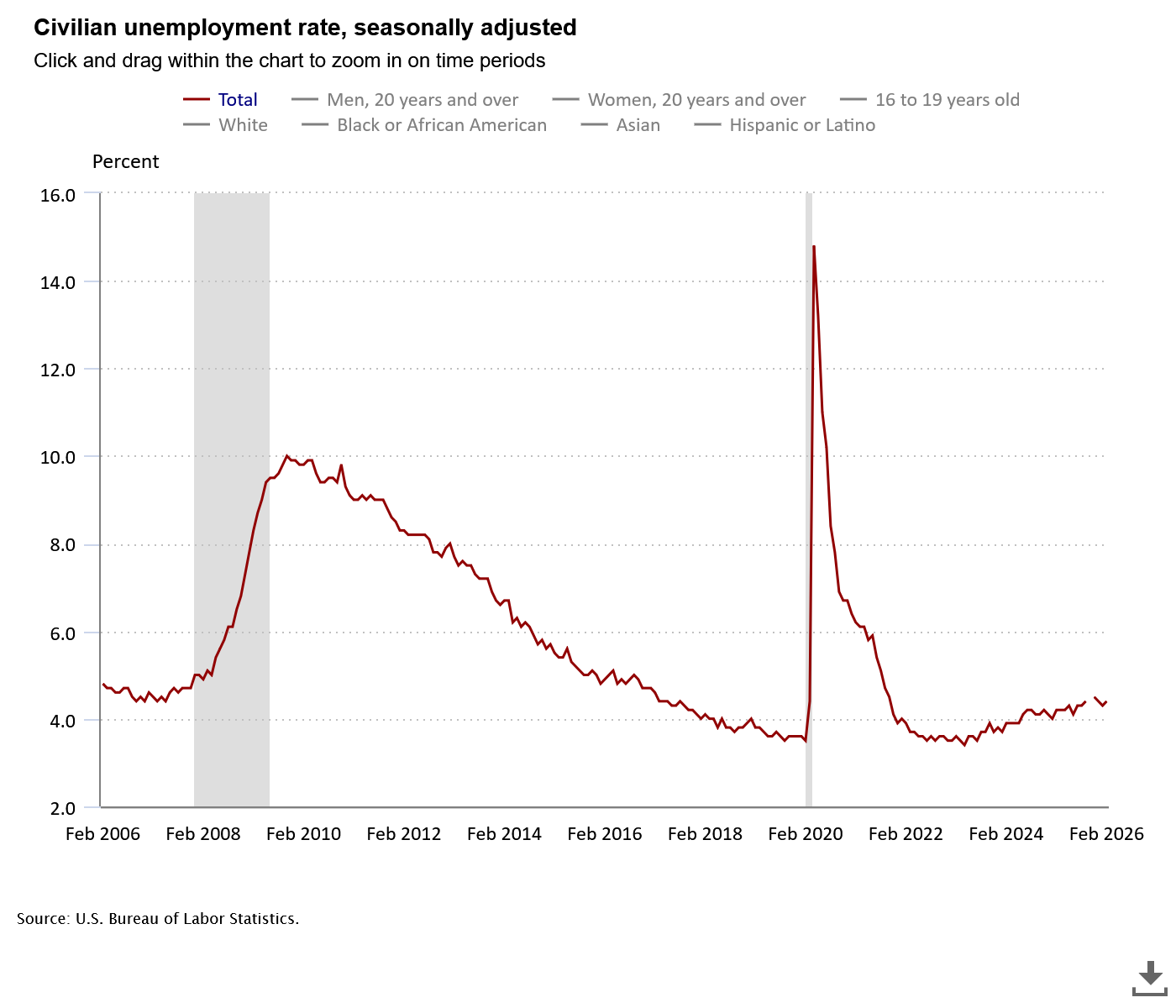
In fact, right now the job market is pretty badfor recent graduates—while usually unemployment for recent college grads is lower than that of the general population, since about 2018 it has actually been higher. (It’s no longer sky-high like it was during COVID; 4.8% is not bad in the scheme of things.)

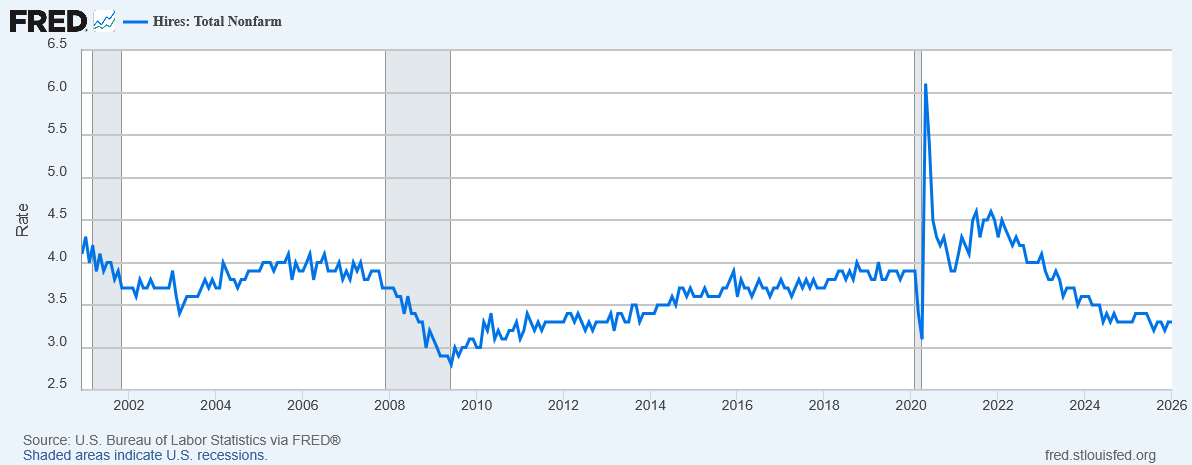
Actually the job market may even be worse than it looks, because new hires are actually the lowest rate they’ve been since 2020. Our relatively low unemployment currently seems to reflect a lack of layoffs, not a healthy churn of people entering and leaving jobs. People seem to be locked into their jobs, and if they do leave them, finding another is quite difficult.

What I think we need is a system that makes the government take on more of the risk, instead of the students.

There are lots of ways to do this. Actually, the income-based repayment systems we used to have weren’t too bad.

But there is actually a way to do it without student loans at all. College could be free, paid for by taxes.


Now, I know what you’re thinking: Isn’t this unfair to people who didn’t go to college? Why should they have to pay?

Who said they were paying?

There could simply be a portion of the income tax that you only pay if you have a bachelor’s degree. Then you would only pay this tax if you both graduated from college and make a lot of money.

I don’t think this would create a strong incentive not to get a bachelor’s degree; the benefits of doing so remain quite large, even if your taxes were a bit higher as a result.

It might create incentives to major in subjects that aren’t as closely linked to higher earnings—liberal arts instead of engineering, medicine, law, or business. But this I see as fundamentally a public good: The world needs people with liberal arts education. If the market fails to provide for them, the government should step in.

This plan is not as progressive as Elizabeth Warren’s proposal to use wealth taxes to fund free college; but it might be more politically feasible. The argument that people who didn’t go to college shouldn’t have to pay for people who did actually seems reasonable to me; but this system would ensure that in fact they don’t.

The transfer of wealth here would be from people who went to college and make a lot of money to people who went to college and don’t make a lot of money. It would be the government bearing some of the financial risk of taking on a career in an uncertain world.

Conflict without shared reality

Aug 17 JDN 2460905

Donald Trump has federalized the police in Washington D.C. and deployed the National Guard. He claims he is doing this in response to a public safety emergency and crime that is “out of control”.

Crime rates in Washington, D.C. are declining and overall at their lowest level in 30 years. Its violent crime rate has not been this low since the 1960s.

By any objective standard, there is no emergency here. Crime in D.C. is not by any means out of control.

Indeed, across the United States, homicide rates are as low as they have been in 60 years.

But we do not live in a world where politics is based on objective truth.

We live in a world where the public perception of reality itself is shaped by the political narrative.

One of the first things that authoritarians do to control these narratives is try to make their followers distrust objective sources. I watch in disgust as not simply the Babylon Bee (which is a right-wing satire site that tries really hard to be funny but never quite manages it) but even the Atlantic (a mainstream news outlet generally considered credible) feeds—in multiple articles—into this dangerous lie that crime is increasing and the official statistics are somehow misleading us about that.

Of course the Atlantic‘s take is much more nuanced; but quite frankly, now is not the time for nuance. A fascist is trying to take over our government, and he needs to be resisted at every turn by every means possible. You need to be calling him out on every single lie he makes—yes, every single one, I know there are a lot of them, and that’s kind of the point—rather than trying to find alternative framings on which maybe part of what he said could somehow be construed as reasonable from a certain point of view. Every time you make Trump sound more reasonable than he is—and mainstream news outlets have done this literally hundreds of times—you are pushing America closer to fascism.

I really don’t know what to do here.

It is impossible to resolve conflicts when they are not based on shared reality.

No policy can solve a crime wave that doesn’t exist. No trade agreement can stop unfair trading practices that aren’t happening. Nothing can stop vaccines from causing autism that they already don’t cause. There is no way to fix problems when those problems are completely imaginary.

I used to think that political conflict was about different values which had to be balanced against one another: Liberty versus security, efficiency versus equality, justice versus mercy. I thought that we all agreed on the basic facts and even most of the values, and were just disagreeing about how to weigh certain values over others.

Maybe I was simply naive; maybe it’s never been like that. But it certainly isn’t right now. We aren’t disagreeing about what should be done; we are disagreeing about what is happening in front of our eyes. We don’t simply have different priorities or even different values; it’s like we are living in different worlds.

I have read, e.g. by Jonathan Haidt, that conservatives largely understand what liberals want, but liberals don’t really understand what conservatives want. (I would like to take one of the tests they use in these experiments, see how I actually do; but I’ve never been able to find one.)

Haidt’s particular argument seems to be that liberals don’t “understand” the “moral dimensions” of loyalty, authority, and sanctity, because we only “understand” harm and fairness as the basis of morality. But just because someone says something is morally relevant, that doesn’t mean it is morally relevant! And indeed, based on more or less the entirety of ethical philosophy, I can say that harm and fairness are morality, and the others simply aren’t. They are distortions of morality, they are inherently evil, and we are right to oppose them at every turn. Loyalty, authority, and sanctity are what fed Nazi Germany and the Spanish Inquisition.

This claim that liberals don’t understand conservatives has always seemed very odd to me: I feel like I have a pretty clear idea what conservatives want, it’s just that what they want is terrible: Kick out the immigrants, take money from the poor and give it to the rich, and put rich straight Christian White men back in charge of everything. (I mean, really, if that’s not what they want, why do they keep voting for people who do it? Revealed preferences, people!)

Or, more sympathetically: They want to go back to a nostalgia-tinted vision of the 1950s and 1960s in which it felt like things were going well for our country—because they were blissfully ignorant of all the violence and injustice in the world. No, thank you, Black people and queer people do not want to go back to how we were treated in the 1950s—when segregation was legal and Alan Turing was chemically castrated. (And they also don’t seem to grasp that among the things that did make some things go relatively well in that period were unions, antitrust law and progressive taxes, which conservatives now fight against at every turn.)

But I think maybe part of what’s actually happening here is that a lot of conservatives actually “want” things that literally don’t make sense, because they rest upon assumptions about the world that simply aren’t true.

They want to end “out of control” crime that is the lowest it’s been in decades.

They want to stop schools from teaching things that they already aren’t teaching.

They want the immigrants to stop bringing drugs and crime that they aren’t bringing.

They want LGBT people to stop converting their children, which we already don’t and couldn’t. (And then they want to do their own conversions in the other direction—which also don’t work, but cause tremendous harm.)

They want liberal professors to stop indoctrinating their students in ways we already aren’t and can’t. (If we could indoctrinate our students, don’t you think we’d at least make them read the syllabus?)

They want to cut government spending by eliminating “waste” and “fraud” that are trivial amounts, without cutting the things that are actually expensive, like Social Security, Medicare, and the military. They think we can balance the budget without cutting these things or raising taxes—which is just literally mathematically impossible.

They want to close off trade to bring back jobs that were sent offshore—but those jobs weren’t sent offshore, they were replaced by robots. (US manufacturing output is near its highest ever, even though manufacturing employment is half what it once was.)


And meanwhile, there’s a bunch of real problems that aren’t getting addressed: Soaring inequality, a dysfunctional healthcare system, climate change, the economic upheaval of AI—and they either don’t care about those, aren’t paying attention to them, or don’t even believe they exist.

It feels a bit like this:

You walk into a room and someone points a gun at you, shouting “Drop the weapon!” but you’re not carrying a weapon. And you show your hands, and try to explain that you don’t have a weapon, but they just keep shouting “Drop the weapon!” over and over again. Someone else has already convinced them that you have a weapon, and they expect you to drop that weapon, and nothing you say can change their mind about this.

What exactly should you do in that situation?

How do you avoid getting shot?

Do you drop something else and say it’s the weapon (make some kind of minor concession that looks vaguely like what they asked for)? Do you try to convince them that you have a right to the weapon (accept their false premise but try to negotiate around it)? Do you just run away (leave the country?)? Do you double down and try even harder to convince them that you really, truly, have no weapon?

I’m not saying that everyone on the left has a completely accurate picture of reality; there are clearly a lot of misconceptions on this side of the aisle as well. But at least among the mainstream center left, there seems to be a respect for objective statistics and a generally accurate perception of how the world works—the “reality-based community”. Sometimes liberals make mistakes, have bad ideas, or even tell lies; but I don’t hear a lot of liberals trying to fix problems that don’t exist or asking for the government budget to be changed in ways that violate basic arithmetic.

I really don’t know what do here, though.

How do you change people’s minds when they won’t even agree on the basic facts?

Wage-matching and the collusion under our noses

Jul 20 JDN 2460877

It was a minor epiphany for me when I learned, over the course of studying economics, that price-matching policies, while they seem like they benefit consumers, actually are a brilliant strategy for maintaining tacit collusion.

Consider a (Bertrand) market, with some small number n of firms in it.

Each firm announces a price, and then customers buy from whichever firm charges the lowest price. Firms can produce as much as they need to in order to meet this demand. (This makes the most sense for a service industry rather than as literal manufactured goods.)

In Nash equilibrium, all firms will charge the same price, because anyone who charged more would sell nothing. But what will that price be?

In the absence of price-matching, it will be just above the marginal cost of the service. Otherwise, it would be advantageous to undercut all the other firms by charging slightly less, and you could still make a profit. So the equilibrium price is basically the same as it would be in a perfectly-competitive market.

But now consider what happens if the firms can announce a price-matching policy.

If you were already planning on buying from firm 1 at price P1, and firm 2 announces that you can buy from them at some lower price P2, then you still have no reason to switch to firm 2, because you can still get price P2 from firm 1 as long as you show them the ad from the other firm. Under the very reasonable assumption that switching firms carries some cost (if nothing else, the effort of driving to a different store), people won’t switch—which means that any undercut strategy will fail.

Now, firms don’t need to set such low prices! They can set a much higher price, confident that if any other firm tries to undercut them, it won’t actually work—and thus, no one will try to undercut them. The new Nash equilibrium is now for the firms to charge the monopoly price.

In the real world, it’s a bit more complicated than that; for various reasons they may not actually be able to sustain collusion at the monopoly price. But there is considerable evidence that price-matching schemes do allow firms to charge a higher price than they would in perfect competition. (Though the literature is not completely unanimous; there are a few who argue that price-matching doesn’t actually facilitate collusion—but they are a distinct minority.)

Thus, a policy that on its face seems like it’s helping consumers by giving them lower prices actually ends up hurting them by giving them higher prices.

Now I want to turn things around and consider the labor market.

What would price-matching look like in the labor market?

It would mean that whenever you are offered a higher wage at a different firm, you can point this out to the firm you are currently working at, and they will offer you a raise to that new wage, to keep you from leaving.

That sounds like a thing that happens a lot.

Indeed, pretty much the best way to get a raise, almost anywhere you may happen to work, is to show your employer that you have a better offer elsewhere. It’s not the only way to get a raise, and it doesn’t always work—but it’s by far the most reliable way, because it usually works.

This for me was another minor epiphany:

The entire labor market is full of tacit collusion.

The very fact that firms can afford to give you a raise when you have an offer elsewhere basically proves that they weren’t previously paying you all that you were worth. If they had actually been paying you your value of marginal product as they should in a competitive labor market, then when you showed them a better offer, they would say: “Sorry, I can’t afford to pay you any more; good luck in your new job!”

This is not a monopoly price but a monopsonyprice (or at least something closer to it); people are being systematically underpaid so that their employers can make higher profits.

And since the phenomenon of wage-matching is so ubiquitous, it looks like this is happening just about everywhere.

This simple model doesn’t tell us how much higher wages would be in perfect competition. It could be a small difference, or a large one. (It likely varies by industry, in fact.) But the simple fact that nearly every employer engages in wage-matching implies that nearly every employer is in fact colluding on the labor market.

This also helps explain another phenomenon that has sometimes puzzled economists: Why doesn’t raising the minimum wage increase unemployment? Well, it absolutely wouldn’t, if all the firms paying minimum wage are colluding in the labor market! And we already knew that most labor markets were shockingly concentrated.

What should be done about this?

Now there we have a thornier problem.

I actually think we could implement a law against price-matching on product and service markets relatively easily, since these are generally applied to advertised prices.

But a law against wage-matching would be quite tricky indeed. Wages are generally not advertised—a problem unto itself—and we certainly don’t want to ban raises in general.

Maybe what we should actually do is something like this: Offer a cash bonus (refundable tax credit?) to anyone who changes jobs in order to get a higher wage. Make this bonus large enough to offset the costs of switching jobs—which are clearly substantial. Then, the “undercut” (“overcut”?) strategy will become more effective; employers will have an easier time poaching workers from each other, and a harder time sustaining collusive wages.

Businesses would of course hate this policy, and lobby heavily against it. This is precisely the reaction we should expect if they are relying upon collusion to sustain their profits.

Toward a positive vision of the future

Jun 22 JDN 2460849

Things look pretty bleak right now. Wildfires rage across Canada, polluting the air across North America. Russia is still at war with Ukraine, and Israel seems to be trying to start a war with Iran. ICE continues sending agents without badges to kidnap people in unmarked vehicles and sending them to undisclosed locations. Climate change is getting worse, and US policy is pivoting from subsidizing renewables back to subsidizing fossil fuels. And Trump, now revealed to be a literal fascist, is still President.

But things can get better.

I can’t guarantee that they will, nor can I say when; but there is still hope that a better future is possible.

It has been very difficult to assemble a strong coalition against the increasingly extreme far-right in this country (epitomized by Trump). This seems odd, when most Americans hold relatively centrist views. Yes, more Americans identify as conservative than as liberal, but Trump isn’t a conservative; he’s a radical far-right fascist. Trump recently gave a speech endorsing ethnic cleansing, for goodness’ sake! I’m liberal, but I’d definitely vote for a conservative like Mitt Romney rather than a Stalinist! So why are “conservatives” voting for a fascist?

But setting aside the question of why people voted for Trump, we still have the question of why the left has not been able to assemble a strong coalition against him.

I think part of the problem is that the left really has two coalitions within it: The center left, who were relatively happy with the status quo before Trump and want to go back to that; and the far left, who were utterly unhappy with that status quo and want radical change. So while we all agree that Trump is awful, we don’t really agree on what he’s supposed to be replaced with.

It’s of course possible to be in between, and indeed I would say that I am. While clearly things were better under Obama and Biden than they have been under Trump, there were still a lot of major problems in this country that should have been priorities for national policy but weren’t:

  1. Above all, climate change—the Democrats at least try to do something against it, but not nearly enough. Our carbon emissions are declining, but it’s very unclear if we’ll actually hit our targets. The way we have been going, we’re in for a lot more hurricanes and wildfires and droughts.
  2. Housing affordability is still an absolute crisis; half of renters spend more than the targeted 30% of their income on housing, and a fourth spend more than 50%.Homelessness is now at a record high.
  3. Healthcare is still far too expensive in this country; we continue to spend far more than other First World countries without getting meaningfully better care.
  4. While rights and protections for LGB people have substantially improved in the last 30 years, rights and protections for trans people continue to lag behind.
  5. Racial segregation in housing remains the de facto norm, even though it is de jure illegal.
  6. Livestock remain exempted from the Animal Welfare Act and in 2002 laboratory rats and mice were excluded as well, meaning that cruel or negligent treatment which would be illegal for cats and dogs is still allowed on livestock and lab rats.
  7. Income and wealth inequality in this country remains staggeringly high, and the super-rich continue to gain wealth at a terrifying rate.
  8. Our voting system is terrible—literally the worst possible system that can technically still be considered democracy.

This list is by no means exhaustive, but these are the issues that seem most salient to me.

2 and 3 both clearly showed up in my Index of Necessary Expenditure; these costs were the primary reason why raising a family of 4 was unaffordable on a median household income.

So it isn’t right to say that I was completely happy with how things were going before. But I still think of myself as center left, because I don’t believe we need to tear everything down and start over.

I have relatively simple recommendations that would go a long way toward solving all 8 of these problems:

Climate change could be greatly mitigated if we’d just tax carbon already, or implement a cap-and-trade system like California’s nationwide. If that’s too politically unpalatable, subsidize nuclear power, fusion research, and renewables instead. That’s way worse from a budget perspective, but for some reason Americans are just fanatically opposed to higher gas prices.

Housing affordability is politically thorny, but economically quite simple: Build more housing. Whatever we have to do to make that happen, we should do it. Maybe this involves changes to zoning or other regulations. Maybe it involves subsidies to developers. Maybe it involves deploying eminent domain to build public housing. Maybe it involves using government funds to build housing and then offering it for sale on the market. But whatever we do, we need more housing.

Healthcare costs are a trickier one; Obamacare helped, but wasn’t enough. I think what I would like to see next is an option to buy into Medicare; before you are old enough to get it for free, you can pay a premium to be covered by it. Because Medicare is much more efficient than private insurance, you could pay a lower premium and get better coverage, so a lot of people would likely switch (which is of course exactly why insurance companies would fight the policy at every turn). Even putting everyone on Medicare might not be enough; to really bring costs down, we may need to seriously address the fact that US doctors, particularly specialists, are just radically higher-paid than any other doctors in the world. Is an American doctor who gets $269,000 per year really 88% better than a French doctor who gets $143,000?

The policies we need for LGBT rights are mostly no-brainers.

Okay, I can admit to some reasonable nuance when it comes to trans women in pro sports (the statistical advantages they have over cis women are not as clear-cut as many people think, but they do seem to exist; average athletic performance for trans women seems to be somewhere in between the average for cis men and the average for cis women), but that’s really not a very important issue. Like, seriously, why do we care so much about pro sports? Either let people play sports according to their self-identified gender, or make the two options “cis women” and “other” and let trans people play the latter. And you can do the same thing with school sports, or you can eliminate them entirely because they are a stupid waste of academic resources; but either way this should not be considered a top priority policy question. (If parents want their kids to play sports, they can form their own leagues; the school shouldn’t be paying for it. Winning games is not one of the goals of an academic institution. If you want kids to get more exercise, give them more recess and reform the physical education system so it isn’t so miserable for the kids who need it most.)

But there is absolutely no reason not to let people use whatever pronouns and bathrooms they want; indeed, there doesn’t really seem to be a compelling reason to gender-segregate bathrooms in the first place, and removing that segregation would most benefit women, who often have to wait much longer in line for the bathroom. (The argument that this somehow protects women never made sense to me; if a man wants to assault women in the bathroom, what’s to stop him from just going into the women’s bathroom? It’s not like there’s a magic field that prevents men from entering. He’s already planning on committing a crime, so it doesn’t seem like he’s very liable to held back by social norms. It’s worthwhile to try to find ways to prevent sexual assault, but segregating bathrooms does little or nothing toward that goal—and indeed, trans-inclusive bathrooms do not statistically correlate with higher rates of sexual assault.) But okay, fine, if you insist on having the segregation, at least require gender-neutral bathrooms as well. This is really not that difficult; it’s pretty clearly bigotry driving this, not serious policy concerns.

Not exempting any vertebrate animals from anti-cruelty legislation is an incredibly simple thing to do, obviously morally better, and the only reason we’re not doing it is that it would hurt agribusinesses and make meat more expensive. There is literally zero question what the morally right thing to do here is; the question is only how to get people to actually do that morally right thing.

Finally, how do we fix income inequality? Some people—including some economists—treat this as a very complicated, difficult question, but I don’t think it is. I think the really simple, obvious answer is actually the correct one: Tax rich people more, and use the proceeds to help poor people. We should be taxing the rich a lot more; I want something like the revenue-maximizing rate, estimated at about 70%. (And an even higher rate like the 90% we had in the 1950s is not out of the question.) These funds could either provide services like education and healthcare, or they could simply be direct cash transfers. But one way or another, the simplest, most effective way to reduce inequality is to tax the rich and help the poor. A lot of economists fear that this would hurt the overall economy, but particularly if these rates are really targeted at the super-rich (the top 0.01%), I don’t see how they could, because all those billions of dollars are very clearly monopoly rents rather than genuine productivity. If anything, making it harder to amass monopoly rents should make the economy more efficient. And taking say 90% of the roughly 10% return just the top 400 billionaires make on their staggering wealth would give us an additional $480 billion per year.

Fixing our voting system is also quite straightforward. Ranked-choice voting would be a huge improvement, and has already been implemented successfully in several states. Even better would be range voting, but so far very few places have been bold enough to actually try it. But even ranked-choice voting would remove most of the terrible incentives that plurality voting creates, and likely allow us to move beyond the two-party system into a much more representative multiparty system.

None of this requires overthrowing the entire system or dismantling capitalism.

That is, we can have a positive vision of the future that doesn’t require revolution or radical change.

Unfortunately, there’s still a very good chance we’ll do none of it.

Patriotism for dark times

May 18 JDN 2460814

These are dark times indeed. ICE is now arresting people without warrants, uniforms or badges and detaining them in camps without lawyers or trials. That is, we now have secret police who are putting people in concentration camps. Don’t mince words here; these are not “arrests” or “deportations”, because those actions would require warrants and due process of law.

Fascism has arrived in America, and, just as predicted, it is indeed wrapped in the flag.

I don’t really have anything to say to console you about this. It’s absolutely horrific, and the endless parade of ever more insane acts and violations of civil rights under Trump’s regime has been seriously detrimental to my own mental health and that of nearly everyone I know.

But there is something I do want to say:

I believe the United States of America is worth saving.

I don’t think we need to burn it all down and start with something new. I think we actually had something pretty good here, and once Trump is finally gone and we manage to fix some of the tremendous damage he has done, I believe that we can put better safeguards in place to stop something like this from happening again.

Of course there are many, many ways that the United States could be made better—even before Trump took the reins and started wrecking everything. But when we consider what we might have had instead, the United States turns out looking a lot better than most of the alternatives.

Is the United States especially evil?

Every nation in the world has darkness in its history. The United States is assuredly no exception: Genocide against Native Americans, slavery, Jim Crow, and the Japanese internment to name a few. (I could easily name many more, but I think you get the point.) This country is certainly responsible for a great deal of evil.

But unlike a lot of people on the left, I don’t think the United States is uniquely or especially evil. In fact, I think we have quite compelling reasons to think that the United States overall has been especially good, and could be again.

How can I say such a thing about a country that has massacred natives, enslaved millions, and launched a staggering number of coups?

Well, here’s the thing:

Every country’s history is like that.

Some are better or worse than others, but it’s basically impossible to find a nation on Earth that hasn’t massacred, enslaved, or conquered another group—and often all three. I guess maybe some of the very youngest countries might count, those that were founded by overthrowing colonial rule within living memory. But certainly those regions and cultures all had similarly dark pasts.

So what actually makes the United States different?

What is distinctive about the United States, relative to other countries? It’s large, it’s wealthy, it’s powerful; that is certainly all true. But other nations and empires have been like that—Rome once was, and China has gained and lost such status multiple times throughout its long history.

Is it especially corrupt? No, its corruption ratings are on a par with other First World countries.

Is it especially unequal? Compared to the rest of the First World, certainly; but by world standards, not really. (The world is a very unequal place.)

But there are two things about the United States that really do seem unique.

The first is how the United States was founded.

Some countries just sort of organically emerged. They were originally tribes that lived in that area since time immemorial, and nobody really knows when they came about; they just sort of happened.

Most countries were created by conquering or overthrowing some other country. Usually one king wanted some territory that was held by another king, so he gathered an army and took over that territory and said it was his now. Or someone who wasn’t a king really wanted to become one, so he killed the current king and took his place on the throne.

And indeed, for most of history, most nations have been some variant of authoritarianism. Monarchy was probably the most common, but there were also various kinds of oligarchy, and sometimes military dictatorship. Even Athens, the oldest recorded “democracy”, was really an oligarchy of Greek male property owners. (Granted, the US also started out pretty much the same way.)

I’m glossing over a huge amount of variation and history here, of course. But what I really want to get at is just how special the founding of the United States was.

The United States of America was the first country on Earth to be designed.

Up until that point, countries just sort of emerged, or they governed however their kings wanted, or they sort of evolved over time as different interest groups jockeyed for control of the oligarchy.

But the Constitution of the United States was something fundamentally new. A bunch of very smart, well-read, well-educated people (okay, mostly White male property owners, with a few exceptions) gathered together to ask the bold question: “What is the best way to run a country?”

And they discussed and argued and debated over this, sometimes finding agreement, other times reaching awkward compromises that no one was really satisfied with. But when the dust finally settled, they had a blueprint for a better kind of nation. And then they built it.

This was a turning point in human history.

Since then, hundreds of constitutions have been written, and most nations on Earth have one of some sort (and many have gone through several). We now think of writing a constitution as what you do to make a country. But before the United States, it wasn’t! A king just took charge and did whatever he wanted! There were no rules; there was no document telling him what he could and couldn’t do.

Most countries for most of history really only had one rule:

L’Etat, c’est moi.

Yes, there was some precedent for a constitution, even going all the way back to the Magna Carta; but that wasn’t created when England was founded, it was foisted upon the king after England had already been around for centuries. And it was honestly still pretty limited in how it restricted the king.

Now, it turns out that the Founding Fathers made a lot of mistakes in designing the Constitution; but I think this is quite forgivable, for two reasons:

  1. They were doing this for the first time. Nobody had ever written a constitution before! Nobody had governed a democracy (even of the White male property-owner oligarchy sort) in centuries!
  2. They knew they would make mistakes—and they included in the Constitution itself a mechanism for amending it to correct those mistakes.

And amend it we have, 27 times so far, most importantly the Bill of Rights and the Fifteenth and Nineteenth Amendments, which together finally created true universal suffrage—a real democracy. And even in 1920 when the Nineteenth Amendment was passed, this was an extremely rare thing. Many countries had followed the example of the United States by now, but only a handful of them granted voting rights to women.

The United States really was a role model for modern democracy. It showed the world that a nation governed by its own people could be prosperous and powerful.

The second is how the United States expanded its influence.

Many have characterized the United States as an empire, because its influence is so strongly felt around the world. It is undeniably a hegemon, at least.

The US military is the world’s most powerful, accounting for by far the highest spending (more than the next 9 countries combined!) and 20 of the world’s 51 aircraft carriers (China has 5—and they’re much smaller). (The US military is arguably not the largest since China has more soldiers and more ships. But US soldiers are much better trained and equipped, and the US Navy has far greater tonnage.) Most of the world’s currency exchange is done in dollars. Nearly all the world’s air traffic control is done in English. The English-language Internet is by far the largest, forming nearly the majority of all pages by itself. Basically every computer in the world either runs as its operating system Windows, Mac, or Linux—all of which were created in the United States. And since the US attained its hegemony after World War 2, the world has enjoyed a long period of relative peace not seen in centuries, sometimes referred to as the Pax Americana. These all sound like characteristics of an empire.

Yet if it is an empire, the United States is a very unusual one.

Most empires are formed by conquest: Rome created an empire by conquering most of Europe and North Africa. Britain created an empire by colonizing and conquering natives all around the globe.

Yet aside from the Native Americans (which, I admit, is a big thing to discount) and a few other exceptions, the United States engaged in remarkably little conquest. Its influence is felt as surely across the globe as Britain’s was at the height of the British Empire, yet where under Britain all those countries were considered holdings of the Crown (until they all revolted), under the Pax Americana they all have their own autonomous governments, most of them democracies (albeit most of them significantly flawed—including the US itself, these days).

That is, the United States does not primarily spread its influence by conquering other nations. It primarily spreads its influence through diplomacy and trade. Its primary methods are peaceful and mutually-beneficial. And the world has become tremendously wealthier, more peaceful, and all around better off because of this.

Yes, there are some nuances here: The US certainly has engaged in a large number of coups intended to decide what sort of government other countries would have, especially in Latin America. Some of these coups were in favor of democratic governments, which might be justifiable; but many were in favor of authoritarian governments that were simply more capitalist, which is awful. (Then again, while the US was instrumental in supporting authoritarian capitalist regimes in Chile and South Korea, those two countries did ultimately turn into prosperous democracies—especially South Korea.)

So it still remains true that the United States is guilty of many horrible crimes; I’m not disputing that. What I’m saying is that if any other nation had been in its place, things would most like have been worse. This is even true of Britain or France, which are close allies of the US and quite similar; both of these countries, when they had a chance at empire, took it by brutal force. Even Norway once had an empire built by conquest—though I’ll admit, that was a very long time ago.

I admit, it’s depressing that this is what a good nation looks like.

I think part of the reason why so many on the left imagine the United States to be uniquely evil is that they want to think that somewhere out there is a country that’s better than this, a country that doesn’t have staggering amounts of blood on its hands.

But no, this is pretty much as good as it gets. While there are a few countries with a legitimate claim to being better (mostly #ScandinaviaIsBetter), the vast majority of nations on Earth are not better than the United States; they are worse.

Humans have a long history of doing terrible things to other humans. Some say it’s in our nature. Others believe that it is the fault of culture or institutions. Likely both are true to some extent. But if you look closely into the history of just about anywhere on Earth, you will find violence and horror there.

What you won’t always find is a nation that marks a turning point toward global democracy, or a nation that establishes its global hegemony through peaceful and mutually-beneficial means. Those nations are few and far between, and indeed are best exemplified by the United States of America.