Compassion and the cosmos

Dec 24 JDN 2460304

When this post goes live, it will be Christmas Eve, one of the most important holidays around the world.

Ostensibly it celebrates the birth of Jesus, but it doesn’t really.

For one thing, Jesus almost certainly wasn’t born in December. The date of Christmas was largely set by the Council of Tours in AD 567; it was set to coincide with existing celebrations—not only other Christian celebrations such as the Feast of the Epiphany, but also many non-Christian celebrations such as Yuletide, Saturnalia, and others around the Winter Solstice. (People today often say “Yuletide” when they actually mean Christmas, because the syncretization was so absolute.)

For another, an awful lot of the people celebrating Christmas don’t particularly care about Jesus. Countries like Sweden, Belgium, the UK, Australia, Norway, and Denmark are majority atheist but still very serious about Christmas. Maybe we should try to secularize and ecumenize the celebration and call it Solstice or something, but that’s a tall order. For now, it’s Christmas.

Compassion, love, and generosity are central themes of Christmas—and, by all accounts, Jesus did exemplify those traits. Christianity has a very complicated history, much of it quite dark; but this part of it at least seems worth preserving and even cherishing.

It is truly remarkable that we have compassion at all.

Most of this universe has no compassion. Many would like to believe otherwise, and they invent gods and other “higher beings” or attribute some sort of benevolent “universal consciousness” to the cosmos. (Really, most people copy the prior inventions of others.)

This is all wrong.

The universe is mostly empty, and what is here is mostly pitilessly indifferent.

The vast majority of the universe is comprised of cold, dark, empty space—or perhaps of “dark energy“, a phenomenon we really don’t understand at all, which many physicists believe is actually a shockingly powerful form of energy contained within empty space.

Most of the rest is made up of “dark matter“, a substance we still don’t really understand either, but believe to be basically a dense sea of particles that have mass but not much else, which cluster around other mass by gravity but otherwise rarely interact with other matter or even with each other.

Most of the “ordinary matter”, or more properly baryonic matter, (which we think of as ordinary, but actually by far the minority) is contained within stars and nebulae. It is mostly hydrogen and helium. Some of the other lighter elements—like lithium, sodium, carbon, oxygen, nitrogen, and all the way up to iron—can be made within ordinary stars, but still form a tiny fraction of the mass of the universe. Anything heavier than that—silver, gold, beryllium, uranium—can only be made in exotic, catastrophic cosmic events, mainly supernovae, and as a result these elements are even rarer still.

Most of the universe is mind-bendingly cold: about 3 Kelvin, just barely above absolute zero.

Most of the baryonic matter is mind-bendingly hot, contained within stars that burn with nuclear fires at thousands or even millions of Kelvin.

From a cosmic perspective, we are bizarre.

We live at a weird intermediate temperature and pressure, where matter can take on such exotic states as liquid and solid, rather than the far more common gas and plasma. We do contain a lot of hydrogen—that, at least, is normal by the standards of baryonic matter. But then we’re also made up of oxygen, carbon, nitrogen, and even little bits of all sorts of other elements that can only be made in supernovae? What kind of nonsense lifeform depends upon something as exotic as iodine to survive?

Most of the universe does not care at all about you.

Most of the universe does not care about anything.

Stars don’t burn because they want to. They burn because that’s what happens when hydrogen slams into other hydrogen hard enough.

Planets don’t orbit because they want to. They orbit because if they didn’t, they’d fly away or crash into their suns—and those that did are long gone now.

Even most living things, which are already nearly as bizarre as we are, don’t actually care much.

Maybe there is a sense in which a C. elegans or an oak tree or even a cyanobacterium wants to live. It certainly seems to try to live; it has behaviors that seem purposeful, which evolved to promote its ability to survive and pass on offspring. Rocks don’t behave. Stars don’t seek. But living things—even tiny, microscopic living things—do.

But we are something very special indeed.

We are animals. Lifeforms with complex, integrated nervous systems—in a word, brains—that allow us to not simply live, but to feel. To hunger. To fear. To think. To choose.

Animals—and to the best of our knowledge, only animals, though I’m having some doubts about AI lately—are capable of making choices and experiencing pleasure and pain, and thereby becoming something more than living beings: moral beings.

Because we alone can choose, we alone have the duty to choose rightly.

Because we alone can be hurt, we alone have the right to demand not to be.

Humans are even very special among animals. We are not just animals but chordates; not just chordates but mammals; not just mammals but primates. And even then, not just primates. We’re special even by those very high standards.

When you count up all the ways that we are strange compared to the rest of the universe, it seems incredibly unlikely that beings like us would come into existence at all.

Yet here we are. And however improbable it may have been for us to emerge as intelligent beings, we had to do so in order to wonder how improbable it was—and so in some sense we shouldn’t be too surprised.

It is a mistake to say that we are “more evolved” than any other lifeform; turtles and cockroaches had just as much time to evolve as we did, and if anything their relative stasis for hundreds of millions of years suggests a more perfected design: “If it ain’t broke, don’t fix it.”

But we are different than other lifeforms in a very profound way. And I dare say, we are better.

All animals feel pleasure, pain and hunger. (Some believe that even some plants and microscopic lifeforms may too.) Pain when something damages you; hunger when you need something; pleasure when you get what you needed.

But somewhere along the way, new emotions were added: Fear. Lust. Anger. Sadness. Disgust. Pride. To the best of our knowledge, these are largely chordate emotions, often believed to have emerged around the same time as reptiles. (Does this mean that cephalopods never get angry? Or did they evolve anger independently? Surely worms don’t get angry, right? Our common ancestor with cephalopods was probably something like a worm, perhaps a nematode. Does C. elegans get angry?)

And then, much later, still newer emotions evolved. These ones seem to be largely limited to mammals. They emerged from the need for mothers to care for their few and helpless young. (Consider how a bear or a cat fiercely protects her babies from harm—versus how a turtle leaves her many, many offspring to fend for themselves.)

One emotion formed the core of this constellation:

Love.

Caring, trust, affection, and compassion—and also rejection, betrayal, hatred, and bigotry—all came from this one fundamental capacity to love. To care about the well-being of others as well as our own. To see our purpose in the world as extending beyond the borders of our own bodies.

This is what makes humans different, most of all. We are the beings most capable of love.

We are of course by no means perfect at it. Some would say that we are not even very good at loving.

Certainly there are some humans, such as psychopaths, who seem virtually incapable of love. But they are rare.

We often wish that we were better at love. We wish that there were more compassion in the world, and fear that humanity will destroy itself because we cannot find enough compassion to compensate for our increasing destructive power.

Yet if we are bad at love, compared to what?

Compared to the unthinking emptiness of space, the hellish nuclear fires of stars, or even the pitiless selfishness of a worm or a turtle, we are absolute paragons of love.

We somehow find a way to love millions of others who we have never even met—maybe just a tiny bit, and maybe even in a way that becomes harmful, as solidarity fades into nationalism fades into bigotry—but we do find a way. Through institutions of culture and government, we find a way to trust and cooperate on a scale that would be utterly unfathomable even to the most wise and open-minded bonobo, let alone a nematode.

There are no other experts on compassion here. It’s just us.

Maybe that’s why so many people long for the existence of gods. They feel as ignorant as children, and crave the knowledge and support of a wise adult. But there aren’t any. We’re the adults. For all the vast expanses of what we do not know, we actually know more than anyone else. And most of the universe doesn’t know a thing.

If we are not as good at loving as we’d like, the answer is for us to learn to get better at it.

And we know that we can get better at it, because we have. Humanity is more peaceful and cooperative now than we have ever been in our history. The process is slow, and sometimes there is backsliding, but overall, life is getting better for most people in most of the world most of the time.

As a species, as a civilization, we are slowly learning how to love ourselves, one another, and the rest of the world around us.

No one else will learn to love for us. We must do it ourselves.

But we can.

And I believe we will.
Lamentations of a temporary kludge

Dec 17 JDN 2460297

Most things in the universe are just that—things. They consist of inanimate matter, blindly following the trajectories the laws of physics have set them on. (Actually, most of the universe may not even be matter—at our current best guess, most of the universe is mysterious “dark matter” and even more mysterious “dark energy”).

Then there are the laws: The fundamental truths of physics and mathematics are omnipresent and eternal. They could even be called omniscient, in the sense that all knowledge which could ever be conveyed must itself be possible to encode in physics and mathematics. (Could, in some metaphysical sense, knowledge exist that cannot be conveyed this way? Perhaps, but if so, we’ll never know nor even be able to express it.)

The reason physics and mathematics cannot simply be called God is twofold: One, they have no minds of their own; they do not think. Two, they do not care. They have no capacity for concern whatsoever, no desires, no goals. Mathematics seeks neither your fealty nor your worship, and physics will as readily destroy you as reward you. If the eternal law is a god, it is a mindless, pitilessly indifferent god—a Blind Idiot God.

But we are something special, something in between. We are matter, yes; but we are also pattern. Indeed, what makes me me and makes you you has far more to do with the arrangement of trillions of parts than it does with any particular material. The atoms in your body are being continually replaced, and you barely notice. But should the pattern ever be erased, you would be no more.

In fact, we are not simply one pattern, but many. We are a kludge: Billions of years of random tinkering has assembled us from components that each emerged millions of years apart. We could move before we could see; we could see before we could think; we could think before we could speak. All this evolution was mind-bogglingly gradual: In most cases it would be impossible to tell the difference one generation—or even one century—to the next. Yet as raindrops wear away mountains, one by one, we were wrought from mindless fragments of chemicals into beings of thought, feeling, reason—beings with hopes, fears, and dreams.

Much of what makes our lives difficult ultimately comes from these facts.

Our different parts were not designed to work together. Indeed, they were not really designed at all. Each component survived because it worked well enough to stay alive in the environment in which our ancestors lived. We often find ourselves in conflict with our own desires, in part because those desires evolved for very different environments than the ones we now find ourselves—and in part because there is no particular reason for evolution to avoid conflict, so long as survival is achieved.

As patterns, we can experience the law. We can write down equations that express small pieces of the fundamental truths that exist throughout the universe beyond space and time. From “2+2=4” to Gμν + Λgμν = κTμν“, through mathematics, we glimpse eternity.

But as matter, we are doomed to suffer, degrade, and ultimately die. Our pattern cannot persist forever. Perhaps one day we will find a way to change this—and if that day comes, it will be a glorious day; I will make no excuses for the dragon. For now, at least, it is a truth that we must face: We, all we love, and all we build must one day perish.

That is, we are not simply a kludge; we are a temporary one. Sooner or later, our bodies will fail and our pattern will be erased. What we were made of may persist, but in a form that will no longer be us, and in time, may become indistinguishable from all the rest of the universe.

We are flawed, for the same reason that a crystal is flawed. A theoretical crystal can be flawless and perfect; but a real, physical one must exist in an actual world where it will suffer impurities and disturbances that keep it from ever truly achieving perfect unity and symmetry. We can imagine ourselves as perfect beings, but our reality will always fall short.

We lament that are not perfect, eternal beings. Yet I am not sure it could have been any other way: Perhaps one must be a temporary kludge in order to be a being at all.

What is anxiety for?

Sep 17 JDN 2460205

As someone who experiences a great deal of anxiety, I have often struggled to understand what it could possibly be useful for. We have this whole complex system of evolved emotions, and yet more often than not it seems to harm us rather than help us. What’s going on here? Why do we even have anxiety? What even is anxiety, really? And what is it for?

There’s actually an extensive body of research on this, though very few firm conclusions. (One of the best accounts I’ve read, sadly, is paywalled.)

For one thing, there seem to be a lot of positive feedback loops involved in anxiety: Panic attacks make you more anxious, triggering more panic attacks; being anxious disrupts your sleep, which makes you more anxious. Positive feedback loops can very easily spiral out of control, resulting in responses that are wildly disproportionate to the stimulus that triggered them.

A certain amount of stress response is useful, even when the stakes are not life-or-death. But beyond a certain point, more stress becomes harmful rather than helpful. This is the Yerkes-Dodson effect, for which I developed my stochastic overload model (which I still don’t know if I’ll ever publish, ironically enough, because of my own excessive anxiety). Realizing that anxiety can have benefits can also take some of the bite out of having chronic anxiety, and, ironically, reduce that anxiety a little. The trick is finding ways to break those positive feedback loops.

I think one of the most useful insights to come out of this research is the smoke-detector principle, which is a fundamentally economic concept. It sounds quite simple: When dealing with an uncertain danger, sound the alarm if the expected benefit of doing so exceeds the expected cost.

This has profound implications when risk is highly asymmetric—as it usually is. Running away from a shadow or a noise that probably isn’t a lion carries some cost; you wouldn’t want to do it all the time. But it is surely nowhere near as bad as failing to run away when there is an actual lion. Indeed, it might be fair to say that failing to run away from an actual lion counts as one of the worst possible things that could ever happen to you, and could easily be 100 times as bad as running away when there is nothing to fear.

With this in mind, if you have a system for detecting whether or not there is a lion, how sensitive should you make it? Extremely sensitive. You should in fact try to calibrate it so that 99% of the time you experience the fear and want to run away, there is not a lion. Because the 1% of the time when there is one, it’ll all be worth it.

Yet this is far from a complete explanation of anxiety as we experience it. For one thing, there has never been, in my entire life, even a 1% chance that I’m going to be attacked by a lion. Even standing in front of a lion enclosure at the zoo, my chances of being attacked are considerably less than that—for a zoo that allowed 1% of its customers to be attacked would not stay in business very long.

But for another thing, it isn’t really lions I’m afraid of. The things that make me anxious are generally not things that would be expected to do me bodily harm. Sure, I generally try to avoid walking down dark alleys at night, and I look both ways before crossing the street, and those are activities directly designed to protect me from bodily harm. But I actually don’t feel especially anxious about those things! Maybe I would if I actually had to walk through dark alleys a lot, but I don’t, and in the rare occasion I would, I think I’d feel afraid at the time but fine afterward, rather than experiencing persistent, pervasive, overwhelming anxiety. (Whereas, if I’m anxious about reading emails, and I do manage to read emails, I’m usually still anxious afterward.) When it comes to crossing the street, I feel very little fear at all, even though perhaps I should—indeed, it had been remarked that when it comes to the perils of motor vehicles, human beings suffer from a very dangerous lack of fear. We should be much more afraid than we are—and our failure to be afraid kills thousands of people.

No, the things that make me anxious are invariably social: Meetings, interviews, emails, applications, rejection letters. Also parties, networking events, and back when I needed them, dates. They involve interacting with other people—and in particular being evaluated by other people. I never felt particularly anxious about exams, except maybe a little before my PhD qualifying exam and my thesis defenses; but I can understand those who do, because it’s the same thing: People are evaluating you.

This suggests that anxiety, at least of the kind that most of us experience, isn’t really about danger; it’s about status. We aren’t worried that we will be murdered or tortured or even run over by a car. We’re worried that we will lose our friends, or get fired; we are worried that we won’t get a job, won’t get published, or won’t graduate.

And yet it is striking to me that it often feels just as bad as if we were afraid that we were going to die. In fact, in the most severe instances where anxiety feeds into depression, it can literally make people want to die. How can that be evolutionarily adaptive?

Here it may be helpful to remember that in our ancestral environment, status and survival were oft one and the same. Humans are the most social organisms on Earth; I even sometimes describe us as hypersocial, a whole new category of social that no other organism seems to have achieved. We cooperate with others of our species on a mind-bogglingly grand scale, and are utterly dependent upon vast interconnected social systems far too large and complex for us to truly understand, let alone control.

At this historical epoch, these social systems are especially vast and incomprehensible; but at least for most of us in First World countries, they are also forgiving in a way that is fundamentally alien to our ancestors’ experience. It was not so long ago that a failed hunt or a bad harvest would let your family starve unless you could beseech your community for aid successfully—which meant that your very survival could depend upon being in the good graces of that community. But now we have food stamps, so even if everyone in your town hates you, you still get to eat. Of course some societies are more forgiving (Sweden) than others (the United States); and virtually all societies could be even more forgiving than they are. But even the relatively cutthroat competition of the US today has far less genuine risk of truly catastrophic failure than what most human beings lived through for most of our existence as a species.

I have found this realization helpful—hardly a cure, but helpful, at least: What are you really afraid of? When you feel anxious, your body often tells you that the stakes are overwhelming, life-or-death; but if you stop and think about it, in the world we live in today, that’s almost never true. Failing at one important task at work probably won’t get you fired—and even getting fired won’t really make you starve.

In fact, we might be less anxious if it were! For our bodies’ fear system seems to be optimized for the following scenario: An immediate threat with high chance of success and life-or-death stakes. Spear that wild animal, or jump over that chasm. It will either work or it won’t, you’ll know immediately; it probably will work; and if it doesn’t, well, that may be it for you. So you’d better not fail. (I think it’s interesting how much of our fiction and media involves these kinds of events: The hero would surely and promptly die if he fails, but he won’t fail, for he’s the hero! We often seem more comfortable in that sort of world than we do in the one we actually live in.)

Whereas the life we live in now is one of delayed consequences with low chance of success and minimal stakes. Send out a dozen job applications. Hear back in a week from three that want to interview you. Do those interviews and maybe one will make you an offer—but honestly, probably not. Next week do another dozen. Keep going like this, week after week, until finally one says yes. Each failure actually costs you very little—but you will fail, over and over and over and over.

In other words, we have transitioned from an environment of immediate return to one of delayed return.

The result is that a system which was optimized to tell us never fail or you will die is being put through situations where failure is constantly repeated. I think deep down there is a part of us that wonders, “How are you still alive after failing this many times?” If you had fallen in as many ravines as I have received rejection letters, you would assuredly be dead many times over.

Yet perhaps our brains are not quite as miscalibrated as they seem. Again I come back to the fact that anxiety always seems to be about people and evaluation; it’s different from immediate life-or-death fear. I actually experience very little life-or-death fear, which makes sense; I live in a very safe environment. But I experience anxiety almost constantly—which also makes a certain amount of sense, seeing as I live in an environment where I am being almost constantly evaluated by other people.

One theory posits that anxiety and depression are a dual mechanism for dealing with social hierarchy: You are anxious when your position in the hierarchy is threatened, and depressed when you have lost it. Primates like us do seem to care an awful lot about hierarchies—and I’ve written before about how this explains some otherwise baffling things about our economy.

But I for one have never felt especially invested in hierarchy. At least, I have very little desire to be on top of the hiearchy. I don’t want to be on the bottom (for I know how such people are treated); and I strongly dislike most of the people who are actually on top (for they’re most responsible for treating the ones on the bottom that way). I also have ‘a problem with authority’; I don’t like other people having power over me. But if I were to somehow find myself ruling the world, one of the first things I’d do is try to figure out a way to transition to a more democratic system. So it’s less like I want power, and more like I want power to not exist. Which means that my anxiety can’t really be about fearing to lose my status in the hierarchy—in some sense, I want that, because I want the whole hierarchy to collapse.

If anxiety involved the fear of losing high status, we’d expect it to be common among those with high status. Quite the opposite is the case. Anxiety is more common among people who are more vulnerable: Women, racial minorities, poor people, people with chronic illness. LGBT people have especially high rates of anxiety. This suggests that it isn’t high status we’re afraid of losing—though it could still be that we’re a few rungs above the bottom and afraid of falling all the way down.

It also suggests that anxiety isn’t entirely pathological. Our brains are genuinely responding to circumstances. Maybe they are over-responding, or responding in a way that is not ultimately useful. But the anxiety is at least in part a product of real vulnerabilities. Some of what we’re worried about may actually be real. If you cannot carry yourself with the confidence of a mediocre White man, it may be simply because his status is fundamentally secure in a way yours is not, and he has been afforded a great many advantages you never will be. He never had a Supreme Court ruling decide his rights.

I cannot offer you a cure for anxiety. I cannot even really offer you a complete explanation of where it comes from. But perhaps I can offer you this: It is not your fault. Your brain evolved for a very different world than this one, and it is doing its best to protect you from the very different risks this new world engenders. Hopefully one day we’ll figure out a way to get it calibrated better.

The evolution of cuteness

Dec20 JDN 2459204

I thought I’d go for something a little more light-hearted for this week’s post. It’s been a very difficult year for a lot of people, though with Biden winning the election and the recent FDA approval of a COVID vaccine for emergency use, the light at the end of the tunnel is now visible. I’ve also had some relatively good news in my job search; I now have a couple of job interviews lined up for tenure-track assistant professor positions.

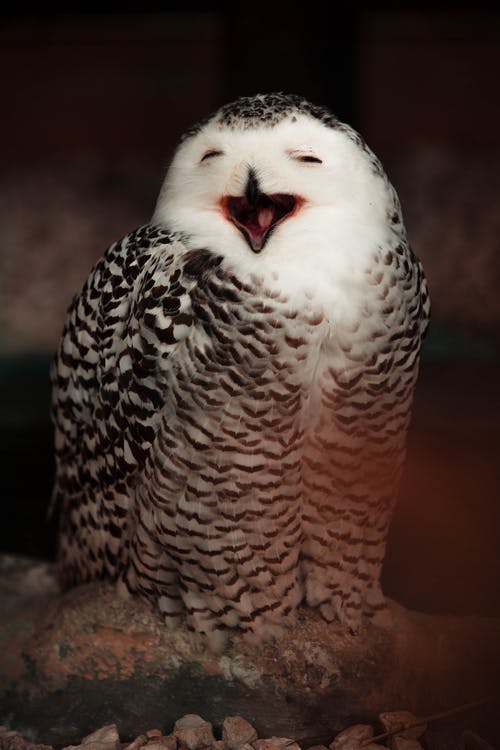
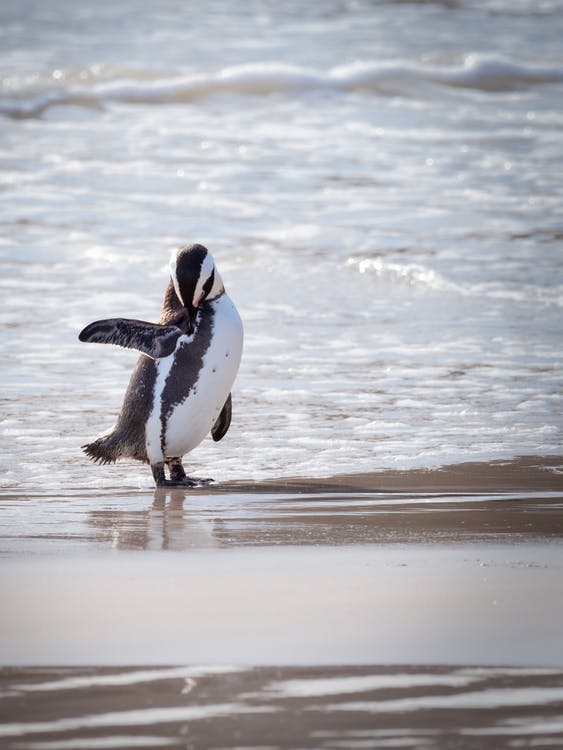
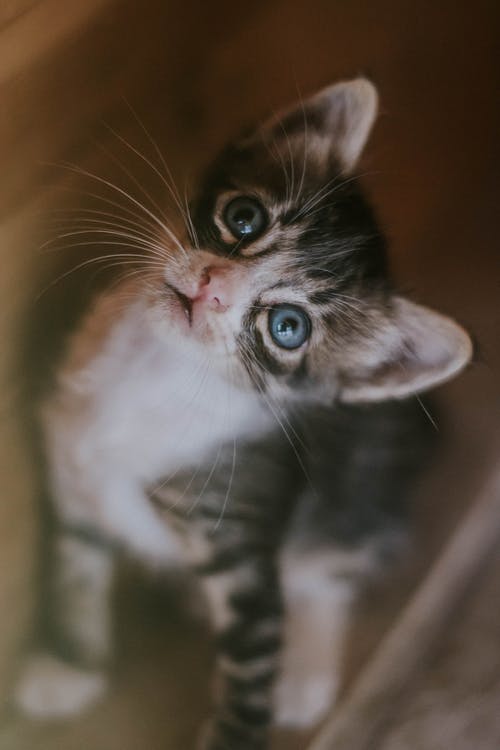
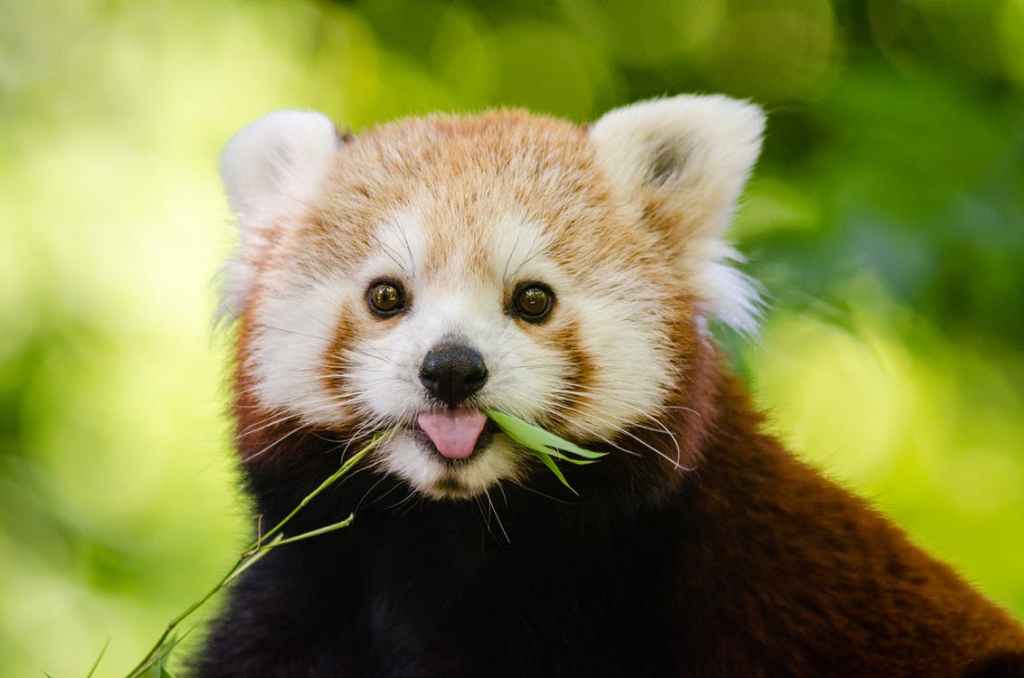
So rather than the usual economic and political topics, I thought I would focus today on cuteness. First of all, this allows me the opportunity to present you with a bunch of photos of cute animals (free stock photos brought to you by pexels.com):

Beyond the joy I hope this brings you in a dark time, I have a genuine educational purpose here, which is to delve into the surprisingly deep evolutionary question: Why does cuteness exist?

Well, first of all, what is cuteness? We evaluate a person or animal (or robot, or alien) as cute based on certain characteristics like wide eyes, a large head, a posture or expression that evokes innocence. We feel positive feelings toward that which we identify as cute, and we want to help them rather than harm them. We often feel protective toward them.

It’s not too hard to provide an evolutionary rationale for why we would find our own offspring cute: We have good reasons to want to protect and support our own offspring, and given the substantial amounts of effort involved in doing so, it behooves us to have a strong motivation for committing to doing so.

But it’s less obvious why we would feel this way about so many other things that are not human. Dogs and cats have co-evolved along with us as they became domesticated, dogs starting about 40,000 years ago and cats starting around 8,000 years ago. So perhaps it’s not so surprising that we find them cute as well: Becoming domesticated is, in many ways, simply the process of maximizing your level of cuteness so that humans will continue to feed and protect you.

But why are non-domesticated animals also often quite cute? That red panda, penguin, owl, and hedgehog are not domesticated; this is what they look like in the wild. And yet I personally find the red panda to be probably the cutest among an already very cute collection.

Some animals we do not find cute, or at least most people don’t. Here’s a collection of “cute snakes” that I honestly am not getting much cuteness reaction from. These “cute snails” work a little better, but they’re assuredly not as cute as kittens or red pandas. But honestly these “cute spiders” are doing a remarkably good job of it, despite the general sense I have (and I think I share with most people) that spiders are not generally cute. And while tentacles are literally the stuff of Lovecraftian nightmares, this “adorable octopus” lives up to the moniker.

The standard theory is that animals that we find cute are simply those that most closely resemble our own babies, but I don’t really buy it. Naked mole rats have their moments, but they are certainly not as cute as puppies or kittens, despite clearly bearing a closer resemblance to the naked wrinkly blob that most human infants look like. Indeed, I think it’s quite striking that babies aren’t really that cute; yes, some are, but many are not, and even the cutest babies are rarely as cute as the average kitten or red panda.

It actually seems to me more that we have some idealized concept of what a cute creature should look like, and maybe it evolved to reflect some kind of “optimal baby” of perfect health and vigor—but most of our babies don’t quite manage to meet that standard. Perhaps the cuteness of penguins or red pandas is sheer coincidence; out of the millions of animal species out there, some of them were bound to send our cuteness-detectors into overdrive. Dogs and cats, then, started as such coincidence—and then through domestication they evolved to fit our cuteness standard better and better, because this was in fact the primary determinant of their survival. That’s how you can get the adorable abomination that is a pug:

Such a creature would never survive in the wild, but we created it because we liked it (or enough of us did, anyway).

There are actually important reasons why having such a strong cuteness response could be maladaptive—we’re apex predators, after all. If finding animals cute prevents us from killing and eating them, that’s an important source of nutrition we are passing up. So whatever evolutionary pressure molded our cuteness response, it must be strong enough to overcome that risk.

Indeed, perhaps the cuteness of cats and dogs goes beyond not only coincidence but also the co-opting of an impulse to protect our offspring. Perhaps it is something that co-evolved in us for the direct purpose of incentivizing us to care for cats and dogs. It has been long enough for that kind of effect—we evolved our ability to digest wheat and milk in roughly the same time period. Indeed, perhaps the very cuteness response that makes us hesitant to kill a rabbit ourselves actually made us better at hunting rabbits, by making us care for dogs who could do the hunting even better than we could. Perhaps the cuteness of a mouse is less relevant to how we relate to mice than the cuteness of the cat who will have that mouse for dinner.

This theory is much more speculative, and I admit I don’t have very clear evidence of it; but let me at least say this: A kitten wouldn’t get cuter by looking more like a human baby. The kitten already seems quite well optimized for us to see it as cute, and any deviation from that optimum is going to be downward, not upward. Any truly satisfying theory of cuteness needs to account for that.

I also think it’s worth noting that behavior is an important element of cuteness; while a kitten will pretty much look cute no matter what it’s doing, where or not a snail or a bird looks cute often depends on the pose it is in.


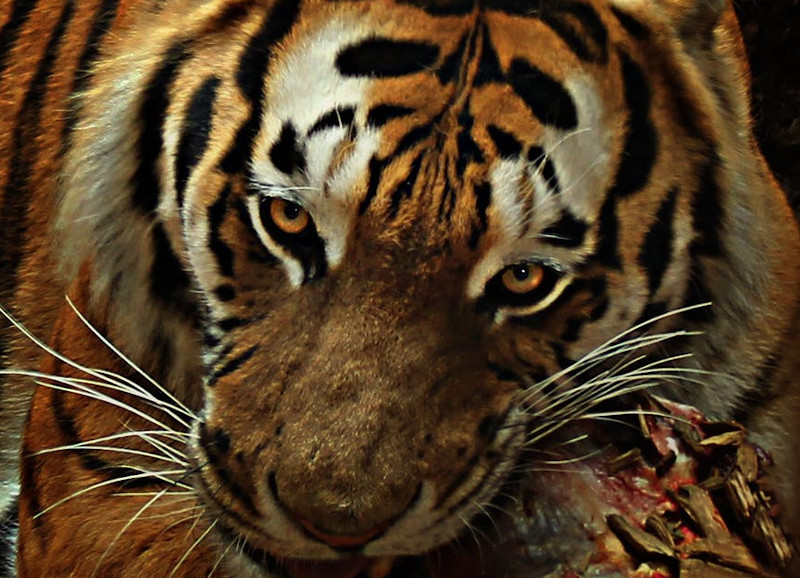
There is an elegance and majesty to the tiger below, but I wouldn’t call them cute; indeed, should you encounter either one in the wild, the correct response is for you to run for your life.

Cuteness is playful, innocent, or passive; aggressive and powerful postures rapidly undermine cuteness. A lion make look cute as it rubs against a tree—but not once it turns to you and roars.

The truth is, I’m not sure we fully grasp what is going on in our brains when we identify something as cute. But it does seem to brighten our days.

To a first approximation, all human behavior is social norms

Dec 15 JDN 2458833

The language we speak, the food we eat, and the clothes we wear—indeed, the fact that we wear clothes at all—are all the direct result of social norms. But norms run much deeper than this: Almost everything we do is more norm than not.

Why do sleep and wake up at a particular time of day? For most people, the answer is that they needed to get up to go to work. Why do you need to go to work at that specific time? Why does almost everyone go to work at the same time? Social norms.

Even the most extreme human behaviors are often most comprehensible in terms of social norms. The most effective predictive models of terrorism are based on social networks: You are much more likely to be a terrorist if you know people who are terrorists, and much more likely to become a terrorist if you spend a lot of time talking with terrorists. Cultists and conspiracy theorists seem utterly baffling if you imagine that humans form their beliefs rationally—and totally unsurprising if you realize that humans mainly form their beliefs by matching those around them.

For a long time, economists have ignored social norms at our peril; we’ve assumed that financial incentives will be sufficient to motivate behavior, when social incentives can very easily override them. Indeed, it is entirely possible for a financial incentive to have a negative effect, when it crowds out a social incentive: A good example is a friend who would gladly come over to help you with something as a friend, but then becomes reluctant if you offer to pay him $25. I previously discussed another example, where taking a mentor out to dinner sounds good but paying him seems corrupt.

Why do you drive on the right side of the road (or the left, if you’re in Britain)? The law? Well, the law is already a social norm. But in fact, it’s hardly just that. You probably sometimes speed or run red lights, which are also in violation of traffic laws. Yet somehow driving on the right side seem to be different. Well, that’s because driving on the right has a much stronger norm—and in this case, that norm is self-enforcing with the risk of severe bodily harm or death.

This is a good example of why it isn’t necessary for everyone to choose to follow a norm for that norm to have a great deal of power. As long as the norms include some mechanism for rewarding those who follow and punishing those who don’t, norms can become compelling even to those who would prefer not to obey. Sometimes it’s not even clear whether people are following a norm or following direct incentives, because the two are so closely aligned.

Humans are not the only social species, but we are by far the most social species. We form larger, more complex groups than any other animal; we form far more complex systems of social norms; and we follow those norms with slavish obedience. Indeed, I’m a little suspicious of some of the evolutionary models predicting the evolution of social norms, because they predict it too well; they seem to suggest that it should arise all the time, when in fact it’s only a handful of species who exhibit it at all and only we who build our whole existence around it.

Along with our extreme capacity for altruism, this is another way that human beings actually deviate more from the infinite identical psychopaths of neoclassical economics than most other animals. Yes, we’re smarter than other animals; other animals are more likely to make mistakes (though certainly we make plenty of our own). But most other animals aren’t motivated by entirely different goals than individual self-interest (or “evolutionary self-interest” in a Selfish Gene sort of sense) the way we typically are. Other animals try to be selfish and often fail; we try not to be selfish and usually succeed.

Economics experiments often go out of their way to exclude social motives as much as possible—anonymous random matching with no communication, for instance—and still end up failing. Human behavior in experiments is consistent, systematic—and almost never completely selfish.

Once you start looking for norms, you see them everywhere. Indeed, it becomes hard to see anything else. To a first approximation, all human behavior is social norms.

Creativity and mental illness

Dec 1 JDN 2458819

There is some truth to the stereotype that artistic people are crazy. Mental illnesses, particularly bipolar disorder, are overrepresented among artists, writers, and musicians. Creative people score highly on literally all five of the Big Five personality traits: They are higher in Openness, higher in Conscientiousness, higher in Extraversion (that one actually surprised me), higher in Agreeableness, and higher in Neuroticism. Creative people just have more personality, it seems.

But in fact mental illness is not as overrepresented among creative people as most people think, and the highest probability of being a successful artist occurs when you have close relatives with mental illness, but are not yourself mentally ill. Those with mental illness actually tend to be most creative when their symptoms are in remission. This suggests that the apparent link between creativity and mental illness may actually increase over time, as treatments improve and remission becomes easier.

One possible source of the link is that artistic expression may be a form of self-medication: Art therapy does seem to have some promise in treating a variety of mental disorders (though it is not nearly as effective as therapy and medication). And that wouldn’t explain why family history of mental illness is actually a better predictor of creativity than mental illness itself.

My guess is that in order to be creative, you need to think differently than other people. You need to see the world in a way that others do not see it. Mental illness is surely not the only way to do that, but it’s definitely one way.

But creativity also requires basic functioning: If you are totally crippled by a mental illness, you’re not going to be very creative. So the people who are most creative have just enough craziness to think differently, but not so much that it takes over their lives.

This might even help explain how mental illness persisted in our population, despite its obvious survival disadvantages. It could be some form of heterozygote advantage.

The classic example of heterozygote advantage is sickle-cell anemia: If you have no copies of the sickle-cell gene, you’re normal. If you have two copies, you have sickle-cell anemia, which is very bad. But if you have only one copy, you’re healthy—and you’re resistant to malaria. Thus, high risk of malaria—as we certainly had, living in central Africa—creates a selection pressure that keeps sickle-cell genes in the population, even though having two copies is much worse than having none at all.

Mental illness might function something like this. I suspect it’s far more complicated than sickle-cell anemia, which is literally just two alleles of a single gene; but the overall process may be similar. If having just a little bit of bipolar disorder or schizophrenia makes you see the world differently than other people and makes you more creative, there are lots of reasons why that might improve the survival of your genes: There are the obvious problem-solving benefits, but also the simple fact that artists are sexy.

The downside of such “weird-thinking” genes is that they can go too far and make you mentally ill, perhaps if you have too many copies of them, or if you face an environmental trigger that sets them off. Sometimes the reason you see the world differently than everyone else is that you’re just seeing it wrong. But if the benefits of creativity are high enough—and they surely are—this could offset the risks, in an evolutionary sense.

But one thing is quite clear: If you are mentally ill, don’t avoid treatment for fear it will damage your creativity. Quite the opposite: A mental illness that is well treated and in remission is the optimal state for creativity. Go seek treatment, so that your creativity may blossom.

The evolution of human cooperation

Jun 17 JDN 2458287

If alien lifeforms were observing humans (assuming they didn’t turn out the same way—which they actually might, for reasons I’ll get to shortly), the thing that would probably baffle them the most about us is how we organize ourselves into groups. Each individual may be part of several groups at once, and some groups are closer-knit than others; but the most tightly-knit groups exhibit extremely high levels of cooperation, coordination, and self-sacrifice.

They might think at first that we are eusocial, like ants or bees; but upon closer study they would see that our groups are not very strongly correlated with genetic relatedness. We are somewhat more closely related to those in our groups than to those outsides, usually; but it’s a remarkably weak effect, especially compared to the extremely high relatedness of worker bees in a hive. No, to a first approximation, these groups are of unrelated humans; yet their level of cooperation is equal to if not greater than that exhibited by the worker bees.

However, the alien anthropologists would find that it is not that humans are simply predisposed toward extremely high altruism and cooperation in general; when two humans groups come into conflict, they are capable of the most extreme forms of violence imaginable. Human history is full of atrocities that combine the indifferent brutality of nature red in tooth and claw with the boundless ingenuity of a technologically advanced species. Yet except for a small proportion perpetrated by individual humans with some sort of mental pathology, these atrocities are invariably committed by one unified group against another. Even in genocide there is cooperation.

Humans are not entirely selfish. But nor are they paragons of universal altruism (though some of them aspire to be). Humans engage in a highly selective form of altruism—virtually boundless for the in-group, almost negligible for the out-group. Humans are tribal.

Being a human yourself, this probably doesn’t strike you as particularly strange. Indeed, I’ve mentioned it many times previously on this blog. But it is actually quite strange, from an evolutionary perspective; most organisms are not like this.

As I said earlier, there is actually reason to think that our alien anthropologist would come from a species with similar traits, simply because such cooperation may be necessary to achieve a full-scale technological civilization, let alone the capacity for interstellar travel. But there might be other possibilities; perhaps they come from a eusocial species, and their large-scale cooperation is within an extremely large hive.

It’s true that most organisms are not entirely selfish. There are various forms of cooperation within and even across species. But these usually involve only close kin, and otherwise involve highly stable arrangements of mutual benefit. There is nothing like the large-scale cooperation between anonymous unrelated individuals that is exhibited by all human societies.

How would such an unusual trait evolve? It must require a very particular set of circumstances, since it only seems to have evolved in a single species (or at most a handful of species, since other primates and cetaceans display some of the same characteristics).

Once evolved, this trait is clearly advantageous; indeed it turned a local apex predator into a species so successful that it can actually intentionally control the evolution of other species. Humans have become a hegemon over the entire global ecology, for better or for worse. Cooperation gave us a level of efficiency in producing the necessities of survival so great that at this point most of us spend our time working on completely different tasks. If you are not a farmer or a hunter or a carpenter (and frankly, even if you are a farmer with a tractor, a hunter with a rifle, or a carpenter with a table saw), you are doing work that would simply not have been possible without very large-scale human cooperation.

This extremely high fitness benefit only makes the matter more puzzling, however: If the benefits are so great, why don’t more species do this? There must be some other requirements that other species were unable to meet.

One clear requirement is high intelligence. As frustrating as it may be to be a human and watch other humans kill each other over foolish grievances, this is actually evidence of how smart humans are, biologically speaking. We might wish we were even smarter still—but most species don’t have the intelligence to make it even as far as we have.

But high intelligence is likely not sufficient. We can’t be sure of that, since we haven’t encountered any other species with equal intelligence; but what we do know is that even Homo sapiens didn’t coordinate on anything like our current scale for tens of thousands of years. We may have had tribal instincts, but if so they were largely confined to a very small scale. Something happened, about 50,000 years ago or so—not very long ago in evolutionary time—that allowed us to increase that scale dramatically.

Was this a genetic change? It’s difficult to say. There could have been some subtle genetic mutation, something that wouldn’t show up in the fossil record. But more recent expansions in human cooperation to the level of the nation-state and beyond clearly can’t be genetic; they were much too fast for that. They must be a form of cultural evolution: The replicators being spread are ideas and norms—memes—rather than genes.

So perhaps the very early shift toward tribal cooperation was also a cultural one. Perhaps it began not as a genetic mutation but as an idea—perhaps a metaphor of “universal brotherhood” as we often still hear today. The tribes that believed this ideas prospered; the tribes that didn’t were outcompeted or even directly destroyed.

This would explain why it had to be an intelligent species. We needed brains big enough to comprehend metaphors and generalize concepts. We needed enough social cognition to keep track of who was in the in-group and who was in the out-group.

If it was indeed a cultural shift, this should encourage us. (And since the most recent changes definitely were cultural, that is already quite encouraging.) We are not limited by our DNA to only care about a small group of close kin; we are capable of expanding our scale of unity and cooperation far beyond.
The real question is whether we can expand it to everyone. Unfortunately, there is some reason to think that this may not be possible. If our concept of tribal identity inherently requires both an in-group and an out-group, then we may never be able to include everyone. If we are only unified against an enemy, never simply for our own prosperity, world peace may forever remain a dream.

But I do have a work-around that I think is worth considering. Can we expand our concept of the out-group to include abstract concepts? With phrases like “The War on Poverty” and “The War on Terror”, it would seem in fact that we can. It feels awkward; it is somewhat imprecise—but then, so was the original metaphor of “universal brotherhood”. Our brains are flexible enough that they don’t actually seem to need the enemy to be a person; it can also be an idea. If this is right, then we can actually include everyone in our in-group, as long as we define the right abstract out-group. We can choose enemies like poverty, violence, cruelty, and despair instead of other nations or ethnic groups. If we must continue to fight a battle, let it be a battle against the pitiless indifference of the universe, rather than our fellow human beings.

Of course, the real challenge will be getting people to change their existing tribal identities. In the moment, these identities seem fundamentally intractable. But that can’t really be the case—for these identities have changed over historical time. Once-important categories have disappeared; new ones have arisen in their place. Someone in 4th century Constantinople would find the conflict between Democrats and Republicans as baffling as we would find the conflict between Trinitarians and Arians. The ongoing oppression of Native American people by White people would be unfathomable to someone of the 11th century Onondaga, who could scarcely imagine an enemy more different than the Seneca west of them. Even the conflict between Russia and NATO would probably seem strange to someone living in France in 1943, for whom Germany was the enemy and Russia was at least the enemy of the enemy—and many of those people are still alive.

I don’t know exactly how these tribal identities change (I’m working on it). It clearly isn’t as simple as convincing people with rational arguments. In fact, part of how it seems to work is that someone will shift their identity slowly enough that they can’t perceive the shift themselves. People rarely seem to appreciate, much less admit, how much their own minds have changed over time. So don’t ever expect to change someone’s identity in one sitting. Don’t even expect to do it in one year. But never forget that identities do change, even within an individual’s lifetime.

Why are humans so bad with probability?

Apr 29 JDN 2458238

In previous posts on deviations from expected utility and cumulative prospect theory, I’ve detailed some of the myriad ways in which human beings deviate from optimal rational behavior when it comes to probability.

This post is going to be a bit different: Yes, we behave irrationally when it comes to probability. Why?

Why aren’t we optimal expected utility maximizers?
This question is not as simple as it sounds. Some of the ways that human beings deviate from neoclassical behavior are simply because neoclassical theory requires levels of knowledge and intelligence far beyond what human beings are capable of; basically anything requiring “perfect information” qualifies, as does any game theory prediction that involves solving extensive-form games with infinite strategy spaces by backward induction. (Don’t feel bad if you have no idea what that means; that’s kind of my point. Solving infinite extensive-form games by backward induction is an unsolved problem in game theory; just this past week I saw a new paper presented that offered a partial potential solutionand yet we expect people to do it optimally every time?)

I’m also not going to include questions of fundamental uncertainty, like “Will Apple stock rise or fall tomorrow?” or “Will the US go to war with North Korea in the next ten years?” where it isn’t even clear how we would assign a probability. (Though I will get back to them, for reasons that will become clear.)

No, let’s just look at the absolute simplest cases, where the probabilities are all well-defined and completely transparent: Lotteries and casino games. Why are we so bad at that?

Lotteries are not a computationally complex problem. You figure out how much the prize is worth to you, multiply it by the probability of winning—which is clearly spelled out for you—and compare that to how much the ticket price is worth to you. The most challenging part lies in specifying your marginal utility of wealth—the “how much it’s worth to you” part—but that’s something you basically had to do anyway, to make any kind of trade-offs on how to spend your time and money. Maybe you didn’t need to compute it quite so precisely over that particular range of parameters, but you need at least some idea how much $1 versus $10,000 is worth to you in order to get by in a market economy.

Casino games are a bit more complicated, but not much, and most of the work has been done for you; you can look on the Internet and find tables of probability calculations for poker, blackjack, roulette, craps and more. Memorizing all those probabilities might take some doing, but human memory is astonishingly capacious, and part of being an expert card player, especially in blackjack, seems to involve memorizing a lot of those probabilities.

Furthermore, by any plausible expected utility calculation, lotteries and casino games are a bad deal. Unless you’re an expert poker player or blackjack card-counter, your expected income from playing at a casino is always negative—and the casino set it up that way on purpose.

Why, then, can lotteries and casinos stay in business? Why are we so bad at such a simple problem?

Clearly we are using some sort of heuristic judgment in order to save computing power, and the people who make lotteries and casinos have designed formal models that can exploit those heuristics to pump money from us. (Shame on them, really; I don’t fully understand why this sort of thing is legal.)

In another previous post I proposed what I call “categorical prospect theory”, which I think is a decently accurate description of the heuristics people use when assessing probability (though I’ve not yet had the chance to test it experimentally).

But why use this particular heuristic? Indeed, why use a heuristic at all for such a simple problem?

I think it’s helpful to keep in mind that these simple problems are weird; they are absolutely not the sort of thing a tribe of hunter-gatherers is likely to encounter on the savannah. It doesn’t make sense for our brains to be optimized to solve poker or roulette.

The sort of problems that our ancestors encountered—indeed, the sort of problems that we encounter, most of the time—were not problems of calculable probability risk; they were problems of fundamental uncertainty. And they were frequently matters of life or death (which is why we’d expect them to be highly evolutionarily optimized): “Was that sound a lion, or just the wind?” “Is this mushroom safe to eat?” “Is that meat spoiled?”

In fact, many of the uncertainties most important to our ancestors are still important today: “Will these new strangers be friendly, or dangerous?” “Is that person attracted to me, or am I just projecting my own feelings?” “Can I trust you to keep your promise?” These sorts of social uncertainties are even deeper; it’s not clear that any finite being could ever totally resolve its uncertainty surrounding the behavior of other beings with the same level of intelligence, as the cognitive arms race continues indefinitely. The better I understand you, the better you understand me—and if you’re trying to deceive me, as I get better at detecting deception, you’ll get better at deceiving.

Personally, I think that it was precisely this sort of feedback loop that resulting in human beings getting such ridiculously huge brains in the first place. Chimpanzees are pretty good at dealing with the natural environment, maybe even better than we are; but even young children can outsmart them in social tasks any day. And once you start evolving for social cognition, it’s very hard to stop; basically you need to be constrained by something very fundamental, like, say, maximum caloric intake or the shape of the birth canal. Where chimpanzees look like their brains were what we call an “interior solution”, where evolution optimized toward a particular balance between cost and benefit, human brains look more like a “corner solution”, where the evolutionary pressure was entirely in one direction until we hit up against a hard constraint. That’s exactly what one would expect to happen if we were caught in a cognitive arms race.

What sort of heuristic makes sense for dealing with fundamental uncertainty—as opposed to precisely calculable probability? Well, you don’t want to compute a utility function and multiply by it, because that adds all sorts of extra computation and you have no idea what probability to assign. But you’ve got to do something like that in some sense, because that really is the optimal way to respond.

So here’s a heuristic you might try: Separate events into some broad categories based on how frequently they seem to occur, and what sort of response would be necessary.

Some things, like the sun rising each morning, seem to always happen. So you should act as if those things are going to happen pretty much always, because they do happen… pretty much always.

Other things, like rain, seem to happen frequently but not always. So you should look for signs that those things might happen, and prepare for them when the signs point in that direction.

Still other things, like being attacked by lions, happen very rarely, but are a really big deal when they do. You can’t go around expecting those to happen all the time, that would be crazy; but you need to be vigilant, and if you see any sign that they might be happening, even if you’re pretty sure they’re not, you may need to respond as if they were actually happening, just in case. The cost of a false positive is much lower than the cost of a false negative.

And still other things, like people sprouting wings and flying, never seem to happen. So you should act as if those things are never going to happen, and you don’t have to worry about them.

This heuristic is quite simple to apply once set up: It can simply slot in memories of when things did and didn’t happen in order to decide which category they go in—i.e. availability heuristic. If you can remember a lot of examples of “almost never”, maybe you should move it to “unlikely” instead. If you get a really big number of examples, you might even want to move it all the way to “likely”.

Another large advantage of this heuristic is that by combining utility and probability into one metric—we might call it “importance”, though Bayesian econometricians might complain about that—we can save on memory space and computing power. I don’t need to separately compute a utility and a probability; I just need to figure out how much effort I should put into dealing with this situation. A high probability of a small cost and a low probability of a large cost may be equally worth my time.

How might these heuristics go wrong? Well, if your environment changes sufficiently, the probabilities could shift and what seemed certain no longer is. For most of human history, “people walking on the Moon” would seem about as plausible as sprouting wings and flying away, and yet it has happened. Being attacked by lions is now exceedingly rare except in very specific places, but we still harbor a certain awe and fear before lions. And of course availability heuristic can be greatly distorted by mass media, which makes people feel like terrorist attacks and nuclear meltdowns are common and deaths by car accidents and influenza are rare—when exactly the opposite is true.

How many categories should you set, and what frequencies should they be associated with? This part I’m still struggling with, and it’s an important piece of the puzzle I will need before I can take this theory to experiment. There is probably a trade-off between more categories giving you more precision in tailoring your optimal behavior, but costing more cognitive resources to maintain. Is the optimal number 3? 4? 7? 10? I really don’t know. Even I could specify the number of categories, I’d still need to figure out precisely what categories to assign.

How do we reach people with ridiculous beliefs?

Oct 16, JDN 2457678

One of the most unfortunate facts in the world—indeed, perhaps the most unfortunate fact, from which most other unfortunate facts follow—is that it is quite possible for a human brain to sincerely and deeply hold a belief that is, by any objective measure, totally and utterly ridiculous.

And to be clear, I don’t just mean false; I mean ridiculous. People having false beliefs is an inherent part of being finite beings in a vast and incomprehensible universe. Monetarists are wrong, but they are not ludicrous. String theorists are wrong, but they are not absurd. Multiregionalism is wrong, but it is not nonsensical. Indeed, I, like anyone else, am probably wrong about a great many things, though of course if I knew which ones I’d change my mind. (Indeed, I admit a small but nontrivial probability of being wrong about the three things I just listed.)

I mean ridiculous beliefs. I mean that any rational, objective assessment of the probability of that belief being true would be vanishingly small, 1 in 1 million at best. I’m talking about totally nonsensical beliefs, beliefs that go against overwhelming evidence; some of them are outright incoherent. Yet millions of people go on believing them.

For example, over 40% of Americans believe that human beings were created by God in their present form less than 10,000 years ago, and typically offer no evidence for this besides “The Bible says so.” (Strictly speaking, even that isn’t true—standard interpretations of the Bible say so. The Bible itself contains no clearly stated date for creation.) This despite the absolutely overwhelming body of evidence supporting the theory of evolution by Darwinian natural selection.

Over a third of Americans don’t believe in global warming, which is not only a complete consensus among all credible climate scientists based on overwhelming evidence, but one of the central threats facing human civilization over the 21st century. On a global scale this is rather like standing on a train track and saying you don’t believe in trains. (Or like the time my mother once told me about where an alert went out to her office that there was a sniper in the area, indiscriminately shooting at civilians, and one of her co-workers refused to join the security protocol and declared smugly, “I don’t believe in snipers.” Fortunately, he was unharmed in the incident. This time.)

1/4 of Americans believe in astrology, and 1/4 Americans believe that aliens have visited the Earth. (Not sure if it’s the same 1/4. Probably considerable but not total overlap.) The existence of extraterrestrial civilizations somewhere in this mind-bogglingly (perhaps infinitely) vast universe has probability 1. But visiting us is quite another matter, and there is absolutely no credible evidence of it. As for astrology? I shouldn’t have to explain why the position of Jupiter, much less Sirius, on your birthday is not a major influence on your behavior or life outcomes. Your obstetrician exerted more gravitational force on you than Jupiter did at the moment you were born.

The majority of Americans believe in telepathy or extrasensory perception. I confess that I actually did when I was very young, though I think I disabused myself of this around the time I stopped believing in Santa Claus.

I love the term “extrasensory perception” because it is such an oxymoron; if you’re perceiving, it is via senses. “Sixth sense” is better, except that we actually already have at least nine senses: The ones you probably know, vision (sight), audition (hearing), olfaction (smell), gustation (taste), and tactition (touch)—and the ones you may not know, thermoception (heat), proprioception (body position), vestibulation (balance), and nociception (pain). These can probably be subdivided further—vision and spatial reasoning are dissociated in blind people, heat and cold are separate nerve pathways, pain and itching are distinct systems, and there are a variety of different sensors used for proprioception. So we really could have as many as twenty senses, depending on how you’re counting.

What about telepathy? Well, that is not actually impossible in principle; it’s just that there’s no evidence that humans actually do it. Smartphones do it almost literally constantly, transmitting data via high-frequency radio waves back and forth to one another. We could have evolved some sort of radio transceiver organ (perhaps an offshoot of an electric defense organ such as that of electric eels), but as it turns out we didn’t. Actually in some sense—which some might say is trivial, but I think it’s actually quite deep—we do have telepathy; it’s just that we transmit our thoughts not via radio waves or anything more exotic, but via sound waves (speech) and marks on paper (writing) and electronic images (what you’re reading right now). Human beings really do transmit our thoughts to one another, and this truly is a marvelous thing we should not simply take for granted (it is one of our most impressive feats of Mundane Magic); but somehow I don’t think that’s what people mean when they say they believe in psychic telepathy.

And lest you think this is a uniquely American phenomenon: The particular beliefs vary from place to place, but bizarre beliefs abound worldwide, from conspiracy theories in the UK to 9/11 “truthers” in Canada to HIV denialism in South Africa (fortunately on the wane). The American examples are more familiar to me and most of my readers are Americans, but wherever you are reading from, there are probably ridiculous beliefs common there.

I could go on, listing more objectively ridiculous beliefs that are surprisingly common; but the more I do that, the more I risk alienating you, in case you should happen to believe one of them. When you add up the dizzying array of ridiculous beliefs one could hold, odds are that most people you’d ever meet will have at least one of them. (“Not me!” you’re thinking; and perhaps you’re right. Then again, I’m pretty sure that the 4% or so of people who believe in the Reptilians think the same thing.)

Which brings me to my real focus: How do we reach these people?

One possible approach would be to just ignore them, leave them alone, or go about our business with them as though they did not have ridiculous beliefs. This is in fact the right thing to do under most circumstances, I think; when a stranger on the bus starts blathering about how the lizard people are going to soon reveal themselves and establish the new world order, I don’t think it’s really your responsibility to persuade that person to realign their beliefs with reality. Nodding along quietly would be acceptable, and it would be above and beyond the call of duty to simply say, “Um, no… I’m fairly sure that isn’t true.”

But this cannot always be the answer, if for no other reason than the fact that we live in a democracy, and people with ridiculous beliefs frequently vote according to them. Then people with ridiculous beliefs can take office, and make laws that affect our lives. Actually this would be true even if we had some other system of government; there’s nothing in particular to stop monarchs, hereditary senates, or dictators from believing ridiculous things. If anything, the opposite; dictators are known for their eccentricity precisely because there are no checks on their behavior.

At some point, we’re going to need to confront the fact that over half of the Republicans in the US Congress do not believe in climate change, and are making policy accordingly, rolling drunk on petroleum and treating the hangover with the hair of the dog.

We’re going to have to confront the fact that school boards in Southern states, particularly Texas, continually vote to censor biology textbooks of their dreaded Darwinian evolution.

So we really do need to find a way to talk to people who have ridiculous beliefs, and engage with them, understand why they think the way they do, and then—hopefully at least—tilt them a little bit back toward rational reality. You will not be able to change their mind completely right away, but if each of us can at least chip away at their edifice of absurdity, then all together perhaps we can eventually bring them to enlightenment.

Of course, a good start is probably not to say you think that their beliefs are ridiculous, because people get very defensive when you do that, even—perhaps especially—when it’s true. People invest their identity in beliefs, and decide what beliefs to profess based on the group identities they value most.

This is the link that we must somehow break. We must show people that they are not defined by their beliefs, that it is okay to change your mind. We must be patient and compassionate—sometimes heroically so, as people spout offensive nonsense in our faces, sometimes offensive nonsense that directly attacks us personally. (“Atheists deserve Hell”, taken literally, would constitute something like a death threat except infinitely worse. While to them it very likely is just reciting a slogan, to the atheist listening it says that you believe that they are so evil, so horrible that they deserve eternal torture for believing what they do. And you get mad when we say your beliefs are ridiculous?)

We must also remind people that even very smart people can believe very dumb things—indeed, I’d venture a guess that most dumb things are in fact believed by smart people. Even the most intelligent human beings can only glimpse a tiny fraction of the universe, and all human brains are subject to the same fundamental limitations, the same core heuristics and biases. Make it clear that you’re saying you think their beliefs are false, not that they are stupid or crazy. And indeed, make it clear to yourself that this is indeed what you believe, because it ought to be. It can be tempting to think that only an idiot would believe something so ridiculous—and you are safe, for you are no idiot!—but the truth is far more humbling: Human brains are subject to many flaws, and guarding the fortress of the mind against error and deceit is a 24-7 occupation. Indeed, I hope that you will ask yourself: “What beliefs do I hold that other people might find ridiculous? Are they, in fact, ridiculous?”

Even then, it won’t be easy. Most people are strongly resistant to any change in belief, however small, and it is in the nature of ridiculous beliefs that they require radical changes in order to restore correspondence with reality. So we must try in smaller steps.

Maybe don’t try to convince them that 9/11 was actually the work of Osama bin Laden; start by pointing out that yes, steel does bend much more easily at the temperature at which jet fuel burns. Maybe don’t try to persuade them that astrology is meaningless; start by pointing out the ways that their horoscope doesn’t actually seem to fit them, or could be made to fit anybody. Maybe don’t try to get across the real urgency of climate change just yet, and instead point out that the “study” they read showing it was a hoax was clearly funded by oil companies, who would perhaps have a vested interest here. And as for ESP? I think it’s a good start just to point out that we have more than five senses already, and there are many wonders of the human brain that actual scientists know about well worth exploring—so who needs to speculate about things that have no scientific evidence?

Moral responsibility does not inherit across generations

JDN 2457548

In last week’s post I made a sharp distinction between believing in human progress and believing that colonialism was justified. To make this argument, I relied upon a moral assumption that seems to me perfectly obvious, and probably would to most ethicists as well: Moral responsibility does not inherit across generations, and people are only responsible for their individual actions.

But is in fact this principle is not uncontroversial in many circles. When I read utterly nonsensical arguments like this one from the aptly-named Race Baitr saying that White people have no role to play in the liberation of Black people apparently because our blood is somehow tainted by the crimes our ancestors, it becomes apparent to me that this principle is not obvious to everyone, and therefore is worth defending. Indeed, many applications of the concept of “White Privilege” seem to ignore this principle, speaking as though racism is not something one does or participates in, but something that one is simply by being born with less melanin. Here’s a Salon interview specifically rejecting the proposition that racism is something one does:

For white people, their identities rest on the idea of racism as about good or bad people, about moral or immoral singular acts, and if we’re good, moral people we can’t be racist – we don’t engage in those acts. This is one of the most effective adaptations of racism over time—that we can think of racism as only something that individuals either are or are not “doing.”

If racism isn’t something one does, then what in the world is it? It’s all well and good to talk about systems and social institutions, but ultimately systems and social institutions are made of human behaviors. If you think most White people aren’t doing enough to combat racism (which sounds about right to me!), say that—don’t make some bizarre accusation that simply by existing we are inherently racist. (Also: We? I’m only 75% White, so am I only 75% inherently racist?) And please, stop redefining the word “racism” to mean something other than what everyone uses it to mean; “White people are snakes” is in fact a racist sentiment (and yes, one I’ve actually heard–indeed, here is the late Muhammad Ali comparing all White people to rattlesnakes, and Huffington Post fawning over him for it).

Racism is clearly more common and typically worse when performed by White people against Black people—but contrary to the claims of some social justice activists the White perpetrator and Black victim are not part of the definition of racism. Similarly, sexism is more common and more severe committed by men against women, but that doesn’t mean that “men are pigs” is not a sexist statement (and don’t tell me you haven’t heard that one). I don’t have a good word for bigotry by gay people against straight people (“heterophobia”?) but it clearly does happen on occasion, and similarly cannot be defined out of existence.

I wouldn’t care so much that you make this distinction between “racism” and “racial prejudice”, except that it’s not the normal usage of the word “racism” and therefore confuses people, and also this redefinition clearly is meant to serve a political purpose that is quite insidious, namely making excuses for the most extreme and hateful prejudice as long as it’s committed by people of the appropriate color. If “White people are snakes” is not racism, then the word has no meaning.

Not all discussions of “White Privilege” are like this, of course; this article from Occupy Wall Street actually does a fairly good job of making “White Privilege” into a sensible concept, albeit still not a terribly useful one in my opinion. I think the useful concept is oppression—the problem here is not how we are treating White people, but how we are treating everyone else. What privilege gives you is the freedom to be who you are.”? Shouldn’t everyone have that?

Almost all the so-called “benefits” or “perks” associated with privilege” are actually forgone harms—they are not good things done to you, but bad things not done to you. But benefitting from racist systems doesn’t mean that everything is magically easy for us. It just means that as hard as things are, they could always be worse.” No, that is not what the word “benefit” means. The word “benefit” means you would be worse off without it—and in most cases that simply isn’t true. Many White people obviously think that it is true—which is probably a big reason why so many White people fight so hard to defend racism, you know; you’ve convinced them it is in their self-interest. But, with rare exceptions, it is not; most racial discrimination has literally zero long-run benefit. It’s just bad. Maybe if we helped people appreciate that more, they would be less resistant to fighting racism!

The only features of “privilege” that really make sense as benefits are those that occur in a state of competition—like being more likely to be hired for a job or get a loan—but one of the most important insights of economics is that competition is nonzero-sum, and fairer competition ultimately means a more efficient economy and thus more prosperity for everyone.

But okay, let’s set that aside and talk about this core question of what sort of responsibility we bear for the acts of our ancestors. Many White people clearly do feel deep shame about what their ancestors (or people the same color as their ancestors!) did hundreds of years ago. The psychological reactance to that shame may actually be what makes so many White people deny that racism even exists (or exists anymore)—though a majority of Americans of all races do believe that racism is still widespread.

We also apply some sense of moral responsibility applied to whole races quite frequently. We speak of a policy “benefiting White people” or “harming Black people” and quickly elide the distinction between harming specific people who are Black, and somehow harming “Black people” as a group. The former happens all the time—the latter is utterly nonsensical. Similarly, we speak of a “debt owed by White people to Black people” (which might actually make sense in the very narrow sense of economic reparations, because people do inherit money! They probably shouldn’t, that is literally feudalist, but in the existing system they in fact do), which makes about as much sense as a debt owed by tall people to short people. As Walter Michaels pointed out in The Trouble with Diversity (which I highly recommend), because of this bizarre sense of responsibility we are often in the habit of “apologizing for something you didn’t do to people to whom you didn’t do it (indeed to whom it wasn’t done)”. It is my responsibility to condemn colonialism (which I indeed do), to fight to ensure that it never happens again; it is not my responsibility to apologize for colonialism.

This makes some sense in evolutionary terms; it’s part of the all-encompassing tribal paradigm, wherein human beings come to identify themselves with groups and treat those groups as the meaningful moral agents. It’s much easier to maintain the cohesion of a tribe against the slings and arrows (sometimes quite literal) of outrageous fortune if everyone believes that the tribe is one moral agent worthy of ultimate concern.

This concept of racial responsibility is clearly deeply ingrained in human minds, for it appears in some of our oldest texts, including the Bible: “You shall not bow down to them or worship them; for I, the Lord your God, am a jealous God, punishing the children for the sin of the parents to the third and fourth generation of those who hate me,” (Exodus 20:5)

Why is inheritance of moral responsibility across generations nonsensical? Any number of reasons, take your pick. The economist in me leaps to “Ancestry cannot be incentivized.” There’s no point in holding people responsible for things they can’t control, because in doing so you will not in any way alter behavior. The Stanford Encyclopedia of Philosophy article on moral responsibility takes it as so obvious that people are only responsible for actions they themselves did that they don’t even bother to mention it as an assumption. (Their big question is how to reconcile moral responsibility with determinism, which turns out to be not all that difficult.)

An interesting counter-argument might be that descent can be incentivized: You could use rewards and punishments applied to future generations to motivate current actions. But this is actually one of the ways that incentives clearly depart from moral responsibilities; you could incentivize me to do something by threatening to murder 1,000 children in China if I don’t, but even if it was in fact something I ought to do, it wouldn’t be those children’s fault if I didn’t do it. They wouldn’t deserve punishment for my inaction—I might, and you certainly would for using such a cruel incentive.

Moreover, there’s a problem with dynamic consistency here: Once the action is already done, what’s the sense in carrying out the punishment? This is why a moral theory of punishment can’t merely be based on deterrence—the fact that you could deter a bad action by some other less-bad action doesn’t make the less-bad action necessarily a deserved punishment, particularly if it is applied to someone who wasn’t responsible for the action you sought to deter. In any case, people aren’t thinking that we should threaten to punish future generations if people are racist today; they are feeling guilty that their ancestors were racist generations ago. That doesn’t make any sense even on this deterrence theory.

There’s another problem with trying to inherit moral responsibility: People have lots of ancestors. Some of my ancestors were most likely rapists and murderers; most were ordinary folk; a few may have been great heroes—and this is true of just about anyone anywhere. We all have bad ancestors, great ancestors, and, mostly, pretty good ancestors. 75% of my ancestors are European, but 25% are Native American; so if I am to apologize for colonialism, should I be apologizing to myself? (Only 75%, perhaps?) If you go back enough generations, literally everyone is related—and you may only have to go back about 4,000 years. That’s historical time.

Of course, we wouldn’t be different colors in the first place if there weren’t some differences in ancestry, but there is a huge amount of gene flow between different human populations. The US is a particularly mixed place; because most Black Americans are quite genetically mixed, it is about as likely that any randomly-selected Black person in the US is descended from a slaveowner as it is that any randomly-selected White person is. (Especially since there were a large number of Black slaveowners in Africa and even some in the United States.) What moral significance does this have? Basically none! That’s the whole point; your ancestors don’t define who you are.

If these facts do have any moral significance, it is to undermine the sense most people seem to have that there are well-defined groups called “races” that exist in reality, to which culture responds. No; races were created by culture. I’ve said this before, but it bears repeating: The “races” we hold most dear in the US, White and Black, are in fact the most nonsensical. “Asian” and “Native American” at least almost make sense as categories, though Chippewa are more closely related to Ainu than Ainu are to Papuans. “Latino” isn’t utterly incoherent, though it includes as much Aztec as it does Iberian. But “White” is a club one can join or be kicked out of, while “Black” is the majority of genetic diversity.

Sex is a real thing—while there are intermediate cases of course, broadly speaking humans, like most metazoa, are sexually dimorphic and come in “male” and “female” varieties. So sexism took a real phenomenon and applied cultural dynamics to it; but that’s not what happened with racism. Insofar as there was a real phenomenon, it was extremely superficial—quite literally skin deep. In that respect, race is more like class—a categorization that is itself the result of social institutions.

To be clear: Does the fact that we don’t inherit moral responsibility from our ancestors absolve us from doing anything to rectify the inequities of racism? Absolutely not. Not only is there plenty of present discrimination going on we should be fighting, there are also inherited inequities due to the way that assets and skills are passed on from one generation to the next. If my grandfather stole a painting from your grandfather and both our grandfathers are dead but I am now hanging that painting in my den, I don’t owe you an apology—but I damn well owe you a painting.

The further we become from the past discrimination the harder it gets to make reparations, but all hope is not lost; we still have the option of trying to reset everyone’s status to the same at birth and maintaining equality of opportunity from there. Of course we’ll never achieve total equality of opportunity—but we can get much closer than we presently are.

We could start by establishing an extremely high estate tax—on the order of 99%—because no one has a right to be born rich. Free public education is another good way of equalizing the distribution of “human capital” that would otherwise be concentrated in particular families, and expanding it to higher education would make it that much better. It even makes sense, at least in the short run, to establish some affirmative action policies that are race-conscious and sex-conscious, because there are so many biases in the opposite direction that sometimes you must fight bias with bias.

Actually what I think we should do in hiring, for example, is assemble a pool of applicants based on demographic quotas to ensure a representative sample, and then anonymize the applications and assess them on merit. This way we do ensure representation and reduce bias, but don’t ever end up hiring anyone other than the most qualified candidate. But nowhere should we think that this is something that White men “owe” to women or Black people; it’s something that people should do in order to correct the biases that otherwise exist in our society. Similarly with regard to sexism: Women exhibit just as much unconscious bias against other women as men do. This is not “men” hurting “women”—this is a set of unconscious biases found in almost everywhere and social structures almost everywhere that systematically discriminate against people because they are women.

Perhaps by understanding that this is not about which “team” you’re on (which tribe you’re in), but what policy we should have, we can finally make these biases disappear, or at least fade so small that they are negligible.