This post will go live on my 37th birthday. I’m now at an age where birthdays don’t really feel like a good thing.
This past year has been one of my worst ever.
It started with returning home from the UK, burnt out, depressed, suffering from frequent debilitating migraines. I had no job prospects, and I was too depressed to search for any. I moved in with my mother, who lately has been suffering health problems of her own.
Gradually, far too gradually, some aspects of my situation improved; my migraines are now better controlled, my depression has been reduced. I am now able to search for jobs at least—but I still haven’t found one. I would say that my mother’s health is better than it was—but several of her conditions are chronic, and much of this struggle will continue indefinitely.
I look back on this year feeling shame, despair, failure and defeat. I haven’t published anything—either fiction, nonfiction, or scientific—in years, and after months of searching I still haven’t found a job that would let me and my husband move to a home of our own. My six figures of student debt are now in forbearance, because the SAVE plan was struck down in court. (At least they’re not accruing interest….) I can’t think of anything I’ve done this year that I would count as a meaningful accomplishment. I feel like I’m just treading water, trying not to drown.
I see others my age finding careers, buying homes, starting families. Honestly they’re a little old to be doing these things now—we Millennials have drawn the short straw on homeownership for sure. (The median age of first-time homebuyers is now 38 years old—the highest ever recorded. In 1981, it was only 29.) I don’t see that happening for me any time soon, and I feel a deep grief over that.
I have not had a year go this badly since high school, when I was struggling even more with migraines and depression. Back then I had debilitating migraines multiple times per week, and my depression sometimes kept me from getting out of bed. I even had suicidal thoughts for a time, though I never made any plans or attempts.
Somehow, despite all that, I still managed to maintain straight As in high school and became a kind of de facto valedictorian. (My school technically didn’t have a valedictorian, but I had the best grades, and I successfully petitioned for special dispensation to deliver a much longer graduation speech than any other student.) Some would say this was because I was so brilliant, but I say it was because high school was too easy—and that this set me up for unrealistic expectations later in life. I am a poster child for Gifted Kid Syndrome and Impostor Syndrome. Honestly, maybe I would have gotten better help for my conditions sooner if my grades had slipped.
Will the coming year be better?
In some ways, probably. Now that my migraines and depression are better controlled—but by no means gone—I have been able to actively search for jobs, and I should be able to find one that fits me eventually (or so I keep trying to convince myself, when it all feels hopeless and pointless). And once I do have a job, whenever that happens, I might be able to start saving up for a home and finally move forward into feeling like a proper adult in this society.
But I look to the coming year feeling fear and dread, as Trump will soon take office and already looks primed to be far worse the second time around. In all likelihood I personally won’t suffer very much from Trump’s incompetence and malfeasance—but millions of other people will, and I don’t know how I can help them, especially when I seem so ineffectual at helping myself.
Why? I think it’s because high rents are a genuine and serious problem, which economists have invested remarkably little effort in trying to solve. Housing prices are one of the chief drivers of long-term inflation, and with most people spending over a third of their income on housing, even relatively small increases in housing prices can cause a lot of suffering.
One thing we do know is that rent control does not work as a long-term solution. Maybe in response to some short-term shock it would make sense. Maybe you do it for awhile as you wait for better long-term solutions to take effect. But simply putting an arbitrary cap on prices will create shortages in the long run—and it is not a coincidence that cities with strict rent control have the worst housing shortages and the greatest rates of homelessness. Rent control doesn’t even do a good job of helping the people who need it most.
Price ceilings in general are just… not a good idea. If people are selling something at a price that you think is too high and you just insist that they aren’t allowed to, they don’t generally sell at a lower price—they just don’t sell at all. There are a few exceptions; in a very monopolistic market, a well-targeted price ceiling might actually work. And short-run housing supply is inelastic enough that rent control isn’t the worst kind of price ceiling. But as a general strategy, price ceilings just aren’t an effective way of making things cheaper.
This is why we so rarely use them as a policy intervention. When the Federal Reserve wants to achieve a certain interest rate on bonds, do they simply demand that people buy the bonds at that price? No. They adjust the supply of bonds in the market until the market price goes to what they want it to be.
Prices aren’t set in a vacuum by the fiat of evil corporations. They are an equilibrium outcome of a market system. There are things you can do to intervene and shift that equilibrium, but if you just outlaw certain prices, it will result in a new equilibrium—it won’t simply be the same amount sold at the new price you wanted.
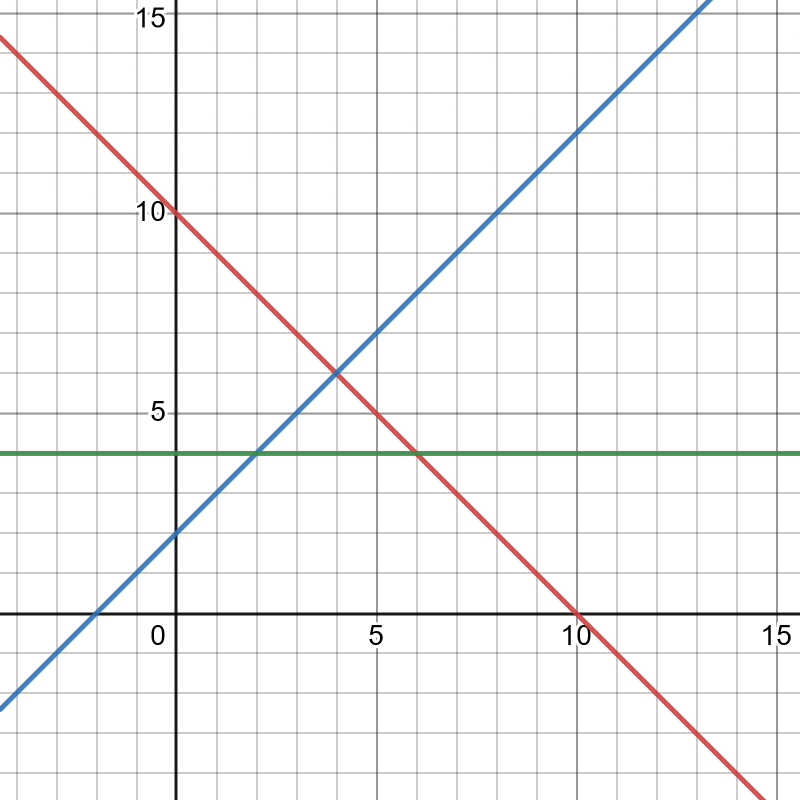
Maybe some graphs would help explain this. In each graph, the red line is the demand and the blue line is the supply.
Here is what the market looks like before intervention: The price is $6. We’ll say that’s too high; people can’t afford it.
[no_intervention.png]
Now suppose we impose a price ceiling at $4 (the green line). You aren’t allowed to charge more than $4. What will happen? Companies will charge $4. But they will also produce and sell a smaller quantity than before.
Far better would be to increase the supply of the good, shifting to a new supply curve (the purple line). Then you would reduce the price and increase the amount of the good available.
[supply_intervention.png]
This is precisely what we do with government bonds when we want to raise interest rates. (A greater supply of bonds makes their prices lower, which makes their yields higher.) And when we want to lower interest rates, we do the opposite.
Of course, with bonds, it’s easy to control the supply; it’s all just numbers in a network. Increasing the supply of housing is a much greater undertaking; you actually need to build new housing. But ultimately, the only way to ensure that housing is available and affordable for everyone is in fact to build more housing.
There are various ways we might accomplish that; one of the simplest would be to simply relax zoning restrictions that make it difficult to build high-density housing in cities. Those are bad laws anyway; they only benefit a small number of people a little bit while harming a large number of people a lot. (The problem is that the people they benefit are the local homeowners who show up to city council meetings.)
But we could do much more. I propose that we really use interest-rate targeting as our model and introduce home price targeting. I want the federal government to exercise eminent domain and order the construction of new high-density housing in any city that has rents above a certain threshold—if you like, the same threshold you were thinking of setting the rent control at.
Is this an extreme solution? Perhaps. But housing affordability is an extreme problem. And I keep hearing from the left wing that economists aren’t willing to consider “radical enough” solutions to housing (by which they always seem to mean the tried-and-failed strategy of rent control). So here’s a radical solution for you. If cities refuse to build enough housing for their people, make them do it. Buy up and bulldoze their “lovely” “historic” suburban neighborhoods that are ludicrous wastes of land (and also environmentally damaging), and replace them with high-rise apartments. (Get rid of the golf courses while you’re at it.)
This would be expensive, of course; we have to pay to build all those new apartments. But hardly so expensive as living in a society where people can’t afford to live where they want.
Would this destroy the “charm” of the city? I dunno, maybe a little. But if the only thing your city had going for it was some old houses that are clearly not an efficient use of space, that’s pretty sad. And it is quite possible to build a city at high density and have it still be beautiful and a major draw for tourists; Paris is a lot denser than far-less-picturesque Houston. (Though I’ll admit, Houston is far more affordable than Paris. It’s not just about density.) And is the “charm” of your city really worth making it so unaffordable that people can’t move there without risking becoming homeless?
There are a lot of details to be worked out: How serious must things get before the federal government steps in? (Wherever we draw the line, San Francisco is surely well past it.) It takes a long time to build houses and let prices adjust, so how do we account for that time-lag? Where does the money come from, actually? Debt? Taxes? But these could all be resolved.
Of course, it’s a pipe dream; we’re never going to implement this policy, because homeowners dread the idea of their home values going down (even though it would actually make their property taxes cheaper!). I’d even be willing to consider some kind of program that would let people refinance underwater mortgages to write off the lost equity, if that’s what it takes to actually build enough housing.
Because there is really only one thing that’s ever going to solve the (global!) housing crises:


 Human Economics