Oct 5 JDN 2460954
This post is one I’ve been meaning to write for awhile, but current events keep taking precedence.
In 2023, Taylor Swift did something very interesting from an economic perspective, which turns out to have profound implications for our economic future.
She re-recorded an entire album and released it through a different record company.
The album was called 1989 (Taylor’s Version), and she created it because for the last four years she had been fighting with Big Machine Records over the rights to her previous work, including the original album 1989.
A Marxist might well say she seized the means of production! (How rich does she have to get before she becomes bourgeoisie, I wonder? Is she already there, even though she’s one of a handful of billionaires who can truly say they were self-made?)
But really she did something even more interesting than that. It was more like she said:
“Seize the means of production? I am the means of production.”
Singing and songwriting are what is known as a human-capital-intensive industry. That is, the most important factor of production is not land, or natural resources, or physical capital (yes, you need musical instruments, amplifiers, recording equipment and the like—but these are a small fraction of what it costs to get Talor Swift for a concert), or even labor in the ordinary sense. It’s one where so-called (honestly poorly named) “human capital” is the most important factor of production.
A labor-intensive industry is one where you just need a lot of work to be done, but you can get essentially anyone to do it: Cleaning floors is labor-intensive. A lot of construction work is labor-intensive (though excavators and the like also make it capital-intensive).
No, for a human-capital-intensive industry, what you need is expertise or talent. You don’t need a lot of people doing back-breaking work; you need a few people who are very good at doing the specific thing you need to get done.
Taylor Swift was able to re-record and re-release her songs because the one factor of production that couldn’t be easily substituted was herself. Big Machine Records overplayed their hand; they thought they could control her because they owned the rights to her recordings. But she didn’t need her recordings; she could just sing the songs again.
But now I’m sure you’re wondering: So what?
Well, Taylor Swift’s story is, in large part, the story of us all.
For most of the 18th, 19th, and 20th centuries, human beings in developed countries saw a rapid increase in their standard of living.
Yes, a lot of countries got left behind until quite recently.
Yes, this process seems to have stalled in the 21st century, with “real GDP” continuing to rise but inequality and cost of living rising fast enough that most people don’t feel any richer (and I’ll get to why that may be the case in a moment).
But for millions of people, the gains were real, and substantial. What was it that brought about this change?
The story we are usually told is that it was capital; that as industries transitioned from labor-intensive to capital-intensive, worker productivity greatly increased, and this allowed us to increase our standard of living.
That’s part of the story. But it can’t be the whole thing.
Why not, you ask?
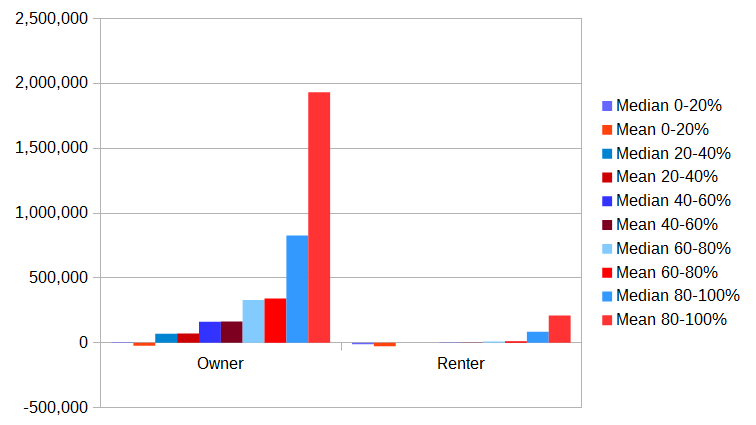
Because very few people actually own the capital.
When capital ownership is so heavily concentrated, any increases in productivity due to capital-intensive production can simply be captured by the rich people who own the capital. Competition was supposed to fix this, compelling them to raise wages to match productivity, but we often haven’t actually had competitive markets; we’ve had oligopolies that consolidate market power in a handful of corporations. We had Standard Oil before, and we have Microsoft now. (Did you know that Microsoft not only owns more than half the consumer operating system industry, but after acquiring Activision Blizzard, is now the largest video game company in the world?) In the presence of an oligopoly, the owners of the capital will reap the gains from capital-intensive productivity.
But standards of living did rise. So what happened?
The answer is that production didn’t just become capital-intensive. It became human-capital-intensive.
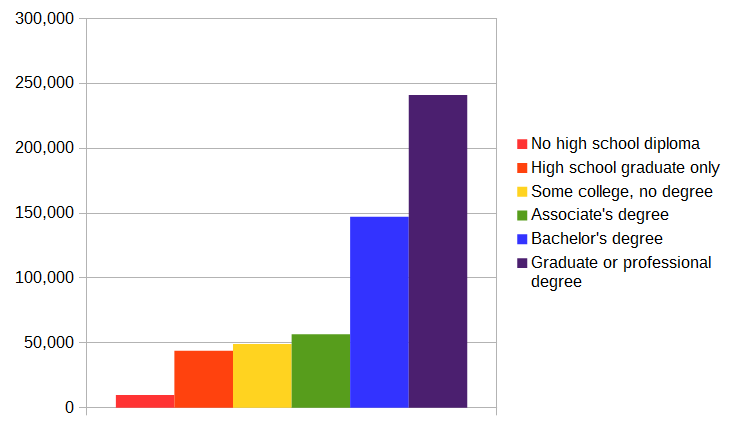
More and more jobs required skills that an average person didn’t have. This created incentives for expanding public education, making workers not just more productive, but also more aware of how things work and in a stronger bargaining position.
Today, it’s very clear that the jobs which are most human-capital-intensive—like doctors, lawyers, researchers, and software developers—are the ones with the highest pay and the greatest social esteem. (I’m still not 100% sure why stock traders are so well-paid; it really isn’t that hard to be a stock trader. I could write you an algorithm in 50 lines of Python that would beat the average trader (mostly by buying ETFs). But they pretend to be human-capital-intensive by hiring Harvard grads, and they certainly pay as if they are.)
The most capital-intensive industries—like factory work—are reasonably well-paid, but not that well-paid, and actually seem to be rapidly disappearing as the capital simply replaces the workers. Factory worker productivity is now staggeringly high thanks to all this automation, but the workers themselves have gained only a small fraction of this increase in higher wages; by far the bigger effect has been increased profits for the capital owners and reduced employment in manufacturing.
And of course the real money is all in capital ownership. Elon Musk doesn’t have $400 billion because he’s a great engineer who works very hard. He has $400 billion because he owns a corporation that is extremely highly valued (indeed, clearly overvalued) in the stock market. Maybe being a great engineer or working very hard helped him get there, but it was neither necessary nor sufficient (and I’m sure that his dad’s emerald mine also helped).
Indeed, this is why I’m so worried about artificial intelligence.
Most forms of automation replace labor, in the conventional labor-intensive sense: Because you have factory robots, you need fewer factory workers; because you have mountaintop removal, you need fewer coal miners. It takes fewer people to do the same amount of work. But you still need people to plan and direct the process, and in fact those people need to be skilled experts in order to be effective—so there’s a complementarity between automation and human capital.
But AI doesn’t work like that. AI substitutes for human capital. It doesn’t just replace labor; it replaces expertise.
So far, AI is currently too unreliable to replace any but entry-level workers in human-capital-intensive industries (though there is some evidence it’s already doing that). But it will most likely get more reliable over time, if not via the current LLM paradigm, than through the next one that comes after. At some point, AI will come to replace experienced software developers, and then veteran doctors—and I don’t think we’ll be ready.
The long-term pattern here seems to be transitioning away from human-capital-intensive production to purely capital-intensive production. And if we don’t change the fact that capital ownership is heavily concentrated and so many of our markets are oligopolies—which we absolutely do not seem poised to do anything about; Democrats do next to nothing and Republicans actively and purposefully make it worse—then this transition will be a recipe for even more staggering inequality than before, where the rich will get even more spectacularly mind-bogglingly rich while the rest of us stagnate or even see our real standard of living fall.
The tech bros promise us that AI will bring about a utopian future, but that would only work if capital ownership were equally shared. If they continue to own all the AIs, they may get a utopia—but we sure won’t.
We can’t all be Taylor Swift. (And if AI music catches on, she may not be able to much longer either.)



 Human Economics