The powerful persistence of bigotry

JDN 2457527

Bigotry has been a part of human society since the beginning—people have been hating people they perceive as different since as long as there have been people, and maybe even before that. I wouldn’t be surprised to find that different tribes of chimpanzees or even elephants hold bigoted beliefs about each other.

Yet it may surprise you that neoclassical economics has basically no explanation for this. There is a long-standing famous argument that bigotry is inherently irrational: If you hire based on anything aside from actual qualifications, you are leaving money on the table for your company. Because women CEOs are paid less and perform better, simply ending discrimination against women in top executive positions could save any typical large multinational corporation tens of millions of dollars a year. And yet, they don’t! Fancy that.

More recently there has been work on the concept of statistical discrimination, under which it is rational (in the sense of narrowly-defined economic self-interest) to discriminate because categories like race and gender may provide some statistically valid stereotype information. For example, “Black people are poor” is obviously not true across the board, but race is strongly correlated with wealth in the US; “Asians are smart” is not a universal truth, but Asian-Americans do have very high educational attainment. In the absence of more reliable information that might be your best option for making good decisions. Of course, this creates a vicious cycle where people in the positive stereotype group are better off and have more incentive to improve their skills than people in the negative stereotype group, thus perpetuating the statistical validity of the stereotype.

But of course that assumes that the stereotypes are statistically valid, and that employers don’t have more reliable information. Yet many stereotypes aren’t even true statistically: If “women are bad drivers”, then why do men cause 75% of traffic fatalities? Furthermore, in most cases employers have more reliable information—resumes with education and employment records. Asian-Americans are indeed more likely to have bachelor’s degrees than Latino Americans, but when it say right on Mr. Lorenzo’s resume that he has a B.A. and on Mr. Suzuki’s resume that he doesn’t, that racial stereotype no longer provides you with any further information. Yet even if the resumes are identical, employers will be more likely to hire a White applicant than a Black applicant, and more likely to hire a male applicant than a female applicant—we have directly tested this in experiments. In an experiment where employers had direct performance figures in front of them, they were still more likely to choose the man when they had the same scores—and sometimes even when the woman had a higher score!

Even our assessments of competence are often biased, probably subconsciously; given the same essay to review, most reviewers find more spelling errors and are more concerned about those errors if they are told that the author is Black. If they thought the author was White, they thought of the errors as “minor mistakes” by a student with “otherwise good potential”; but if they thought the author was Black, they “can’t believe he got into this school in the first place”. These reviewers were reading the same essay. The alleged author’s race was decided randomly. Most if not all of these reviewers were not consciously racist. Subconscious racial biases are all over the place; almost everyone exhibits some subconscious racial bias.

No, discrimination isn’t just rational inference based on valid (if unfortunate and self-reinforcing) statistical trends. There is a significant component of just outright irrational bigotry.

We’re seeing this play out in North Carolina; due to their arbitrary discrimination against lesbian, gay, bisexual and especially transgender people, they are now hemorrhaging jobs as employers pull out, and their federal funding for student loans is now in jeopardy due to the obvious Title IX violation. This is obviously not in the best interest of the people of North Carolina (even the ones who aren’t LGBT!); and it’s all being justified on the grounds of an epidemic of sexual assaults by people pretending to be trans that doesn’t even exist. It turns out that more Republican Senators have been arrested for sexual misconduct in bathrooms than transgender people—and while the number of transgender people in the US is surprisingly hard to measure, it’s clearly a lot larger than the number of Republican Senators!

In fact, discrimination is even more irrational than it may seem, because empirically the benefits of discrimination (such as they are—short-term narrow economic self-interest) fall almost entirely on the rich while the harms fall mainly on the poor, yet poor people are much more likely to be racist! Since income and education are highly correlated, education accounts for some of this effect. This is reason to be hopeful, for as educational attainment has soared, we have found that racism has decreased.

But education doesn’t seem to explain the full effect. One theory to account this is what’s called last-place aversiona highly pernicious heuristic where people are less concerned about their own absolute status than they are about not having the worst status. In economic experiments, people are usually more willing to give money to people worse off than them than to those better off than them—unless giving it to the worse-off would make those people better off than they themselves are. I think we actually need to do further study to see what happens if it would make those other people exactly as well-off as they are, because that turns out to be absolutely critical to whether people would be willing to support a basic income. In other words, do people count “tied for last”? Would they rather play a game where everyone gets $100, or one where they get $50 but everyone else only gets $10?

I would hope that humanity is better than that—that we would want to play the $100 game, which is analogous to a basic income. But when I look at the extreme and persistent inequality that has plagued human society for millennia, I begin to wonder if perhaps there really are a lot of people who think of the world in such zero-sum, purely relative terms, and care more about being better than others than they do about doing well themselves. Perhaps the horrific poverty of Sub-Saharan Africa and Southeast Asia is, for many First World people, not a bug but a feature; we feel richer when we know they are poorer. Scarcity seems to amplify this zero-sum thinking; racism gets worse whenever we have economic downturns. Precisely because discrimination is economically inefficient, this can create a vicious cycle where poverty causes bigotry which worsens poverty.

There is also something deeper going on, something evolutionary; bigotry is part of what I call the tribal paradigm, the core aspect of human psychology that defines identity in terms of in-groups which are good and out-groups which are bad. We will probably never fully escape the tribal paradigm, but this is not a reason to give up hope; we have made substantial progress in reducing bigotry in many places. What seems to happen is that people learn to expand their mental tribe, so that it encompasses larger and larger groups—not just White Americans but all Americans, or not just Americans but all human beings. Peter Singer calls this the Expanding Circle (also the title of his book on it). We may one day be able to make our tribe large enough to encompass all sentient beings in the universe; at that point, it’s just fine if we are only interested in advancing the interests of those in our tribe, because our tribe would include everyone. Yet I don’t think any of us are quite there yet, and some people have a really long way to go.

But with these expanding tribes in mind, perhaps I can leave you with a fact that is as counter-intuitive as it is encouraging, and even easier still to take out of context: Racism was better than what came before it. What I mean by this is not that racism is good—of course it’s terrible—but that in order to be racism, to define the whole world into a small number of “racial groups”, people already had to enormously expand their mental tribe from where it started. When we evolved on the African savannah millions of years ago, our tribe was 150 people; to this day, that’s about the number of people we actually feel close to and interact with on a personal level. We could have stopped there, and for millennia we did. But over time we managed to expand beyond that number, to a village of 1,000, a town of 10,000, a city of 100,000. More recently we attained mental tribes of whole nations, in some case hundreds of millions of people. Racism is about that same scale, if not a bit larger; what most people (rather arbitrarily, and in a way that changes over time) call “White” constitutes about a billion people. “Asian” (including South Asian) is almost four billion. These are astonishingly huge figures, some seven orders of magnitude larger than what we originally evolved to handle. The ability to feel empathy for all “White” people is just a little bit smaller than the ability to feel empathy for all people period. Similarly, while today the gender in “all men are created equal” is jarring to us, the idea at the time really was an incredibly radical broadening of the moral horizon—Half the world? Are you mad?

Therefore I am confident that one day, not too far from now, the world will take that next step, that next order of magnitude, which many of us already have (or try to), and we will at last conquer bigotry, and if not eradicate it entirely then force it completely into the most distant shadows and deny it its power over our society.

Is there hope for stopping climate change?

JDN 2457523

This topic was decided by vote of my Patreons (there are still few enough that the vote usually has only two or three people, but hey, what else can I do?).

When it comes to climate change, I have good news and bad news.

First, the bad news:

We are not going to be able to stop climate change, or even stop making it worse, any time soon. Because of this, millions of people are going to die and there’s nothing we can do about it.

Now, the good news:

We can do a great deal to slow down our contribution to climate change, reduce its impact on human society, and save most of the people who would otherwise have been killed by it. It is currently forecasted that climate change will cause somewhere between 10 million and 100 million deaths over the next century; if we can hold to the lower end of that error bar instead of the upper end, that’s half a dozen Holocausts prevented.

There are three basic approaches to take, and we will need all of them:

1. Emission reduction: Put less carbon in

2. Geoengineering: Take more carbon out

3. Adaptation: Protect more humans from the damage

Strategies 1 and 2 are classified as mitigation, while strategy 3 is classified as adaptation. Mitigation is reducing climate change; adaptation is reducing the effect of climate change on people.

Let’s start with strategy 1, emission reduction. It’s probably the most important; without it the others are clearly doomed to fail.

So, what are our major sources of emissions, and what can we do to reduce them?

While within the US and most other First World countries the primary sources of emissions are electricity and transportation, worldwide transportation is less important and agriculture is about as large a source of emissions as electricity. 25% of global emissions are due to electricity, 24% are due to agriculture, 21% are due to industry, 14% are due to transportation, only 6% are due to buildings, and everything else adds up to 10%.

global_emissions_sector_2015

1A. Both within the First World and worldwide, the leading source of emissions is electricity. Our first priority is therefore electrical grid reform.

Energy efficiency can help—and it already is helping, as global electricity consumption has stopped growing despite growth in population and GDP. Energy intensity of GDP is declining. But the main thing we need to do is reform the way that electricity is produced.

Let’s take a look at how the world currently produces electricity. Currently, the leading source of electricity is “liquids”, an odd euphemism for oil; currently about 175 quadrillion BTU per year, 30% of all production. This is closely followed by coal, at about 160 quadrillion BTU per year, 28%. Then we have natural gas, about 130 quadrillion BTU per year (23%), wind, solar, hydroelectric, and geothermal altogether about 60 quadrillion BTU per year (11%), and nuclear fission only about 40 quadrillion BTU per year (7%).

This list basically needs to be reversed. We will probably not be able to completely stop using oil for transportation, but we have no excuse for using for electricity production. We also need to stop using coal for, well, just about anything. There are a few industrial processes that basically have to use coal; fine, use it for that. But just as something to burn, coal is one of the most heavily-polluting technologies in existence—the only things we burn that are worse are wood and animal dung. Simply ending the burning of coal, wood, and dung would by itself save 4 million lives a year just from reduced pollution.

Natural gas burns cleaner than coal or oil, but it still produces a lot of carbon emissions. Even worse, natural gas is itself one of the worst greenhouse gases—and so natural gas leaks are a major source of greenhouse emissions. Last year a single massive leak accounted for 25% of California’s methane emissions. Like oil, natural gas is also something we’ll want to use quite sparingly.

The best power source is solar power, hands-down. In the long run, the goal should be to convert as much as possible of the grid to solar. Wind, hydroelectric, and geothermal are also very useful, though wind power peaks at the wrong time of day for high energy demand and hydro and geothermal require specific geography to work. Solar is also the most scalable; as long as you have the raw materials and the technology, you can keep expanding solar production all the way up to a Dyson Sphere.

But solar is intermittent, and we don’t have good enough energy storage methods right now to ensure a steady grid on solar alone. The bulk of our grid is therefore going to have to be made of the one energy source we have with negligible carbon emissions, mature technology, and virtually unlimited and fully controllable output: Nuclear fission. At least until fusion matures or we solve the solar energy storage problem, nuclear fission is our best option for minimizing carbon emissions immediatelynot waiting for some new technology to come save us, but building efficient reactors now. Why does France only emit 6 tonnes of carbon per person per year while the UK emits 9, Germany emits 10, and the US emits a whopping 17? Because France’s electricity grid is almost entirely nuclear.

But nuclear power is dangerous!” people will say. France has indeed had several nuclear accidents in the last 40 years; guess how many deaths those accidents have caused? Zero. Deepwater Horizon killed more people than the sum total of all nuclear accidents in all First World countries. Worldwide, there was one Black Swan horrible nuclear event—Chernobyl (which still only killed about as many people as die in the US each year of car accidents or lung cancer), and other than that, nuclear power is safer that every form of fossil fuel.

“Where will we store the nuclear waste?” Well, that’s a more legitimate question, but you know what? It can wait. Nuclear waste doesn’t accumulate very fast, precisely because fission is thousands of times more efficient than combustion; so we’ll have plenty of room in existing facilities or easily-built expansions for the next century. By that point, we should have fusion or a good way of converting the whole grid to solar. We should of course invest in R&D in the meantime. But right now, we need fission.

So, after we’ve converted the electricity grid to nuclear, what next?
1B. To reduce the effect of agriculture, we need to eat less meat; among agricultural sources, livestock is the leading contributor of greenhouse emissions, followed by land use “emissions” (i.e. deforestation), which could also be reduced by converting more crop production to vegetables instead of meat because vegetables are much more land-efficient (and just-about-everything-else-efficient).

1C. To reduce the effect of transportation, we need huge investments in public transit, as well as more fuel-efficient vehicles like hybrids and electric cars. Switching to public transit could cut private transportation-related emissions in half. 100% electric cars are too much to hope for, but by implementing a high carbon tax, we might at least raise the cost of gasoline enough to incentivize makers and buyers of cars to choose more fuel-efficient models.
The biggest gains in fuel efficiency happen on the most gas-guzzling vehicles—indeed, so much so that our usual measure “miles per gallon” is highly misleading.

Quick: Which of the following changes would reduce emissions more, assuming all the vehicles drive the same amount? Switching from a hybrid of 50 MPG to a zero-emission electric (infinity MPG!), switching from a normal sedan of 20 MPG to a hybrid of 50 MPG, or switching from an inefficient diesel truck of 3 MPG to a modern diesel truck of 7 MPG?

The diesel truck, by far.

If each vehicle drives 10,000 miles per year: The first switch will take us from consuming 200 gallons to consuming 0 gallons—saving 200 gallons. The second switch will take us from consuming 500 gallons to consuming 200 gallons—saving 300 gallons. But the third switch will take us from consuming 3,334 gallons to consuming only 1,429 gallons—saving a whopping 1,905 gallons. Even slight increases in the fuel efficiency of highly inefficient vehicles have a huge impact, while you can raise an already-efficient vehicle to perfect efficiency and barely notice a difference.

We really should measure in gallons per mile—or better yet, liters per megameter. (Most of the world uses liters per 100 km; almost!)

All right, let’s assume we’ve done that: The whole grid is nuclear, and everyone is a vegetarian driving an electric car. That’s a good start. But we can’t stop there. Because of the feedback loops involved, we only reduce our emissions—even to near zero—the amount of carbon dioxide will continue to increase for decades. We need to somehow take the carbon out that is already there, which brings me to strategy 2, geoengineering.

2A. There are some exotic proposals out there for geoengineering (putting sulfur into the air to block out the Sun; what could possibly go wrong?), and maybe we’ll end up using some of them. I think iron fertilization of the oceans is one of the more promising options. But we need to be careful to make sure we actually know what these projects will do; we got into this mess by doing things without appreciating their long-run environmental impact, so let’s not make the same mistake again.

2B. But really, the most effective form of geoengineering is simply reforestation. Trees are very good at capturing carbon from the atmosphere; it’s what they evolved to do. So let’s plant trees—lots of trees. Many countries already have net positive forestation (such as the US as a matter of fact), but the world still has net deforestation, and that needs to be reversed.

But even if we do all that, at this point we probably can’t do enough fast enough to actually stop climate change from causing damage. After we’ve done our best to slow it down, we’re still going to need to respond to its effects and find ways to minimize the harm. That’s strategy 3, adaptation.

3A. Coastal regions around the world are going to have to turn into the Netherlands, surrounded by dikes and polders. First World countries already have the resources to do this, and will most likely do it on our own (many cities already have plans to); but other countries need to be given the resources to do it. We’re responsible for most of the emissions, and we have the most wealth, so we should pick up the tab for most of the adaptation.

3B. Some places aren’t going to be worth saving—so that means saving the people, by moving them somewhere else. We’re going to have global refugee crises, and we need to prepare for them, not in the usual way of “How can I clear my conscience while xenophobically excluding these people?” but by welcoming them with open arms. We are going to need to resettle tens of millions—possibly hundreds of millions—of people, and we need a process for doing that efficiently and integrating these people into the societies they end up living in. We must stop presuming that closed borders are the default and realize that the burden of proof was always on anyone who says that people should have different rights based on whether they were born on the proper side of an imaginary line. If open borders are utopian, then it is utopian we must be.

The bad news is that even if we do all these things, millions of people are still going to die from climate change—but a lot fewer millions than would if we didn’t.

And the really good news is that people are finally starting to do these things. It took a lot longer than it should, and there are still a lot of holdouts; but significant progress is already being made. There are a lot of reasons to be hopeful.

How not to do financial transaction tax

JDN 2457520

I strongly support the implementation of a financial transaction tax; like a basic income, it’s one of those economic policy ideas that are so brilliantly simple it’s honestly a little hard to believe how incredibly effective they are at making the world a better place. You mean we might be able to end stock market crashes just by implementing this little tax that most people will never even notice, and it will raise enough revenue to pay for food stamps? Yes, a financial transaction tax is that good.

So, keep that in mind when I say this:

TruthOut’s proposal for a financial transaction tax is somewhere between completely economically illiterate and outright insane.

They propose a 10% transaction tax on stocks and a 1% transaction tax on notional value of derivatives, then offer a “compromise” of 5% on stocks and 0.5% on derivatives. They make a bunch of revenue projections based on these that clearly amount to nothing but multiplying the current amount of transactions by the tax rate, which is so completely wrong we now officially have a left-wing counterpart to trickle-down voodoo economics.

Their argument is basically like this (I’m paraphrasing): “If we have to pay 5% sales tax on groceries, why shouldn’t you have to pay 5% on stocks?”

But that’s not how any of this works.

Demand for most groceries is very inelastic, especially in the aggregate. While you might change which groceries you’ll buy depending on their respective prices, and you may buy in bulk or wait for sales, over a reasonably long period (say a year) across a large population (say all of Michigan or all of the US), total amount of spending on groceries is extremely stable. People only need a certain amount of food, and they generally buy that amount and then stop.

So, if you implement a 5% sales tax that applies to groceries (actually sales tax in most states doesn’t apply to most groceries, but honestly it probably should—offset the regressiveness by providing more social services), people would just… spend about 5% more on groceries. Probably a bit less than that, actually, since suppliers would absorb some of the tax; but demand is much less elastic for groceries than supply, so buyers would bear most of the incidence of the tax. (It does not matter how the tax is collected; see my tax incidence series for further explanation of why.)

Other goods like clothing and electronics are a bit more elastic, so you’d get some deadweight loss from the sales tax; but at a typical 5% to 10% in the US this is pretty minimal, and even the hefty 20% or 30% VATs in some European countries only have a moderate effect. (Denmark’s 180% sales tax on cars seems a bit excessive to me, but it is Pigovian to disincentivize driving, so it also has very little deadweight loss.)

But what would happen if you implemented a 5% transaction tax on stocks? The entire stock market would immediately collapse.

A typical return on stocks is between 5% and 15% per year. As a rule of thumb, let’s say about 10%.

If you pay 5% sales tax and trade once per year, tax just cut your return in half.

If you pay 5% sales tax and trade twice per year, tax destroyed your return completely.

Even if you only trade once every five years, a 5% sales tax means that instead of your stocks being worth 61% more after those 5 years they are only worth 53% more. Your annual return has been reduced from 10% to 8.9%.

But in fact there are many perfectly legitimate reasons to trade as often as monthly, and a 5% tax would make monthly trading completely unviable.

Even if you could somehow stop everyone from pulling out all their money just before the tax takes effect, you would still completely dry up the stock market as a source of funding for all but the most long-term projects. Corporations would either need to finance their entire operations out of cash or bonds, or collapse and trigger a global depression.

Derivatives are even more extreme. The notional value of derivatives is often ludicrously huge; we currently have over a quadrillion dollars in notional value of outstanding derivatives. Assume that say 10% of those are traded every year, and we’re talking $100 trillion in notional value of transactions. At 0.5% you’re trying to take in a tax of $500 billion. That sounds fantastic—so much money!—but in fact what you should be thinking about is that’s a really strong avoidance incentive. You don’t think banks will find a way to restructure their trading practices—or stop trading altogether—to avoid this tax?

Honestly, maybe a total end to derivatives trading would be tolerable. I certainly think we need to dramatically reduce the amount of derivatives trading, and much of what is being traded—credit default swaps, collateralized debt obligations, synthetic collateralized debt obligations, etc.—really should not exist and serves no real function except to obscure fraud and speculation. (Credit default swaps are basically insurance you can buy on other people’s companies. There’s a reason you’re not allowed to buy insurance on other people’s stuff!) Interest rate swaps aren’t terrible (when they’re not being used to perpetrate the largest white-collar crime in history), but they also aren’t necessary. You might be able to convince me that commodity futures and stock options are genuinely useful, though even these are clearly overrated. (Fun fact: Futures markets have been causing financial crises since at least Classical Rome.) Exchange-traded funds are technically derivatives, and they’re just fine (actually ETFs are very low-risk, because they are inherently diversified—which is why you should probably be buying them); but actually their returns are more like stocks, so the 0.5% might not be insanely high in that case.

But stocks? We kind of need those. Equity financing has been the foundation of capitalism since the very beginning. Maybe we could conceivably go to a fully debt-financed system, but it would be a radical overhaul of our entire financial system and is certainly not something to be done lightly.

Indeed, TruthOut even seems to think we could apply the same sales tax rate to bonds, which means that debt financing would also collapse, and now we’re definitely talking about global depression. How exactly is anyone supposed to finance new investments, if they can’t sell stock or bonds? And a 5% tax on the face value of stock or bonds, for all practical purposes, is saying that you can’t sell stock or bonds. It would make no one want to buy them.

Wealthy investors buying of stocks and bonds is essentially no different than average folks buying food, clothing or other real “goods and services.”

Yes it is. It is fundamentally different.

People buy goods to use them. People buy stocks to make money selling them.

This seems perfectly obvious, but it is a vital distinction that seems to be lost on TruthOut.

When you buy an apple or a shoe or a phone or a car, you care how much it costs relative to how useful it is to you; if we make it a bit more expensive, that will make you a bit less likely to buy it—but probably not even one-to-one so that a 5% tax would reduce purchases by 5%; it would probably be more like a 2% reduction. Demand for goods is inelastic. Taxing them will raise a lot of revenue and not reduce the quantity purchased very much.

But when you buy a stock or a bond or an interest rate swap, you care how much it costs relative to what you will be able to sell it for—you care about not its utility but its return. So a 5% tax will reduce the amount of buying and selling by substantially more than 5%—it could well be 50% or even 100%. Demand for financial assets is elastic. Taxing them will not raise much revenue but will substantially reduce the quantity purchased.

Now, for some financial assets, we want to reduce the quantity purchased—the derivatives market is clearly too big, and high-frequency trading that trades thousands of times per second can do nothing but destabilize the financial system. Joseph Stiglitz supports a small financial transaction tax precisely because it would substantially reduce high-frequency trading, and he’s a Nobel Laureate as you may recall. Naturally, he was excluded from the SEC hearings on the subject, because reasons. But the figures Stiglitz is talking about (and I agree with) are on the order of 0.1% for stocks and 0.01% for derivatives—50 times smaller than what TruthOut is advocating.

At the end, they offer another “compromise”:

Okay, half it again, to a 2.5 percent tax on stocks and bonds and a 0.25 percent on derivative trades. That certainly won’t discourage stock and bond trading by the rich (not that that is an all bad idea either).

Yes it will. By a lot. That’s the whole point.

A financial transaction tax is a great idea whose time has come; let’s not ruin its reputation by setting it at a preposterous value. Just as a $15 minimum wage is probably a good idea but a $250 minimum wage is definitely a terrible idea, a 0.1% financial transaction tax could be very beneficial but a 5% financial transaction tax would clearly be disastrous.

Super PACs are terrible—but ineffective

JDN 2457516

It’s now beginning to look like an ongoing series: “Reasons to be optimistic about our democracy.”

Super PACs, in case you didn’t know, are a bizarre form of legal entity, established after the ludicrous Citizens United ruling (“Corporations are people” and “money is speech” are literally Orwellian), which allows corporations to donate essentially unlimited funds to political campaigns with minimal disclosure and zero accountability. This creates an arms race where even otherwise-honest candidates feel pressured to take more secret money just to keep up.

At the time, a lot of policy wonks said “Don’t worry, they already give tons of money anyway, what’s the big deal?”

Well, those wonks were wrong—it was a big deal. Corporate donations to political campaigns exploded in the era of Super PACs. The Citizens United ruling was made in 2010, and take a look at this graph of total “independent” (i.e., not tied to candidate or party) campaign spending (using data from OpenSecrets):

SuperPAC_spending

It’s a small sample size, to be sure, and campaign spending was already rising. But 2010 and 2014 were very high by the usual standards of midterm elections, and 2012 was absolutely unprecedented—over $1 billion spent on campaigns. Moreover, the only reason 2016 looks lower than 2012 is that we’re not done with 2016 yet; I’m sure it will rise a lot higher than it is now, and very likely overtake 2012. (And if it doesn’t it’ll be because Bernie Sanders and Donald Trump made very little use Super-PACs, for quite different reasons.) It was projected to exceed $4 billion, though I doubt it will actually make it quite that high.

Worst of all, this money is all coming from a handful of billionaires. 41% of Super-PAC funds comes from the same 50 households. That’s fifty. Even including everyone living in the household, this group of people could easily fit inside an average lecture hall—and they account for two-fifths of independent campaign spending in the US.

Weirdest of all, there are still people who seem to think that the problem with American democracy is it’s too hard for rich people to give huge amounts of money to political campaigns in secret, and they are trying to weaken our campaign spending regulations even more.

So that’s the bad news—but here’s the good news.

Super-PACs are ludicrously ineffective.

Hillary Clinton is winning, and will probably win the election; and she does have the most Super-PAC money among candidates still in the race (at $76 million, about what the Clintons themselves make in 3 years). Ted Cruz also has $63 million in Super-PAC money. But Bernie Sanders only has $600,000 in Super-PAC money (actually also about 3 times his household income, coincidentally), and Donald Trump only has $2.7 million. Both of these are less than John Kasich’s $13 million in Super-PAC spending, and yet Kasich and Cruz are now dropped out and only Trump remains.

But more importantly, the largest amount of Super-PAC money went to none other than Jeb Bush—a whopping $121 million—and it did basically nothing for him. Marco Rubio had $62 million in Super-PAC money, and he dropped out too. Martin O’Malley had more Super-PAC money than Bernie Sanders, and where is he now? In fact, literally every Republican candidate had more Super-PAC money than Bernie Sanders, and every Republican but Rick Santorum, Jim Gilmore, and George Pataki (you’re probably thinking: “Who?” Exactly.) had more Super-PAC money than Donald Trump.

Indeed, political spending in general is not very effective. Additional spending on political campaigns has minimal effects on election outcomes.

You wouldn’t immediately see that from our current Presidential race; while Rubio raised $117 million and Jeb! raised $155 million and both of them lost, the winners also raised a great deal. Hillary Clinton raised $256 million, Bernie Sanders raised $180 million, Ted Cruz raised $142 million, and Donald Trump raised $48 million. Even that last figure is mainly so low because Donald Trump is a master at getting free publicity; the media effectively gave Trump an astonishing $1.89 billion in free publicity. To be fair, a lot of that was bad publicity—but it still got his name and his ideas out there and didn’t cost him a dime.

So, just from the overall spending figures, it looks like maybe total campaign spending is important, even if Super-PACs in particular are useless.

But empirical research has shown that political spending has minimal effects on actual election outcomes. So ineffective, in fact, that a lot of economists are puzzled that there’s so much spending anyway. Here’s a paper arguing that once you include differences in advertising prices, political spending does matter. Here are two papers proposing different explanations for why incumbent spending appears to be less effective than challenger spending:This one says that it’s a question of accounting for how spending is caused by voter participation (rather than the reverse), while this one argues that the abuse of incumbent privileges like franking gives incumbents more real “spending” power. It’s easy to miss that both of them are trying to explain a basic empirical fact that candidates that spend a lot more still often lose.

Political advertising can be effective at changing minds, but only to a point.

The candidate who spends the most usually does win—but that’s because the candidate who spends the most usually raises the most, and the candidate who raises the most usually has the most support.

The model that makes the most sense to me is that political spending is basically a threshold; you need to spend enough that people know you exist, but beyond that additional spending won’t make much difference. In 1996 that threshold was estimated to be about $400,000 for a House election; that’s still only about $600,000 in today’s money.

Campaign spending is more effective when there are caps on individual contributions; a lot of people find this counter-intuitive, but it makes perfect sense on a threshold model, because spending caps could hold candidates below the threshold. Limits on campaign spending have a large effect on spending, but a small effect on outcomes.

Does this mean we shouldn’t try to limit campaign spending? I don’t think so. It can still be corrupt and undesirable even if isn’t all that effective.

But it is good news: You can’t actually just buy elections—not in America, not yet.

Why is Tatooine poor?

JDN 2457513—May 4, 2016

May the Fourth be with you.

In honor of International Star Wars Day, this post is going to be about Star Wars!

[I wanted to include some images from Star Wars, but here are the copyright issues that made me decide it ultimately wasn’t a good idea.]

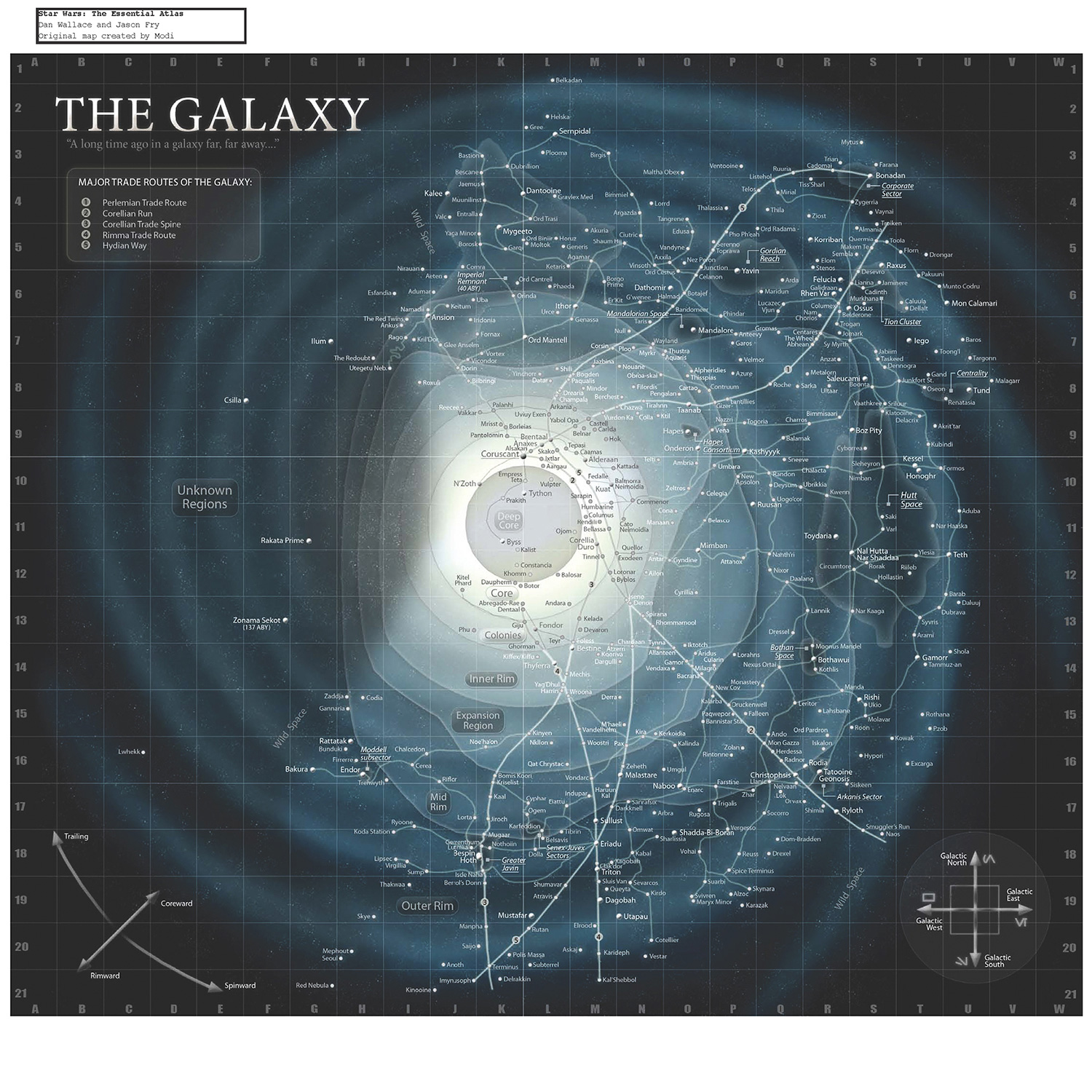
But this won’t be as frivolous as it may sound. Star Wars has a lot of important lessons to teach us about economics and other social sciences, and its universal popularity gives us common ground to start with. I could use Zimbabwe and Botswana as examples, and sometimes I do; but a lot of people don’t know much about Zimbabwe and Botswana. A lot more people know about Tatooine and Naboo, so sometimes it’s better to use those instead.

In fact, this post is just a small sample of a much larger work to come; several friends of mine who are social scientists in different fields (I am of course the economist, and we also have a political scientist, a historian, and a psychologist) are writing a book about this; we are going to use Star Wars as a jumping-off point to explain some real-world issues in social science.

So, my topic for today, which may end up forming the basis for a chapter of the book, is quite simple:
Why is Tatooine poor?

First, let me explain why this is such a mystery to begin with. We’re so accustomed to poverty being in the world that we expect to see it, we think of it as normal—and for most of human history, that was probably the correct attitude to have. Up until at least the Industrial Revolution, there simply was no way of raising the standard of living of most people much beyond bare subsistence. A wealthy few could sometimes live better, and most societies have had such an elite; but it was never more than about 1% of the population—and sometimes as little as 0.01%. They could have distributed wealth more evenly than they did, but there simply wasn’t that much to go around.

The “prosperous” “democracy” of Periclean Athens for example was really an aristocratic oligarchy, in which the top 1%—the ones who could read and write, and hence whose opinions we read—owned just about everything (including a fair number of the people—slavery). Their “democracy” was a voting system that only applied to a small portion of the population.

But now we live in a very different age, the Information Age, where we are absolutely basking in wealth thanks to enormous increases in productivity. Indeed, the standard of living of an Athenian philosopher was in many ways worse than that of a single mother on Welfare in the United States today; certainly the single mom has far better medicine, communication, and transportation than the philosopher, but she may even have better nutrition and higher education. Really the only things I can think of that the philosopher has more of are jewelry and real estate. The single mom also surely spends a lot more time doing housework, but a good chunk of her work is automated (dishwasher, microwave, washing machine), while the philosopher simply has slaves for that sort of thing. The smartphone in her pocket (81% of poor households in the US have a cellphone, and about half of these are smartphones) and the car in her driveway (75% of poor households in the US own at least one car) may be older models in disrepair, but they would still be unimaginable marvels to that ancient philosopher.

How is it, then, that we still have poverty in this world? Even if we argued that the poverty line in First World countries is too high because they have cars and smartphones (not an argument I agree with by the way—given our enormous productivity there’s no reason everyone shouldn’t have a car and a smartphone, and the main thing that poor people still can’t afford is housing), there are still over a billion people in the world today who live on less than $2 per day in purchasing-power-adjusted real income. That is poverty, no doubt about it. Indeed, it may in fact be a lower standard of living than most human beings had when we were hunter-gatherers. It may literally be a step downward from the Paleolithic.

Here is where Tatooine may give us some insights.

Productivity in the Star Wars universe is clearly enormous; indeed the proportional gap between Star Wars and us appears to be about the same as the proportional gap between us and hunter-gatherer times. The Death Star II had a diameter of 160 kilometers. Its cost is listed as “over 1 trillion credits”, but that’s almost meaningless because we have no idea what the exchange rate is or how the price of spacecraft varies relative to the price of other goods. (Spacecraft actually seem to be astonishingly cheap; in A New Hope it seems to be that a drink is a couple of credits while 10,000 credits is almost enough to buy an inexpensive starship. Basically their prices seem to be similar to ours for most goods, but spaceships are so cheap they are priced like cars instead of like, well, spacecraft.)

So let’s look at it another way: How much metal would it take to build such a thing, and how much would that cost in today’s money?

We actually see quite a bit of the inner structure of the Death Star II in Return of the Jedi, so I can hazard a guess that about 5% of the volume of the space station is taken up by solid material. Who knows what it’s actually made out of, but for a ballpark figure let’s assume it’s high-grade steel. The volume of a 160 km diameter sphere is 4*pi*r^3 = 4*(3.1415)*(80,000)^3 = 6.43 quadrillion cubic meters. If 5% is filled with material, that’s 320 trillion cubic meters. High-strength steel has a density of about 8000 kg/m^3, so that’s 2.6 quintillion kilograms of steel. A kilogram of high-grade steel costs about $2, so we’re looking at $5 quintillion as the total price just for the raw material of the Death Star II. That’s $5,000,000,000,000,000,000. I’m not even including the labor (droid labor, that is) and transportation costs (oh, the transportation costs!), so this is a very conservative estimate.

To get a sense of how ludicrously much money this is, the population of Coruscant is said to be over 1 trillion people, which is just about plausible for a city that covers an entire planet. The population of the entire galaxy is supposed to be about 400 quadrillion.

Suppose that instead of building the Death Star II, Emperor Palpatine had decided to give a windfall to everyone on Coruscant. How much would he have given each person (in our money)? $5 million.

Suppose instead he had offered the windfall to everyone in the galaxy? $12.50 per person. That’s 50 million worlds with an average population of 8 billion each. Instead of building the Death Star II, Palpatine could have bought the whole galaxy lunch.

Put another way, the cost I just estimated for the Death Star II is about 60 million times the current world GDP. So basically if the average world in the Empire produced as much as we currently produce on Earth, there would still not be enough to build that thing. In order to build the Death Star II in secret, it must be a small portion of the budget, maybe 5% tops. In order for only a small number of systems to revolt, the tax rates can’t be more than say 50%, if that; so total economic output on the average world in the Empire must in fact be more like 50 times what it is on Earth today, for a comparable average population. This puts their per-capita GDP somewhere around $500,000 per person per year.

So, economic output is extremely high in the Star Wars universe. Then why is Tatooine poor? If there’s enough output to make basically everyone a millionaire, why haven’t they?

In a word? Power.

Political power is of course very unequally distributed in the Star Wars universe, especially under the Empire but also even under the Old Republic and New Republic.

Core Worlds like Coruscant appear to have fairly strong centralized governments, and at least until the Emperor seized power and dissolved the Senate (as Tarkin announces in A New Hope) they also seemed to have fairly good representation in the Galactic Senate (though how you make a functioning Senate with millions of member worlds I have no idea—honestly, maybe they didn’t). As a result, Core Worlds are prosperous. Actually, even Naboo seems to be doing all right despite being in the Mid Rim, because of their strong and well-managed constitutional monarchy (“elected queen” is not as weird as it sounds—Sweden did that until the 16th century). They often talk about being a “democracy” even though they’re technically a constitutional monarchy—but the UK and Norway do the same thing with if anything less justification.

But Outer Rim Worlds like Tatooine seem to be out of reach of the central galactic government. (Oh, by the way, what hyperspace route drops you off at Tatooine if you’re going from Naboo to Coruscant? Did they take a wrong turn in addition to having engine trouble? “I knew we should have turned left at Christophsis!”) They even seem to be out of range of the monetary system (“Republic credits are no good out here,” said Watto in The Phantom Menace.), which is pretty extreme. That doesn’t usually happen—if there is a global hegemon, usually their money is better than gold. (“good as gold” isn’t strong enough—US money is better than gold, and that’s why people will accept negative real interest rates to hold onto it.) I guarantee you that if you want to buy something with a US $20 bill in Somalia or Zimbabwe, someone will take it. They might literally take it—i.e. steal it from you, and the government may not do anything to protect you—but it clearly will have value.

So, the Outer Rim worlds are extremely isolated from the central government, and therefore have their own local institutions that operate independently. Tatooine in particular appears to be controlled by the Hutts, who in turn seem to have a clan-based system of organized crime, similar to the Mafia. We never get much detail about the ins and outs of Hutt politics, but it seems pretty clear that Jabba is particularly powerful and may actually be the de facto monarch of a sizeable region or even the whole planet.

Jabba’s government is at the very far extreme of what Daron Acemoglu calls extractive regimes (I’ve been reading his tome Why Nations Fail, and while I agree with its core message, honestly it’s not very well-written or well-argued), systems of government that exist not to achieve overall prosperity or the public good, but to enrich a small elite few at the expense of everyone else. The opposite is inclusive regimes, under which power is widely shared and government exists to advance the public good. Real-world systems are usually somewhere in between; the US is still largely inclusive, but we’ve been getting more extractive over the last few decades and that’s a big problem.

Jabba himself appears to be fantastically wealthy, although even his huge luxury hover-yacht (…thing) is extremely ugly and spartan inside. I infer that he could have made it look however he wanted, and simply has baffling tastes in decor. The fact that he seems to be attracted to female humanoids is already pretty baffling, given the obvious total biological incompatibility; so Jabba is, shall we say, a weird dude. Eccentricity is quite common among despots of extractive regimes, as evidenced by Muammar Qaddafi’s ostentatious outfits, Idi Amin’s love of oranges and Kentucky Fried Chicken, and Kim Jong-Un’s fear of barbers and bond with Dennis Rodman. Maybe we would all be this eccentric if we had unlimited power, but our need to fit in with the rest of society suppresses it.

It’s difficult to put a figure on just how wealthy Jabba is, but it isn’t implausible to say that he has a million times as much as the average person on Tatooine, just as Bill Gates has a million times as much as the average person in the US. Like Qaddafi, before he was killed he probably feared that establishing more inclusive governance would only reduce his power and wealth and spread it to others, even if it did increase overall prosperity.
It’s not hard to make the figures work out so that is so. Suppose that for every 1% of the economy that is claimed by a single rentier despot, overall economic output drops by the same 1%. Then for concreteness, suppose that at optimal efficiency, the whole economy could produce $1 trillion. The amount of money that the despot can claim is determined by the portion he tries to claim, p, times the total amount that the economy will produce, which is (1-p) trillion dollars. So the despot’s wealth will be maximized when p(1-p) is maximized, which is p = 1/2; so the despot would maximize his own wealth at $250 billion if he claimed half of the economy, even though that also means that the economy produces half as much as it could. If he loosened his grip and claimed a smaller share, millions of his subjects would benefit; but he himself would lose more money than he gained. (You can also adjust these figures so that the “optimal” amount for the despot to claim is larger or smaller than half, depending on how severely the rent-seeking disrupts overall productivity.)

It’s important to note that it is not simply geography (galactography?) that makes Tatooine poor. Their sparse, hot desert may be less productive agriculturally, but that doesn’t mean that Tatooine is doomed to poverty. Indeed, today many of the world’s richest countries (such as Qatar) are in deserts, because they produce huge quantities of oil.

I doubt that oil would actually be useful in the Old Republic or the Empire, but energy more generally seems like something you’d always need. Tatooine has enormous flat desert plains and two suns, meaning that its potential to produce solar energy has to be huge. They couldn’t export the energy directly of course, but they could do so indirectly—the cheaper energy could allow them to build huge factories and produce starships at a fraction of the cost that other planets do. They could then sell these starships as exports and import water from planets where it is abundant like Naboo, instead of trying to produce their own water locally through those silly (and surely inefficient) moisture vaporators.

But Jabba likely has fought any efforts to invest in starship production, because it would require a more educated workforce that’s more likely to unionize and less likely to obey his every command. He probably has established a high tariff on water imports (or even banned them outright), so that he can maintain control by rationing the water supply. (Actually one thing I would have liked to see in the movies was Jabba being periodically doused by slaves with vats of expensive imported water. It would not only show an ostentatious display of wealth for a desert culture, but also serve the much more mundane function of keeping his sensitive gastropod skin from dangerously drying out. That’s why salt kills slugs, after all.) He also probably suppressed any attempt to establish new industries of any kind of Tatooine, fearing that with new industry could come a new balance of power.

The weirdest part to me is that the Old Republic didn’t do something about it. The Empire, okay, sure; they don’t much care about humanitarian concerns, so as long as Tatooine is paying its Imperial taxes and staying out of the Emperor’s way maybe he leaves them alone. But surely the Republic would care that this whole planet of millions if not billions of people is being oppressed by the Hutts? And surely the Republic Navy is more than a match for whatever pitiful military forces Jabba and his friends can muster, precisely because they haven’t established themselves as the shipbuilding capital of the galaxy? So why hasn’t the Republic deployed a fleet to Tatooine to unseat the Hutts and establish democracy? (It could be over pretty fast; we’ve seen that one good turbolaser can destroy Jabba’s hover-yacht—and it looks big enough to target from orbit.)

But then, we come full circle, back to the real world: Why hasn’t the US done the same thing in Zimbabwe? Would it not actually work? We sort of tried it in Libya—a lot of people died, and results are still pending I guess. But doesn’t it seem like we should be doing something?

The surprising honesty of politicians

JDN 2457509

The stereotype that politicians are dishonest is so strong that many people use “honest politician” as an example of an oxymoron. There is a sense that politicians never keep their campaign promises, so what they say is basically just meaningless noise.

This impression could scarcely be further from the truth. Politicians are quite honest, and they usually try to keep their campaign promises. On average, about 2/3 of campaign promises are kept. Most of those that aren’t are largely given up under heavy opposition, not simply ignored because they weren’t real objectives. Politicians are distrusted, while clergy are trusted—despite the fact that clergy quite literally make their entire career out of selling beliefs that are demonstrably false and in most cases outright absurd.

Along similar lines, most people seem to have an impression that democracy is largely a show, and powerful oligarchs make most of the real decisions behind the scenes—even Jimmy Carter has been saying this recently. While there is evidence that the rich have disproportionate power over politicians, this is largely only true of Republicans; and furthermore the theory that democracy is meaningless can’t explain two rather important facts:

1. Economic prosperity is strongly correlated with democracy—more strongly correlated than most economists believed until quite recently. Even the “Miracle of Chile” didn’t actually occur when Pinochet reformed the economy—it occurred in the 1990s, after Pinochet ceded power to a democratic government. Stronger democracy is also strongly linked to better education, though surprisingly has little correlation with inequality.

2. Democratic states almost never go to war with one another. Democracies go to war with non-democracies, and non-democracies go to war with one another; but with a few exceptions (and largely limited to young, unstable democracies), democracies do not go to war with other democracies.

If democracy meant nothing, and were all just a sideshow that the elites use to manipulate us, these results would simply be impossible. If voting did not actually shape policy in some fashion, policy outcomes for democracies and non-democracies would have to be identical. In fact they are wildly different, so different it’s actually kind of hard to explain. Apparently similar policies simply seem to work better when they are implemented by democracies—perhaps because in order to be passed in the first place they must have a certain amount of buy-in from the population.

In fact, politicians are more honest than we’d expect them to be based on the incentives provided by elections—they seem to either be acting out of genuine altruism or to advance their reputation in other ways.

Neoclassical economic theory actually has trouble explaining why politicians are so honest—which may have something to do with the fact that politicians who were trained as neoclassical economists are more likely to be corrupt. A similar effect holds for undergraduate students in experiments. Teaching people that human beings are infinite identical psychopaths seems to make them behave a bit more like psychopaths! (Though some of this may also be selection bias: Psychopaths may find economics appealing either because the ideology justifies their behavior or because it’s a pretty lucrative field.)

Part of this false impression clearly comes from the media, and from politicians slandering each other. Hillary Clinton has an almost impeccable fact-check rating—comparable to or arguably even better than Bernie Sanders and John Kasich, both of whom have majority “Mostly True” or “True” ratings. All three are miles ahead of Donald Trump and Ted Cruz, both of whom are over 60% “Mostly False”, “False”, or “Pants on Fire” (the latter is 18% of what Donald Trump says). And yet, Hillary Clinton is widely perceived as dishonest and Donald Trump is widely perceived as “speaking his mind”. Maybe people think Trump is honest because he keeps saying he is. Or maybe it’s because he’s honest about his horrible motivations, even though he gets most of the facts wrong.

These facts should give us hope! Our votes are not meaningless, and our voices do make a difference. We are right to be obsessed with keeping our politicians honest—but it’s time we recognize that it’s working. We are doing something right. If we can figure out what it is, maybe we can do even better.The last thing we want to do right now is throw up our hands and give up.

What really happened in Greece

JDN 2457506

I said I’d get back to this issue, so here goes.

Let’s start with what is uncontroversial: Greece is in trouble.

Their per-capita GDP PPP has fallen from a peak of over $32,000 in 2007 to a trough of just over $24,000 in 2013, and only just began to recover over the last 2 years. That’s a fall of 29 log points. Put another way, the average person in Greece has about the same real income now that they had in the year 2000—a decade and a half of economic growth disappeared.

Their unemployment rate surged from about 7% in 2007 to almost 28% in 2013. It remains over 24%. That is, almost one quarter of all adults in Greece are seeking jobs and not finding them. The US has not seen an unemployment rate that high since the Great Depression.

Most shocking of all, over 40% of the population in Greece is now below the national poverty line. They define poverty as 60% of the inflation-adjusted average income in 2009, which works out to 665 Euros per person ($756 at current exchange rates) per month, or about $9000 per year. They also have an absolute poverty line, which 14% of Greeks now fall below, but only 2% did before the crash.

So now, let’s talk about why.

There’s a standard narrative you’ve probably heard many times, which goes something like this:

The Greek government spent too profligately, heaping social services on the population without the tax base to support them. Unemployment insurance was too generous; pensions were too large; it was too hard to fire workers or cut wages. Thus, work incentives were too weak, and there was no way to sustain a high GDP. But they refused to cut back on these social services, and as a result went further and further into debt until it finally became unsustainable. Now they are cutting spending and raising taxes like they needed to, and it will eventually allow them to repay their debt.

Here’s a fellow of the Cato Institute spreading this narrative on the BBC. Here’s ABC with a five bullet-point list: Pension system, benefits, early retirement, “high unemployment and work culture issues” (yes, seriously), and tax evasion. Here the Telegraph says that Greece “went on a spending spree” and “stopped paying taxes”.

That story is almost completely wrong. Almost nothing about it is true. Cato and the Telegraph got basically everything wrong. The only one ABC got right was tax evasion.

Here’s someone else arguing that Greece has a problem with corruption and failed governance; there is something to be said for this, as Greece is fairly corrupt by European standards—though hardly by world standards. For being only a generation removed from an authoritarian military junta, they’re doing quite well actually. They’re about as corrupt as a typical upper-middle income country like Libya or Botswana; and Botswana is widely regarded as the shining city on a hill of transparency as far as Sub-Saharan Africa is concerned. So corruption may have made things worse, but it can’t be the whole story.

First of all, social services in Greece were not particularly extensive compared to the rest of Europe.

Before the crisis, Greece’s government spending was about 44% of GDP.

That was about the same as Germany. It was slightly more than the UK. It was less than Denmark and France, both of which have government spending of about 50% of GDP.

Greece even tried to cut spending to pay down their debt—it didn’t work, because they simply ended up worsening the economic collapse and undermining the tax base they needed to do that.

Europe has fairly extensive social services by world standards—but that’s a major part of why it’s the First World. Even the US, despite spending far less than Europe on social services, still spends a great deal more than most countries—about 36% of GDP.

Second, if work incentives were a problem, you would not have high unemployment. People don’t seem to grasp what the word unemployment actually means, which is part of why I can’t stand it when news outlets just arbitrarily substitute “jobless” to save a couple of syllables. Unemployment does not mean simply that you don’t have a job. It means that you don’t have a job and are trying to get one.

The word you’re looking for to describe simply not having a job is nonemployment, and that’s such a rarely used term my spell-checker complains about it. Yet economists rarely use this term precisely because it doesn’t matter; a high nonemployment rate is not a symptom of a failing economy but a result of high productivity moving us toward the post-scarcity future (kicking and screaming, evidently). If the problem with Greece were that they were too lazy and they retire too early (which is basically what ABC was saying in slightly more polite language), there would be high nonemployment, but there would not be high unemployment. “High unemployment and work culture issues” is actually a contradiction.

Before the crisis, Greece had an employment-to-population ratio of 49%, meaning a nonemployment rate of 51%. If that sounds ludicrously high, you’re not accustomed to nonemployment figures. During the same time, the United States had an employment-to-population ratio of 52% and thus a nonemployment rate of 48%. So the number of people in Greece who were voluntarily choosing to drop out of work before the crisis was just slightly larger than the number in the US—and actually when you adjust for the fact that the US is full of young immigrants and Greece is full of old people (their median age is 10 years older than ours), it begins to look like it’s we Americans who are lazy. (Actually, it’s that we are studious—the US has an extremely high rate of college enrollment and the best colleges in the world. Full-time students are nonemployed, but they are certainly not unemployed.)

But Greece does have an enormously high debt, right? Yes—but it was actually not as bad before the crisis. Their government debt surged from 105% of GDP to almost 180% today. 105% of GDP is about what we have right now in the US; it’s less than what we had right after WW2. This is a little high, but really nothing to worry about, especially if you’ve incurred the debt for the right reasons. (The famous paper by Rogart and Reinhoff arguing that 90% of GDP is a horrible point of no return was literally based on math errors.)

Moreover, Ireland and Spain suffered much the same fate as Greece, despite running primary budget surpluses.

So… what did happen? If it wasn’t their profligate spending that put them in this mess, what was it?

Well, first of all, there was the Second Depression, a worldwide phenomenon triggered by the collapse of derivatives markets in the United States. (You want unsustainable debt? Try 20 to 1 leveraged CDO-squareds and one quadrillion dollars in notional value. Notional value isn’t everything, but it’s a lot.) So it’s mainly our fault, or rather the fault of our largest banks. As far as us voters, it’s “our fault” in the way that if your car gets stolen it’s “your fault” for not locking the doors and installing a LoJack. We could have regulated against this and enforced those regulations, but we didn’t. (Fortunately, Dodd-Frank looks like it might be working.)

Greece was hit particularly hard because they are highly dependent on trade, particularly in services like tourism that are highly sensitive to the business cycle. Before the crash they imported 36% of GDP and exported 23% of GDP. Now they import 35% of GDP and export 33% of GDP—but it’s a much smaller GDP. Their exports have only slightly increased while their imports have plummeted. (This has reduced their “trade deficit”, but that has always been a silly concept. I guess it’s less silly if you don’t control your own currency, but it’s still silly.)

Once the crash happened, the US had sovereign monetary policy and the wherewithal to actually use that monetary policy effectively, so we weathered the crash fairly well, all things considered. Our unemployment rate barely went over 10%. But Greece did not have sovereign monetary policy—they are tied to the Euro—and that severely limited their options for expanding the money supply as a result of the crisis. Raising spending and cutting taxes was the best thing they could do.

But the bank(st?)ers and their derivatives schemes caused the Greek debt crisis a good deal more directly than just that. Part of the condition of joining the Euro was that countries must limit their fiscal deficit to no more than 3% of GDP (which is a totally arbitrary figure with no economic basis in case you were wondering). Greece was unwilling or unable to do so, but wanted to look like they were following the rules—so they called up Goldman Sachs and got them to make some special derivatives that Greece could use to continue borrowing without looking like they were borrowing. The bank could have refused; they could have even reported it to the European Central Bank. But of course they didn’t; they got their brokerage fee, and they knew they’d sell it off to some other bank long before they had to worry about whether Greece could ever actually repay it. And then (as I said I’d get back to in a previous post) they paid off the credit rating agencies to get them to rate these newfangled securities as low-risk.

In other words, Greece is not broke; they are being robbed.

Like homeowners in the US, Greece was offered loans they couldn’t afford to pay, but the banks told them they could, because the banks had lost all incentive to actually bother with the question of whether loans can be repaid. They had “moved on”; their “financial innovation” of securitization and collateralized debt obligations meant that they could collect origination fees and brokerage fees on loans that could never possibly be repaid, then sell them off to some Greater Fool down the line who would end up actually bearing the default. As long as the system was complex enough and opaque enough, the buyers would never realize the garbage they were getting until it was too late. The entire concept of loans was thereby broken: The basic assumption that you only loan money you expect to be repaid no longer held.

And it worked, for awhile, until finally the unpayable loans tried to create more money than there was in the world, and people started demanding repayment that simply wasn’t possible. Then the whole scheme fell apart, and banks began to go under—but of course we saved them, because you’ve got to save the banks, how can you not save the banks?

Honestly I don’t even disagree with saving the banks, actually. It was probably necessary. What bothers me is that we did nothing to save everyone else. We did nothing to keep people in their homes, nothing to stop businesses from collapsing and workers losing their jobs. Precisely because of the absurd over-leveraging of the financial system, the cost to simply refinance every mortgage in America would have been less than the amount we loaned out in bank bailouts. The banks probably would have done fine anyway, but if they didn’t, so what? The banks exist to serve the people—not the other way around.

We can stop this from happening again—here in the US, in Greece, in the rest of Europe, everywhere. But in order to do that we must first understand what actually happened; we must stop blaming the victims and start blaming the perpetrators.

The Expanse gets the science right—including the economics

JDN 2457502

Despite constantly working on half a dozen projects at once (literally—preparing to start my PhD, writing this blog, working at my day job, editing a novel, preparing to submit a nonfiction book, writing another nonfiction book with three of my friends as co-authors, and creating a card game—that’s seven actually), I do occasionally find time to do things for fun. One I’ve been doing lately is catching up on The Expanse on DVR (I’m about halfway through the first season so far).

If you’re not familiar with The Expanse, it has been fairly aptly described as Battlestar Galactica meets Game of Thrones, though I think that particular comparison misrepresents the tone and attitudes of the series, because both BG and GoT are so dark and cynical (“It’s a nice day… for a… red wedding!”). I think “Star Trek meets Game of Thrones” might be better actually—the extreme idealism of Star Trek would cancel out the extreme cynicism of Game of Thrones, with the result being a complex mix of idealism and cynicism that more accurately reflects the real world (a world where Mahatma Gandhi and Adolf Hitler lived at the same time). That complex, nuanced world (or should I say worlds?) is where The Expanse takes place. ST is also more geopolitical than BG and The Expanse is nothing if not geopolitical.

But The Expanse is not just psychologically realistic—it is also scientifically and economically realistic. It may in fact be the hardest science fiction I have ever encountered, and is definitely the hardest science fiction I’ve seen in a television show. (There are a few books that might be slightly harder, as well as some movies based on them.)

The only major scientific inaccuracy I’ve been able to find so far is the use of sound effects in space, and actually even these can be interpreted as reflecting an omniscient narrator perspective that would hear any sounds that anyone would hear, regardless of what planet or ship they might be on. The sounds the audience hears all seem to be sounds that someone would hear—there’s simply no particular person who would hear all of them. When people are actually thrown into hard vacuum, we don’t hear them make any noise.

Like Firefly (and for once I think The Expanse might actually be good enough to deserve that comparison), there is no FTL, no aliens, no superhuman AI. Human beings are bound within our own solar system, and travel between planets takes weeks or months depending on your energy budget. They actually show holograms projecting the trajectory of various spacecraft and the trajectories actually make good sense in terms of orbital mechanics. Finally screenwriters had the courage to give us the terrifying suspense and inevitability of an incoming nuclear missile rounding a nearby asteroid and intercepting your trajectory, where you have minutes to think about it but not nearly enough delta-v to get out of its blast radius. That is what space combat will be like, if we ever have space combat (as awesome as it is to watch, I strongly hope that we will not ever actually do it). Unlike what Star Trek would have you believe, space is not a 19th century ocean.

They do have stealth in space—but it requires technology that even to them is highly advanced. Moreover it appears to only work for relatively short periods and seems most effective against civilian vessels that would likely lack state-of-the-art sensors, both of which make it a lot more plausible.

Computers are more advanced in the 2200s then they were in the 2000s, but not radically so, at most a million times faster, about what we gained since the 1980s. I’m guessing a smartphone in The Expanse runs at a few petaflops. Essentially they’re banking on Moore’s Law finally dying sometime in the mid 21st century, but then, so am I. Perhaps a bit harder to swallow is that no one has figured out good enough heuristics to match human cognition; but then, human cognition is very tightly optimized.

Spacecraft don’t have artificial gravity except for the thrust of their engines, and people float around as they should when ships are freefalling. They actually deal with the fact that Mars and Ceres have lower gravity than Earth, and the kinds of health problems that result from this. (One thing I do wish they’d done is had the Martian cruiser set a cruising acceleration of Mars-g—about 38% Earth-g—that would feel awkward and dizzying to their Earther captives. Instead they basically seem to assume that Martians still like to use Earth-g for space transit, but that does make some sense in terms of both human health and simply transit time.) It doesn’t seem like people move around quite awkwardly enough in the very low gravity of Ceres—which should be only about 3% Earth-g—but they do establish that electromagnetic boots are ubiquitous and that could account for most of this.

They fight primarily with nuclear missiles and kinetic weapons, and the damage done by nuclear missiles is appropriately reduced by the fact that vacuum doesn’t transmit shockwaves. (Nuclear missiles would still be quite damaging in space by releasing large amounts of wide-spectrum radiation; but they wouldn’t cause the total devastation they do within atmosphere.) Oddly they decided not to go with laser weapons as far as I can tell, which actually seems to me like they’ve underestimated advancement; laser weapons have a number of advantages that would be particularly useful in space, once we can actually make them affordable and reliable enough for widespread deployment. There could also be a three-tier system, where missiles are used at long range, railguns at medium range, and lasers at short range. (Yes, short range—the increased speed of lasers would be only slight compared to a good railgun, and would be more than offset by the effect of diffraction. At orbital distances, a laser is a shotgun.) Then again, it could well work out that railguns are just better—depending on how vessels are structured, puncturing their hulls with kinetic rounds could well be more useful than burning them up with infrared lasers.

But I think what really struck me about the realism of The Expanse is how it even makes the society realistic (in a way that, say, Firefly really doesn’t—we wanted a Western and we got a Western!).

The only major offworld colonies are Mars and Ceres, both of which seem to be fairly well-established, probably originally colonized as much as a century ago. Different societies have formed on each world; Earth has largely united under the United Nations (one of the lead characters is an undersecretary for the UN), but meanwhile Mars has split off into its own independent nation (“Martian” is now an ethnicity like “German” rather than meaning “extraterrestrial”), and the asteroid belt colonists, while formally still under Earth’s government, think of themselves as a different culture (“Belters”) and are seeking independence. There are some fairly obvious—but deftly managed rather than heavy-handed—parallels between the Belter independence movement and real-world independence movements, particularly Palestine (it’s hard not to think of the PLO when they talk about the OPA). Both Mars and the Belt have their own languages, while Earth’s languages have largely coalesced around English as the language of politics and commerce. (If the latter seems implausible, I remind you that the majority of the Internet and all international air traffic control are in English.) English is the world’s lingua franca (which is a really bizarre turn of phrase because it’s the Latin for French).

There is some of the conniving and murdering of Game of Thrones, but it is at a much more subdued level, and all of the major factions display both merits and flaws. There is no clear hero and no clear villain, just conflict and misunderstanding between a variety of human beings each with their own good and bad qualities. There does seem to be a sense that the most idealistic characters suffer for their idealism much as the Starks often do, but unlike the Starks they usually survive and learn from the experience. Indeed, some of the most cynical also seem to suffer for their cynicism—in the episode I just finished, the grizzled UN Colonel assumed the worst of his adversary and ended up branded “the butcher of Anderson Station”.

Cost of living on Ceres is extraordinarily high because of the limited living space (the apartments look a lot like the tiny studios of New York or San Francisco), and above all the need to constantly import air and water from Earth. A central plot point in the first episode is that a ship carrying comet ice—i.e., water—to Ceres is lost in a surprise attack by unknown adversaries with advanced technology, and the result is a deepening of an already dire water shortage, exacerbating the Belter’s craving for rebellion.

Air and water are recyclable, so it wouldn’t be that literally every drink and every breath needs to be supplied from outside—indeed that would clearly be cost-prohibitive. But recycling is never perfect, and Ceres also appears to have a growing population, both of which would require a constant input of new resources to sustain. It makes perfect sense that the most powerful people on Ceres are billionaire tycoons who own water and air transport corporations.

The police on Ceres (of which another lead character is a detective) are well-intentioned but understaffed, underfunded and moderately corrupt, similar to what we seem to find in large inner-city police departments like the NYPD and LAPD. It felt completely right when they responded to an attempt to kill a police officer with absolutely overwhelming force and little regard for due process and procedure—for this is what real-world police departments almost always do.

But why colonize the asteroid belt at all? Mars is a whole planet, there is plenty there—and in The Expanse they are undergoing terraforming at a very plausible rate (there’s a moving scene where a Martian says to an Earther, “We’re trying to finish building our garden before you finish paving over yours.”). Mars has as much land as Earth, and it has water, abundant metals, and CO2 you could use to make air.Even just the frontier ambition could be enough to bring us to Mars.

But why go to Ceres? The explanation The Expanse offers is a very sensible one: Mining, particularly so-called “rare earth metals”. Gold and platinum might have been profitable to mine at first, but once they became plentiful the market would probably collapse or at least drop off to a level where they aren’t particularly expensive or interesting—because they aren’t useful for very much. But neodymium, scandium, and prometheum are all going to be in extremely high demand in a high-tech future based on nuclear-powered spacecraft, and given that we’re already running out of easily accessible deposits on Earth, by the 2200s there will probably be basically none left. The asteroid belt, however, will have plenty for centuries to come.

As a result Ceres is organized like a mining town, or perhaps an extractive petrostate (metallostate?); but due to lightspeed interplanetary communication—very important in the series—and some modicum of free speech it doesn’t appear to have attained more than a moderate level of corruption. This also seems realistic; the “end-of-history” thesis is often overstated, but the basic idea that some form of democracy and welfare-state capitalism is fast becoming the only viable model of governance does seem to be true, and that is almost certainly the model of governance we would export to other planets. In such a system corruption can only get so bad before it is shown on the mass media and people won’t take it anymore.

The show doesn’t deal much with absolute dollar (or whatever currency) numbers, which is probably wise; but nominal incomes on Ceres are likely extremely high even though the standard of living is quite poor, because the tiny living space and need to import air and water would make prices (literally?) astronomical. Most people on Ceres seem to have grown up there, but the initial attraction could have been something like the California Gold Rush, where rumors of spectacularly high incomes clashed with similarly spectacular expenses incurred upon arrival. “Become a millionaire!” “Oh, by the way, your utility bill this month is $112,000.”

Indeed, even the poor on Ceres don’t seem that poor, which is a very nice turn toward realism that a lot of other science fiction shows seem unprepared to make. In Firefly, the poor are poor—they can barely afford food and clothing, and have no modern conveniences whatsoever. (“Jaynestown”, perhaps my favorite episode, depicts this vividly.) But even the poor in the US today are rarely that poor; our minimalistic and half-hearted welfare state has a number of cracks one can fall through, but as long as you get the benefits you’re supposed to get you should be able to avoid starvation and homelessness. Similarly I find it hard to believe that any society with high enough productivity to routinely build interstellar spacecraft the way we build container ships would not have at least the kind of welfare state that provides for the most basic needs. Chronic dehydration is probably still a problem for Belters, because water would be too expensive to subsidize in this way; but they all seem to have fairly nice clothes, home appliances, and smartphones, and that seems right to me. At one point a character loses his arm, and the “cheap” solution is a cybernetic prosthetic—the “expensive” one would be to grow him a new arm. As today but perhaps even more so, poverty in The Expanse is really about inequality—the enormous power granted to those who have millions of times as much as others. (Another show that does this quite well, though is considerably softer as far as the physics, is Continuum. If I recall correctly, Alec Sadler in 2079 is literally a trillionaire.)

Mars also appears to be a democracy, and actually quite a thriving one. In many ways Mars appears to be surpassing Earth economically and technologically. This suggests that Mars was colonized with our best and brightest, but not necessarily; Australians have done quite well for themselves despite being founded as a penal colony. Mars colonization would also have a way of justifying their frontier idealism that no previous frontiers have granted: No indigenous people to displace, no local ecology to despoil, and no gifts from the surrounding environment. You really are working entirely out of your own hard work and know-how (and technology and funding from Earth of course) to establish a truly new world on the open and unspoiled frontier. You’re not naive or a hypocrite, it’s the real truth. That kind of realistic idealism could make the Martian Dream a success in ways even the American Dream never quite was.

In all it is a very compelling series, and should appeal to people like me who crave geopolitical nuance in fiction. But it also has its moments of huge space battles with exploding star cruisers, so there’s that.

The credit rating agencies to be worried about aren’t the ones you think

JDN 2457499

John Oliver is probably the best investigative journalist in America today, despite being neither American nor officially a journalist; last week he took on the subject of credit rating agencies, a classic example of his mantra “If you want to do something evil, put it inside something boring.” (note that it’s on HBO, so there is foul language):

As ever, his analysis of the subject is quite good—it’s absurd how much power these agencies have over our lives, and how little accountability they have for even assuring accuracy.

But I couldn’t help but feel that he was kind of missing the point. The credit rating agencies to really be worried about aren’t Equifax, Experian, and Transunion, the ones that assess credit ratings on individuals. They are Standard & Poor’s, Moody’s, and Fitch (which would have been even easier to skewer the way John Oliver did—perhaps we can get them confused with Standardly Poor, Moody, and Filch), the agencies which assess credit ratings on institutions.

These credit rating agencies have almost unimaginable power over our society. They are responsible for rating the risk of corporate bonds, certificates of deposit, stocks, derivatives such as mortgage-backed securities and collateralized debt obligations, and even municipal and government bonds.

S&P, Moody’s, and Fitch don’t just rate the creditworthiness of Goldman Sachs and J.P. Morgan Chase; they rate the creditworthiness of Detroit and Greece. (Indeed, they played an important role in the debt crisis of Greece, which I’ll talk about more in a later post.)

Moreover, they are proven corrupt. It’s a matter of public record.

Standard and Poor’s is the worst; they have been successfully sued for fraud by small banks in Pennsylvania and by the State of New Jersey; they have also settled fraud cases with the Securities and Exchange Commission and the Department of Justice.

Moody’s has also been sued for fraud by the Department of Justice, and all three have been prosecuted for fraud by the State of New York.

But in fact this underestimates the corruption, because the worst conflicts of interest aren’t even illegal, or weren’t until Dodd-Frank was passed in 2010. The basic structure of this credit rating system is fundamentally broken; the agencies are private, for-profit corporations, and they get their revenue entirely from the banks that pay them to assess their risk. If they rate a bank’s asset as too risky, the bank stops paying them, and instead goes to another agency that will offer a higher rating—and simply the threat of doing so keeps them in line. As a result their ratings are basically uncorrelated with real risk—they failed to predict the collapse of Lehman Brothers or the failure of mortgage-backed CDOs, and they didn’t “predict” the European debt crisis so much as cause it by their panic.

Then of course there’s the fact that they are obviously an oligopoly, and furthermore one that is explicitly protected under US law. But then it dawns upon you: Wait… US law? US law decides the structure of credit rating agencies that set the bond rates of entire nations? Yes, that’s right. You’d think that such ratings would be set by the World Bank or something, but they’re not; in fact here’s a paper published by the World Bank in 2004 about how rather than reform our credit rating system, we should instead tell poor countries to reform themselves so they can better impress the private credit rating agencies.

In fact the whole concept of “sovereign debt risk” is fundamentally defective; a country that borrows in its own currency should never have to default on debt under any circumstances. National debt is almost nothing like personal or corporate debt. Their fears should be inflation and unemployment—their monetary policy should be set to minimize the harm of these two basic macroeconomic problems, understanding that policies which mitigate one may enflame the other. There is such a thing as bad fiscal policy, but it has nothing to do with “running out of money to pay your debt” unless you are forced to borrow in a currency you can’t control (as Greece is, because they are on the Euro—their debt is less like the US national debt and more like the debt of Puerto Rico, which is suffering an ongoing debt crisis you may not have heard about). If you borrow in your own currency, you should be worried about excessive borrowing creating inflation and devaluing your currency—but not about suddenly being unable to repay your creditors. The whole concept of giving a sovereign nation a credit rating makes no sense. You will be repaid on time and in full, in nominal terms; if inflation or currency exchange has devalued the currency you are repaid in, that’s sort of like a partial default, but it’s a fundamentally different kind of “default” than simply not paying back the money—and credit ratings have no way of capturing that difference.

In particular, it makes no sense for interest rates on government bonds to go up when a country is suffering some kind of macroeconomic problem.

The basic argument for why interest rates go up when risk is higher is that lenders expect to be paid more by those who do pay to compensate for what they lose from those who don’t pay. This is already much more problematic than most economists appreciate; I’ve been meaning to write a paper on how this system creates self-fulfilling prophecies of default and moral hazard from people who pay their debts being forced to subsidize those who don’t. But it at least makes some sense.

But if a country is a “high risk” in the sense of macroeconomic instability undermining the real value of their debt, we want to ensure that they can restore macroeconomic stability. But we know that when there is a surge in interest rates on government bonds, instability gets worse, not better. Fiscal policy is suddenly shifted away from real production into higher debt payments, and this creates unemployment and makes the economic crisis worse. As Paul Krugman writes about frequently, these policies of “austerity” cause enormous damage to national economies and ultimately benefit no one because they destroy the source of wealth that would have been used to repay the debt.

By letting credit rating agencies decide the rates at which governments must borrow, we are effectively treating national governments as a special case of corporations. But corporations, by design, act for profit and can go bankrupt. National governments are supposed to act for the public good and persist indefinitely. We can’t simply let Greece fail as we might let a bank fail (and of course we’ve seen that there are serious downsides even to that). We have to restructure the sovereign debt system so that it benefits the development of nations rather than detracting from it. The first step is removing the power of private for-profit corporations in the US to decide the “creditworthiness” of entire countries. If we need to assess such risks at all, they should be done by international institutions like the UN or the World Bank.

But right now people are so stuck in the idea that national debt is basically the same as personal or corporate debt that they can’t even understand the problem. For after all, one must repay one’s debts.

Whose tax plan makes the most sense?

JDN 2457496

The election for the President of the United States has now come down to four candidates; the most likely winner is Hillary Clinton, but despite claims to the contrary Bernie Sanders could still win the Democratic nomination. On the Republican side Donald Trump holds a small lead over Ted Cruz, and then there’s a small chance that Kasich could win or a new candidate could emerge if neither can win a majority and they go to a brokered convention (I’ve heard Romney and Ryan suggested, and either of them would be far better).

There are a lot of differences between the various candidates, and while it feels partisan to say so I really think it’s pretty obvious that Clinton and Sanders are superior candidates to Trump and Cruz. Trump is a plutocratic crypto-fascist blowhard with no actual qualifications, and Cruz seems to extrude sleaze from his every pore—such that basically nobody who knows him well actually likes him.

In general I’ve preferred Sanders, though when he started talking about trade policy the other day it actually got me pretty worried that he doesn’t appreciate the benefits of free trade. So while I think a lot of Clinton’s plans are kind of lukewarm, I wouldn’t mind if she won, if only because her trade policy is clearly better.

But today I’m going to compare all four candidates in a somewhat wonkier way: Let’s talk about taxes.

Specifically, federal income tax. There are a lot of other types of taxes of course, but federal income tax is the chief source of revenue for the US federal government, as well as the chief mechanism by which the United States engages in redistribution of wealth. I’ll also briefly discuss payroll taxes, which are the second-largest source of federal revenue.
So, I’ve looked up the income tax plans of Hillary Clinton, Bernie Sanders, Donald Trump, and Ted Cruz respectively, and they are summarized below. The first column gives the minimum income threshold for that marginal tax rate (since they vary slightly I’ll be rounding to the nearest thousand). For comparison I’ve included the current income tax system as well. I’m using the rates for an individual filing singly with no deductions for simplicity.

Current system Hillary Clinton Bernie Sanders Donald Trump Ted Cruz
0 10% 10% 10% 0% 0%
9,000 15% 15% 15% 0% 0%
25,000 15% 15% 15% 10% 0%
36,000 25% 25% 25% 10% 10%
37,000 25% 25% 25% 10% 10%
50,000 25% 25% 25% 20% 10%
91,000 28% 28% 28% 20% 10%
150,000 28% 28% 28% 25% 10%
190,000 33% 33% 33% 25% 10%
250,000 33% 33% 37% 25% 10%
412,000 35% 35% 37% 25% 10%
413,000 39.6% 35% 37% 25% 10%
415,000 39.6% 39.6% 37% 25% 10%
500,000 39.6% 39.6% 43% 25% 10%
2,000,000 39.6% 39.6% 48% 25% 10%
5,000,000 39.6% 43.6% 48% 25% 10%
10,000,000 39.6% 43.6% 52% 25% 10%

As you can see, Hillary Clinton’s plan is basically our current system, with some minor adjustments and a slight increase in progressivity.In addition to these slight changes in the income tax code, she also proposes to close some loopholes in corporate taxes, but she basically doesn’t change the payroll tax system at all. Her plan would not change a whole lot, but we know it would work, because our current tax system does work.

Despite calling himself a social democrat and being accused of being a far more extreme sort of socialist, Bernie Sanders offers a tax plan that isn’t very radical either; he makes our income tax system a bit more progressive, especially at very high incomes; but it’s nothing out of the ordinary by historical standards. Sanders’ top rate of 52% is about what Reagan set in his first tax cut plan in 1982, and substantially lower than the about 90% top rates we had from 1942 to 1964 and the about 70% top rates we had from 1965 to 1981. Sanders would also lift the income cap on payroll taxes (which it makes no sense not to do—why would we want payroll taxes to be regressive?) and eliminate the payroll tax deduction for fringe benefits (which is something a lot of economists have been clamoring for).

No, it’s the Republicans who have really radical tax plans. Donald Trump’s plan involves a substantial cut across the board, to rates close to the lowest they’ve ever been in US history, which was during the Roaring Twenties—the top tax rate was 25% from 1925 to 1931. Trump also proposes to cut the corporate tax in half (which I actually like), and eliminate the payroll tax completely—which would only make sense if you absorbed it into income taxes, which he does not.

Ted Cruz’s plan is even more extreme, removing essentially all progressivity from the US tax code and going to a completely flat tax at the nonsensically low rate of 10%. We haven’t had a rate that low since 1915—so these would be literally the lowest income tax rates we’ve had in a century. Ted Cruz also wants to cut the corporate tax rate in half and eliminate payroll taxes, which is even crazier in his case because of how much he would be cutting income tax rates.

To see why this is so bonkers, take a look at federal spending as a portion of GDP over the last century. We spent only about 10% of GDP in 1915; We currently take in $3.25 trillion per year, 17.4% of GDP, and spend $3.70 trillion per year, 19.8% of GDP. So Ted Cruz’s plan was designed for an era in which the federal government spent about half what it does right now. I don’t even see how we could cut spending that far that fast; it would require essentially eliminating Social Security and Medicare, or else huge cuts in just about everything else. Either that, or we’d have to run the largest budget deficit we have since WW2, and not just for the war spending but indefinitely.

Donald Trump’s plan is not quite as ridiculous, but fact-checkers have skewered him for claiming it will be revenue-neutral. No, it would cut revenue by about $1 trillion per year, which would mean either large deficits (and concomitant risk of inflation and interest rate spikes—this kind of deficit would have been good in 2009, but it’s not so great indefinitely) or very large reductions in spending.

To be fair, both Republicans do claim they intend to cut a lot of spending. But they never quite get around to explaining what spending they’ll be cutting. Are you gutting Social Security? Ending Medicare? Cutting the military in half? These are the kinds of things you’d need to do in order to save this much money.

It’s kind of a shame that Cruz set the rate so low, because if he’d proposed a flat tax of say 25% or 30% that might actually make sense. Applied to consumption instead of income, this would be the Fair Tax, which is 23% if calculated like an income tax or 30% if calculated like a sales tax—either way it’s 26 log points. The Fair Tax could actually provide sufficient revenue to support most existing federal spending,

I still oppose it because I want taxes to be progressive (for reasons I’ve explained previously), and the Fair Tax, by applying only to consumption it would be very regressive (poor people often spend more than 100% of their incomes on consumption—financing it on debt—while rich people generally spend about 50%, and the very rich spend even less). It would exacerbate inequality quite dramatically, especially in capital income, which would be completely untaxed. Even a flat income tax like Cruz’s would still hit the poor harder than the rich in real terms.

But I really do like the idea of a very simple, straightforward tax code that has very few deductions so that everyone knows how much they are going to pay and doesn’t have to deal with hours of paperwork to do it. If this lack of deductions is enshrined in law, it would also remove most of the incentives to lobby for loopholes and tax expenditures, making our tax system much fairer and more efficient.

No doubt about it, flat taxes absolutely are hands-down the easiest to compute. Most people would probably have trouble figuring out a formula like r = I^{-p}, though computers have no such problem (my logarithmic tax plan is easier on computers than the present system); but even fifth-graders can multiply something by 25%. There is something very appealing about everyone knowing at all times that they pay in taxes one-fourth of what they get in income. Adding a simple standard deduction for low incomes makes it slightly more complicated, but also makes it a little bit progressive and is totally worth the tradeoff.

His notion of “eliminating the IRS” is ridiculous (we still need the IRS to audit people to make sure they are honest about their incomes!), and I think the downsides of having no power to redistribute wealth via taxes outweigh the benefits of a flat tax, but the benefits are very real. The biggest problem is that Cruz chose a rate that simply makes no sense; there’s no way to make the numbers work out if the rate is only 10%, especially since you’re excluding half the population from being taxed at all.

Hopefully you see how this supports my contention that Clinton and Sanders are the serious candidates while Trump and Cruz are awful; Clinton wants to keep our current tax system, and Sanders wants to make it a bit more progressive, while Trump and Cruz prize cutting taxes and making taxes simple so highly that they forgot to make sure the numbers actually make any sense—or worse, didn’t care.